
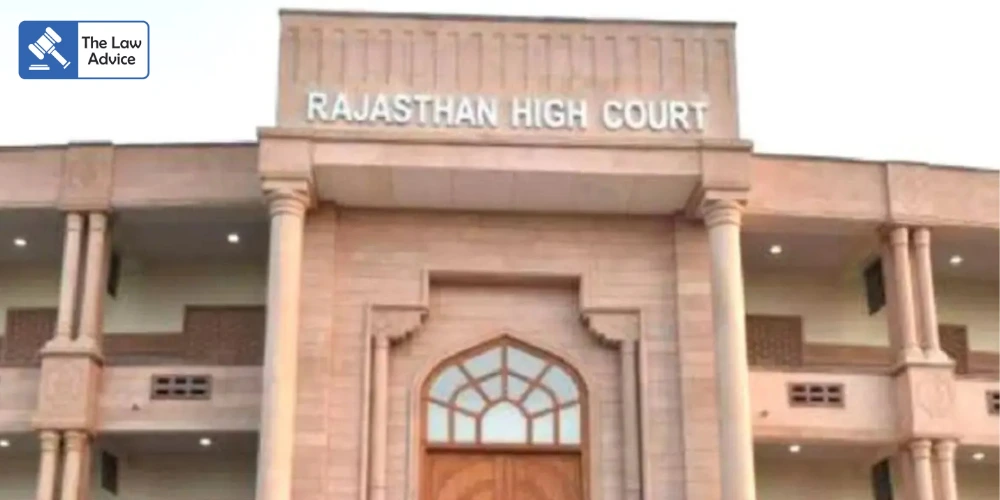
The Rajasthan High Court has set aside a 1994 conviction under the Scheduled Castes and Scheduled Tribes (Prevention of Atrocities) Act, 1989, holding that alleged caste-based abuse occurring inside a closed shop does not satisfy the statutory requirement of being committed “in any place within public view”.
Justice Farjand Ali, while allowing the appeal, examined the scope of Section 3(1)(x) of the Act and observed that the expression “within public view” requires that the alleged insult or intimidation must occur at a location capable of being witnessed by members of the public, and not merely in the presence of the complainant and the accused.
The Court emphasised that the phrase imports an objective test of public visibility, meaning that the scene of the alleged offence must be exposed to public observation or scrutiny. A private exchange within enclosed premises, even if serious in nature, does not automatically attract the offence under Section 3(1)(x).
The case arose from a commercial dispute between the parties. The complainant had purchased a motorcycle from the appellant’s showroom through a loan arrangement, with payments made via cheques that were subsequently dishonoured. After the vehicle met with an accident and was repaired, a disagreement arose when the complainant attempted to clear outstanding dues through a demand draft, which was allegedly refused by the appellant.
According to the complainant, this led to an altercation inside the showroom, followed by caste-based abuse and physical assault, culminating in the filing of a criminal complaint and the appellant’s conviction. Aggrieved, the appellant challenged the conviction before the High Court.
Upon examining the evidence, the Court noted that the prosecution failed to establish the presence of any independent public witnesses at the time of the alleged incident. On the contrary, the incident was consistently stated to have occurred within the four walls of the shop, a spatially confined and enclosed environment.
In this context, the Court held that the legislative intent behind Section 3(1)(x) is to prevent caste-based humiliation in the public domain. Acts alleged to have taken place in a purely private setting lack the essential nexus with public visibility required under the provision.
The Court further observed that there was no material to show that the alleged humiliation was audible or visible to the public, nor was there corroborative evidence regarding the alleged physical assault or the demand draft relied upon by the complainant. These deficiencies, coupled with the commercial nature of the underlying dispute, undermined the prosecution’s case.
Finding that the essential ingredients of the offence were not made out, the Rajasthan High Court set aside the conviction.
Website designed, developed and maintained by webexy