
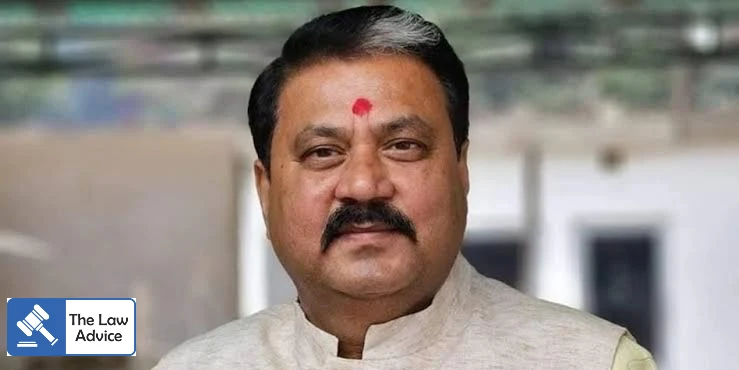
The Delhi High Court has refused to suspend the conviction of Bihar MLA Raju Kumar Singh, who was sentenced to four years in prison for culpable homicide not amounting to murder in connection with the death of a woman during celebratory firing at a New Year’s Eve party.
Justice Manoj Jain observed that a “surface-level analysis” of the case did not reveal any manifest perversity or palpable error in the appreciation of evidence that would justify staying the conviction.
The Court also took note of Singh’s criminal antecedents while dismissing his plea.
“To make things worse, he does not have clean antecedents. There is long list of cases in which he is found to be involved in,” the Court said, adding that although Singh had been acquitted in several of those cases, it could not be said that he had a clean slate.
Singh was sentenced to four years’ imprisonment under Section 304 Part-II of the IPC and two months under Section 30 of the Arms Act. He was also directed to pay Rs. 25 lakh as compensation to the deceased woman’s family.
The High Court had already suspended his sentence in July this year. Singh subsequently sought suspension of his conviction, arguing that its continuation could lead to his disqualification under Section 8(3) of the Representation of the People Act, 1951.
Singh’s counsel submitted that he was a sitting MLA from Sahebganj in Bihar and had around four years remaining in his term. It was argued that the conviction could affect both his membership of the legislative assembly and his eligibility to contest future elections.
The case relates to the intervening night of December 31, 2018 and January 1, 2019, when a New Year’s Eve party was held at Rose Farm House in Mandi Village. The farmhouse belonged to Singh’s brother. The deceased woman had attended the party with her husband and daughter.
According to the prosecution, Singh and his security guard were carrying firearms and engaged in celebratory firing. The guard allegedly fired twice in the air, while Singh fired four to five rounds.
Around four to five minutes later, another round of firing allegedly took place, with the prosecution claiming that Singh was the only person firing at that stage. Shortly afterwards, the woman was found unconscious on the dance floor. She was taken to a hospital, where she later died from her gunshot injury.
Singh was initially charged under Section 302 of the IPC and Section 30 of the Arms Act. The trial court ultimately convicted him under Section 304 Part-II of the IPC and Section 30 of the Arms Act.
While opposing the plea, the prosecution argued that the trial court had correctly appreciated the evidence and found that Singh alone was firing during the second round.
The High Court noted that Singh was seen using his firearm at the crucial time and that the place where he was present was close to where the woman collapsed.
“It hardly matters whether the bullet hit her directly or the hit was resultant on account of some ricocheting,” the Court observed, holding that the injury was a direct consequence of the firing attributed to Singh.
The Court further noted the prosecution’s allegation that Singh was under the influence of liquor and had engaged in celebratory firing despite being aware of its potential consequences.
The judge also noted that three other accused persons had been charged with causing disappearance of evidence, although that charge could not ultimately be proved.
Dismissing the application, the Court said its observations were tentative and would not amount to a final expression on the merits of Singh’s appeal.
Website designed, developed and maintained by webexy