
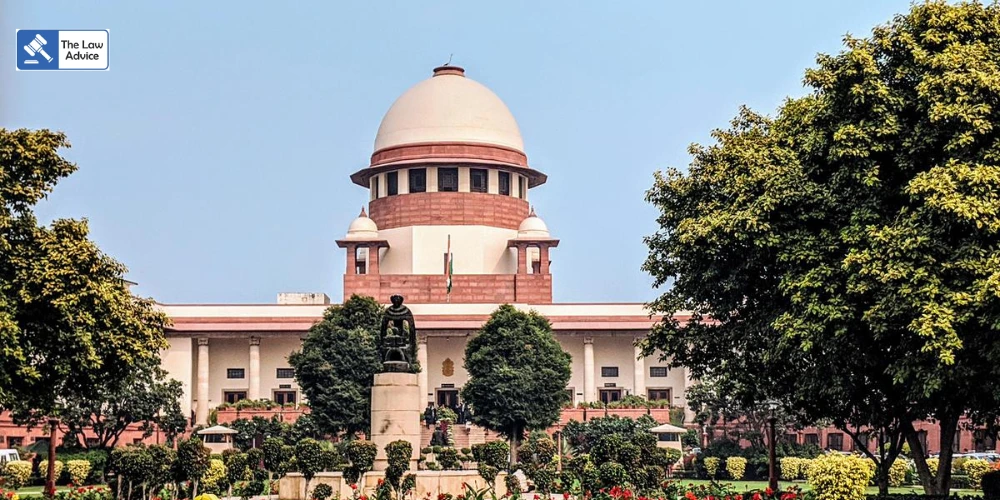
The Supreme Court on Tuesday (December 2) reaffirmed that a divorced Muslim woman has the legal right to recover cash and ornaments handed over to her husband by her family at the time of marriage, under the Muslim Women (Protection of Rights on Divorce) Act, 1986.
A Bench comprising Justices Sanjay Karol and N Kotiswar Singh set aside a Calcutta High Court ruling that had refused the claim of a divorced Muslim woman seeking return of ₹7 lakh and gold ornaments recorded in the marriage register (qabilnama) as gifts given by her father to her husband.
The parties were married in 2005, separated in 2009, and their divorce was finalized in 2011. The woman then moved a petition under Section 3 of the 1986 Act demanding recovery of ₹17.67 lakh, which included ₹7 lakh cash and 30 bhories of gold noted as having been transferred to the groom by her father during marriage.
The High Court had declined her plea citing a minor discrepancy between the statements of the Kazi (who recorded the marriage details) and the woman’s father. While the Kazi confirmed the entry in the register, he did not specify who received the gifts; however, the father stated that the amount was directly handed to the groom.
The Supreme Court ruled that the documentary evidence supported by the Registrar’s testimony cannot be doubted merely on conjecture. It further noted that the father’s earlier statement was made during criminal proceedings under Section 498A IPC, in which the husband was acquitted, and hence its evidentiary value could not outweigh formal marriage documentation.
While interpreting Section 3 of the 1986 Act, the Bench emphasized that gifts and wealth transferred at the time of marriage under Section 3(1)(d) are intended to secure the future of a divorced Muslim woman. Therefore, courts should give the provision a purposive interpretation consistent with its welfare objective.
Section 3(1)(d) entitles a divorced Muslim woman to all properties given to her before, at, or after marriage, whether by her relatives, friends, or by the husband’s side.
Highlighting constitutional values, the Court stressed that the Act must be interpreted in a manner that ensures dignity, equality, and autonomy of women under Article 21, especially considering persistent patriarchal practices in many parts of India.
The Bench remarked that justice delivery must rely on social justice perspectives to achieve true equality in matrimonial matters.
Allowing the appeal, the Supreme Court directed the husband to transfer the owed amount directly to the woman’s bank account, failing which it would attract 9% annual interest.
Case Title: Rousanara Begum vs. S.K. Salahuddin @ Sk Salauddin & Anr.
Website designed, developed and maintained by webexy