Financier Cannot Claim Insurance Amount For Stolen Vehicle Without Direct Contract With Insurer: Supreme Court
The Supreme Court has held that a financier cannot claim insurance compensation for a stolen vehicle in the absence of a direct contractual relationship with the insurance company, reiterating the settled principle that an insurance policy is a personal contract between the insurer and the insured.
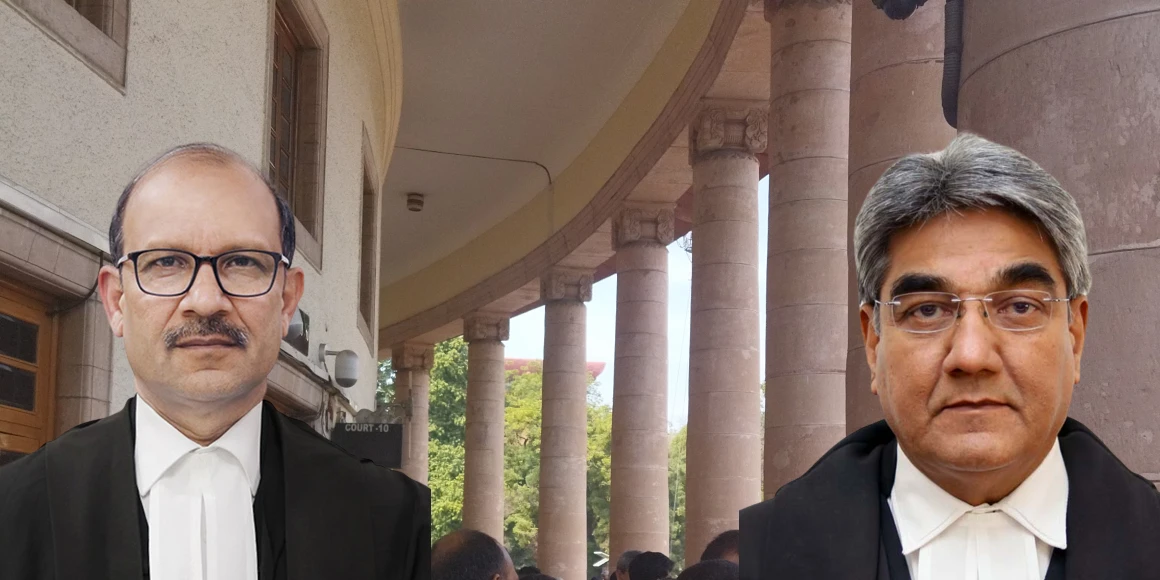
A Bench comprising Justice Sandeep Mehta and Justice Vijay Bishnoi dismissed an appeal filed by financier K. Prakashchand against an order of the National Consumer Disputes Redressal Commission (NCDRC), which had denied him insurance compensation for a vehicle allegedly stolen after being surrendered by the borrower.
The case arose from a vehicle financed by the appellant. The borrower had obtained a comprehensive insurance policy from Oriental Insurance Company Limited covering the vehicle for the period between February 2003 and February 2004.
According to the financier, the borrower faced financial difficulties and surrendered possession of the vehicle to him in December 2003. Shortly thereafter, the vehicle was allegedly stolen while in the financier's custody. Although a police complaint was lodged, the vehicle could not be recovered.
The financier subsequently approached the insurance company seeking indemnification under the policy. When the claim was rejected, he initiated consumer proceedings.
The District Consumer Forum and later the State Consumer Commission ruled in favour of the financier and directed the insurer to pay compensation. However, the NCDRC reversed those findings, prompting the financier to approach the Supreme Court.
Before the apex court, the financier argued that he had a substantial interest in the insured vehicle due to the financing arrangement and hypothecation. He contended that the insurer was aware of his interest through endorsements made in the policy documents.
The insurance company, however, maintained that the policy was exclusively between the insurer and the borrower, who was the insured person. It argued that the financier was neither the registered owner of the vehicle nor a contracting party to the insurance agreement.
Accepting the insurer's submissions, the Supreme Court observed that the agreement relied upon by the financier existed solely between him and the borrower and did not bind the insurance company.
The Court noted:
“The National Commission has rightly observed that there was no privity of contract between the Appellant and the Insurance Company.”
The Bench further found that the nature of the arrangement between the financier and the borrower was not satisfactorily established. It also observed that the appellant failed to place convincing material on record regarding the alleged surrender of the vehicle and the circumstances surrounding the alleged theft.
Reiterating a fundamental principle of insurance law, the Court emphasized that an insurance policy is a personal contract and that third parties generally cannot enforce rights arising out of such contracts unless specifically authorized by law or the terms of the policy.
The Court held that since the insurance company was not a party to the agreement between the financier and the borrower, it could not be compelled to indemnify the financier.
“The Insurance Company could not be forced to indemnify the Appellant,” the Bench observed while dismissing the appeal.
Accordingly, the Supreme Court dismissed Civil Appeal No. 20846 of 2017 and upheld the decision of the NCDRC.
The judgment was delivered in K. Prakashchand v. Oriental Insurance Co. Ltd..