
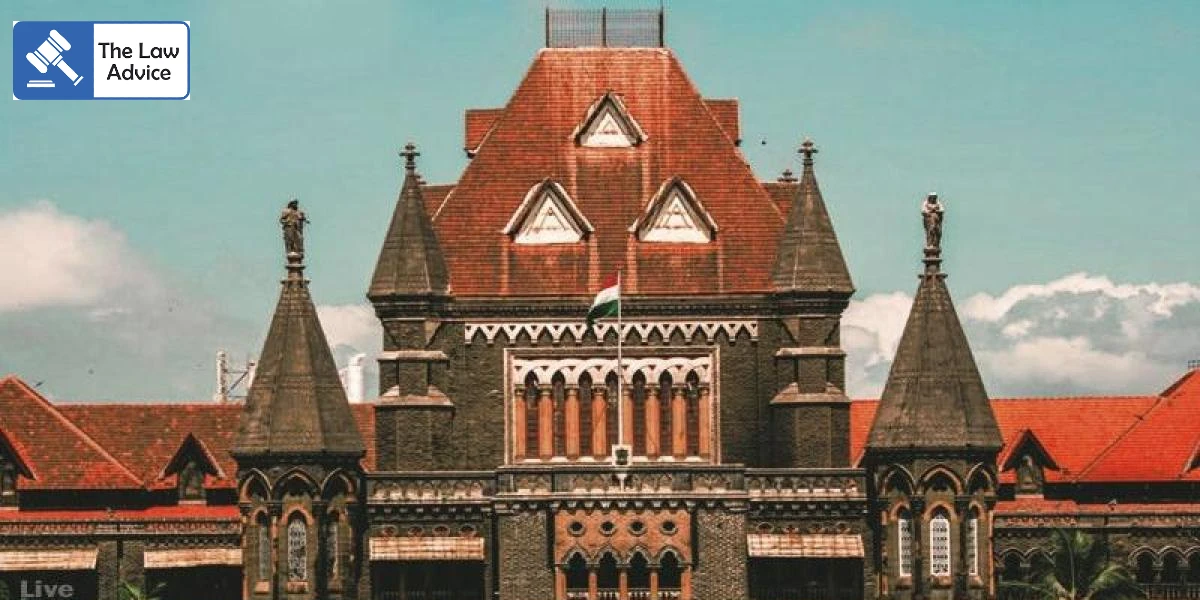
The Bombay High Court recently observed while directing authorities to complete delayed municipal elections across 11 municipal councils within a strict, time-bound schedule.
A division bench of Justice Valmiki Menezes and Justice Hiten Venegavkar made the observations while upholding the constitutional validity of the Goa Municipalities (Amendment) Ordinance, 2026.
The Court, however, made it clear that the introduction of new statutory requirements cannot be used to extend the constitutionally mandated timeline for conducting elections.
“No government has a constitutional entitlement to choose a politically convenient date for an election whose periodicity is fixed by the Constitution. No Legislature can proceed on the assumption that enactment of a new electoral requirement automatically supplies additional constitutional time for its implementation,” the bench observed.
The Court was hearing a batch of petitions challenging the Goa Municipalities (Amendment) Ordinance, 2026, which changed the rules relating to ward delimitation and reservation.
The petitioners argued that applying the new framework after the terms of several municipal councils had expired violated the five-year constitutional limit prescribed under Article 243U of the Constitution.
While the High Court upheld the legislature's power to amend municipal laws, it stressed that such amendments cannot become a justification for delaying elections beyond the constitutional deadline.
The Court accordingly directed the authorities to complete the election process within the shortest lawful period.
The terms of several municipal councils had expired between March and May this year, following which administrators were appointed to oversee their functioning.
The bench also addressed the role of the State Election Commission, observing that its institutional independence does not permit it to disregard valid statutory requirements.
“No State Election Commission can surrender the electoral calendar to the pace at which another authority chooses to act. Each must exercise its powers so that the Constitution, rather than institutional convenience, determines when democratic authority returns to the electorate,” the Court held.
The judges further emphasised that the periodic renewal of elected local bodies cannot be treated as an open-ended or flexible timeline.
“The Constitution does not require a choice between lawful elections and timely elections; it requires both,” the bench said.
The Court added that any deviation from the constitutional deadline must be limited strictly to the minimum period genuinely required to comply with the law.
To reconcile the requirements introduced by the ordinance—including ward delimitation and an empirical inquiry concerning Other Backward Classes (OBC) reservation—with the mandate of Article 243U, the High Court directed the State authorities to undertake the necessary exercises simultaneously rather than sequentially.
The Court ordered that final delimitation notifications be issued by September 9, followed by reservation notifications. It directed that the entire electoral process be completed within the “shortest lawful period.”
The ruling thus reaffirmed that procedural or legislative changes cannot be allowed to indefinitely postpone the restoration of elected local governments.
Website designed, developed and maintained by webexy