
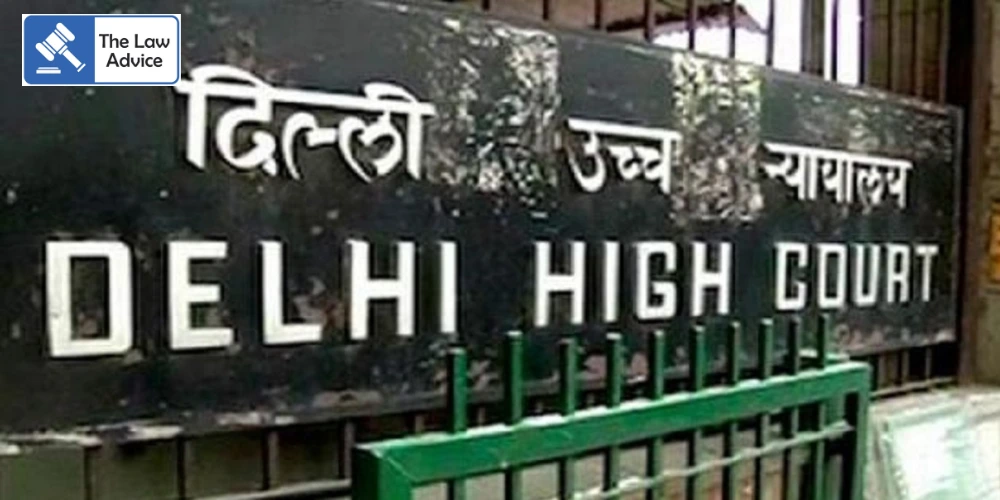
The Delhi High Court has dismissed a writ petition filed by a “Scientist-E” employed with the Centre for Development of Telematics (C-DOT), who sought permission to work from home on account of severe air pollution and related respiratory ailments.
The petitioner, Shubham Verma, had approached the Court seeking strict enforcement of the Graded Response Action Plan (GRAP) directions issued by the Commission for Air Quality Management (CAQM) within the premises of his organisation. He contended that his doctor had advised him to avoid exposure to dust and smoke due to a dust-induced allergic respiratory condition.
Justice Sachin Datta held that GRAP guidelines are essentially regulatory in nature and cannot be interpreted as creating enforceable legal rights in favour of central government employees against their employer, particularly where such claims run contrary to established service conditions.
“The objective behind the implementation of GRAP cannot be construed as creating an enforceable personal right in favour of individual employees. Rather, it casts an obligation upon institutions, authorities and citizens to adhere to and support, to the extent practicable and feasible, the pollution-mitigating measures stipulated therein,” the Court observed.
Verma alleged that C-DOT was continuing non-essential construction and demolition activities in violation of GRAP norms, resulting in excessive dust levels within the office premises. According to him, this aggravated his existing respiratory condition and posed a serious health risk.
Through his petition, Verma sought directions for mandatory compliance with all GRAP orders, inspection of the office premises, and permission to work from home until indoor air quality was restored to safe levels.
Rejecting these prayers, the Court held that the petitioner’s claim to a work-from-home arrangement was misconceived. It noted that the relevant guidelines merely confer a discretionary power on the Central Government to take appropriate decisions regarding work-from-home facilities and do not impose any mandatory obligation to grant such relief to employees.
The Court further clarified that no writ of mandamus could be issued to effectively alter or override applicable service conditions under the guise of enforcing GRAP directives. “There is no occasion for issuance of a mandamus for altering service conditions in the name of GRAP compliance. Accordingly, no merit is found in the present petition,” Justice Datta ruled.
However, taking note of the medical concerns raised by the petitioner, the Court observed that if his health condition so requires, he would be at liberty to request his employer for a transfer outside Delhi.
“The respondent authority shall endeavour to favourably consider such a request, if made,” the Court added.
Case Title: Shubham Verma v. Centre for Development of Telematics (C-DOT) & Ors.
Website designed, developed and maintained by webexy