
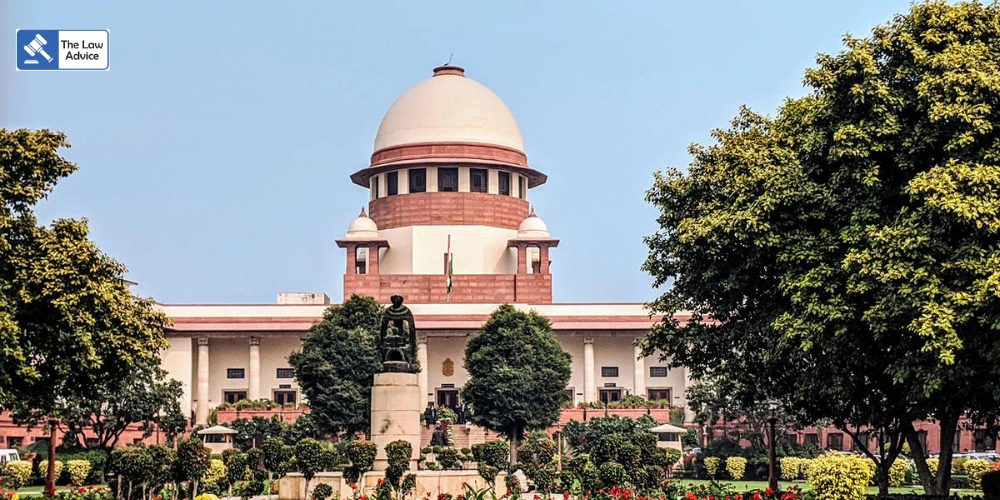
The Supreme Court on Thursday observed that while judges cannot ordinarily face action merely for the content of their judicial orders, disciplinary proceedings may be justified if such orders are found to be influenced by dishonest motives or extraneous considerations.
A Bench comprising Chief Justice of India Surya Kant, Justice Joymalya Bagchi and Justice Vipul Pancholi made these remarks while hearing a writ petition filed by a District Judge from Madhya Pradesh challenging an order of suspension passed by the High Court.
Senior Advocate Vipin Sanghi, appearing for the petitioner, submitted that the officer was a senior and reputed judicial officer with consistently good Annual Confidential Reports (ACRs). He argued that the suspension was ordered just days before the judge’s retirement, without assigning any reasons.
Sanghi contended that, according to press reports, the suspension was allegedly based on two judicial orders passed by the petitioner. He emphasized that no disciplinary action can be taken against a judge solely on the basis of judicial orders, as any erroneous order can always be corrected by an appellate court.
Responding to this, CJI Surya Kant remarked that while mere errors cannot be grounds for disciplinary action, the situation would be different if an order is “palpably based on dishonest or extraneous considerations.” The CJI also expressed concern over a growing pattern of judges passing a flurry of significant orders close to their retirement.
When asked about the nature of the impugned orders, Sanghi informed the Court that they related to the stay of recoveries of royalties and penalties connected to mining activities. On being queried about the scale of financial implications, Sanghi stated that he had not examined the orders in detail but maintained that there was no material to suggest any improper considerations.
Drawing from Sanghi’s own experience as a former Chief Justice of a High Court, the CJI questioned whether notices had been issued to the revenue authorities before granting interim relief. Sanghi responded that the interim orders were reasoned and passed after hearing the State.
Sanghi further pointed out that the petitioner was originally due to retire on November 30, 2025. However, pursuant to the Supreme Court’s order dated November 20 extending the retirement age of judges in Madhya Pradesh, his tenure stood extended till November 30, 2026. Notably, the suspension order was passed on November 19.
The Bench declined to interfere with the suspension at this stage. It also expressed disapproval of the petitioner having filed an application under the Right to Information Act before the High Court seeking reasons for his suspension. The Court observed that such a course was highly unusual and inappropriate for an officer of his seniority, and that he should instead have submitted a formal representation to the competent authority.
The Court held that a proper representation would have enabled the High Court to communicate the reasons for suspension and, if necessary, formally initiate disciplinary proceedings. While refusing to quash the suspension, the Bench granted liberty to the petitioner to submit a comprehensive representation to the High Court seeking recall of the suspension and any other permissible relief. The High Court was directed to decide the representation expeditiously, preferably within two weeks.
After the order was dictated, Sanghi requested that the petitioner be reinstated and posted at a different station. The Bench declined the request, observing that when the petitioner passed the impugned orders, he could not have anticipated the extension of the retirement age. CJI Surya Kant remarked that a clear message needed to go out regarding this “unfortunate trend” of judges issuing far-reaching orders close to retirement, though he refrained from elaborating further.
Case Title: Rajarambhartiaya v. The High Court of Madhya Pradesh
Case Number: W.P.(C) No. 1230/2025
Website designed, developed and maintained by webexy