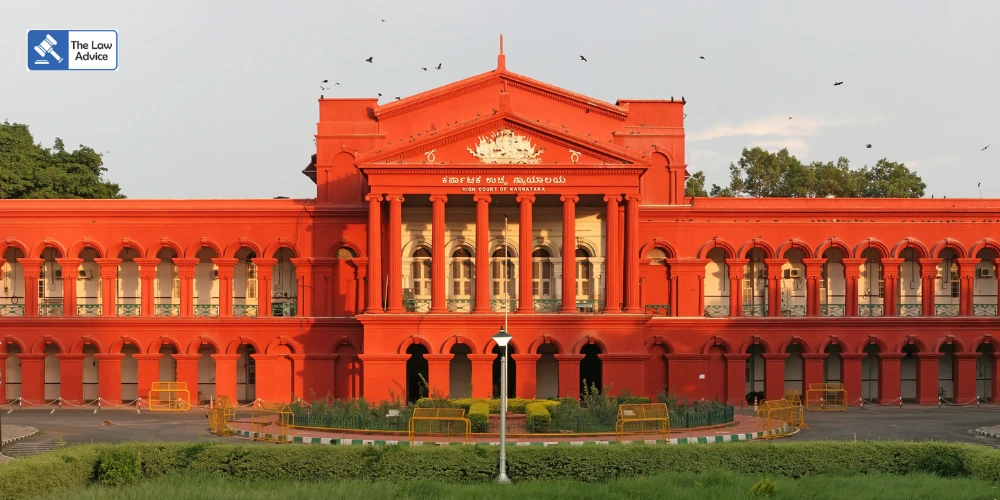
The Karnataka High Court on Tuesday (December 9) granted an interim stay on the State Government’s November 20 notification requiring all registered industrial establishments to provide one paid menstrual leave day per month to permanent, contract, and outsourced women workers.
Justice Jyoti M, while issuing notice to the State, observed:
“There shall be an interim order as prayed for. Liberty is granted to seek modification. The Government shall file its statement of objections. Relist after winter vacation.”
The stay was granted on petitions filed by the Bangalore Hotels Association and Avirata AFL Connectivity Systems Ltd.
Petitioners’ submissions
Counsel for the petitioners contended that the State issued the notification through an executive direction, even though existing labour legislations already prescribe a comprehensive leave structure for employees.
The Court specifically queried whether industry stakeholders were consulted prior to introducing such a mandate. The petitioners confirmed there was no prior hearing, after which the Court issued the interim relief.
Arguments detailed in the plea
• The Association represents around 1540 establishments whose operations are governed by labour laws stipulating working hours, weekly offs, and leave with wages.
• Under Model Standing Orders (Clause 9) of the Karnataka Industrial Employment Rules, leave provisions are regulated by the Factories Act, 1948, and other applicable statutes.
• Clause 10 allows casual leave up to 10 days annually, while other laws restrict leave benefits to 12 days per year.
The petitioners assert that none of the governing statutes — including the Factories Act, Karnataka Shops and Commercial Establishments Act, Plantations Labour Act, Beedi and Cigar Workers Act, and Motor Transport Workers Act — contain any provision mandating menstrual leave.
Hence, the State lacks legislative backing to impose such a requirement solely via executive action.
The petition argues that:
• The notification amounts to unwarranted interference in the employers’ internal HR policies.
• The State failed to issue a draft notification or invite stakeholder objections, violating principles of natural justice.
• The mandate could lead to financial and operational burdens, particularly in establishments with large numbers of female employees.
• The order is arbitrary and unconstitutional, infringing Article 14 of the Constitution.
Accordingly, the petitioners seek quashing of the notification as ultra vires and unconstitutional.
Case Details
Bangalore Hotels Association (R) & Anr. v. State of Karnataka
W.P. No. 36659/2025 c/w W.P. No. 37122/2025
Advocate Prashanth B K — for the petitioners