
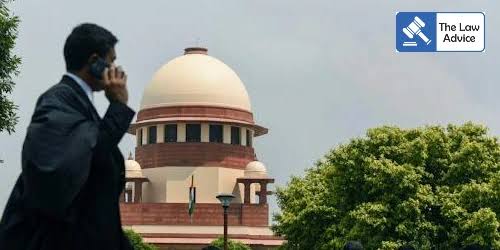
The Karnataka government has approached the Supreme Court challenging the Karnataka High Court’s decision allowing authorities to consider applications for operating motorcycles as bike taxis, arguing that such services raise serious concerns over passenger safety, insurance coverage and women’s security.
The State has challenged a January 23, 2026 judgment of the High Court Division Bench, which effectively lifted an earlier court-ordered restriction on bike taxi operations in Karnataka.
The dispute began after a single judge directed that bike taxi services be stopped until the State framed a policy permitting their operation. The order was later challenged by Ola, Uber, Rapido, motorcycle owners and the Bike Taxi Welfare Association.
In January 2026, the Division Bench directed the authorities to consider applications seeking registration of motorcycles as transport vehicles and permits to operate them as taxis. Karnataka has now challenged that ruling through a special leave petition before the Supreme Court.
The State has argued that the High Court's decision effectively turned the transport authorities' discretionary power to grant permits into a mandatory obligation.
According to Karnataka, motorcycles cannot be allowed to carry passengers for hire without a comprehensive regulatory framework covering safety, insurance and operational standards.
“Motorcycles lack essential passenger safety features that are present in autos and cabs,” the State said, adding that this creates concerns relating to accident vulnerability, insurance coverage in the event of fatalities and women’s safety.
Karnataka also cited concerns over road congestion, pollution, passenger security and the comparatively higher fatality rates associated with two-wheelers.
The State maintained that its restriction on bike taxis does not amount to a blanket ban on using motorcycles for commercial purposes. Motorcycle riders can continue to earn through delivery and logistics services offered by platforms such as Swiggy, Zomato, Amazon and Flipkart, it submitted.
The State further pointed out that such workers are covered by the Karnataka Platform-Based Gig Workers (Social Security and Welfare) Act, 2025, which provides for social-security and occupational-safety measures.
“The restriction is not a blanket prohibition on the use of motorcycles for livelihood,” Karnataka said.
The State has also argued that the Motor Vehicles Act, 1988 does not give anyone an absolute right to operate a particular category of vehicle as a taxi.
According to Karnataka, the grant of a contract-carriage permit remains within the discretion of the transport authorities, which can refuse an application on grounds of public safety.
The State has also challenged the High Court's interpretation that motorcycles fall within the definitions of “motor cab” and “contract carriage” under the Motor Vehicles Act.
Karnataka contended that motorcycles are primarily designed for personal use and cannot automatically be treated as vehicles constructed or adapted for the commercial transportation of passengers.
It further submitted that the Karnataka On-Demand Transportation Technology Aggregator Rules, 2016 were framed specifically for four-wheeled motor cabs and deliberately excluded motorcycles.
The High Court, however, had taken a different view. It held that operating taxis is a legitimate business protected under Article 19(1)(g) of the Constitution.
The Division Bench had also found that Karnataka's unwritten prohibition on bike taxis could not be treated as a reasonable restriction when there was no specific law, rule or notification prohibiting the registration of motorcycles as transport vehicles.
The Ministry had stated that the term “bike taxi” is not defined under the Motor Vehicles Act or the rules framed under it.
The State has argued that the absence of an express prohibition cannot, by itself, be interpreted as creating a positive legal right to operate bike taxis.
Karnataka has also pointed to practical difficulties arising from the High Court's judgment, particularly its direction concerning the conversion of privately registered white-board motorcycles into yellow-board transport vehicles.
The State said there is currently no mechanism under Karnataka's regulatory framework for such conversion or for dual registration of motorcycles.
The State has additionally raised environmental and traffic-related concerns over large-scale bike taxi operations.
According to its petition, restricting such operations could potentially prevent around 1.39 million tonnes of carbon dioxide emissions every year, while also helping reduce congestion and strengthen the public transport system.
The matter was expected to come up before the Supreme Court on August 11. However
Website designed, developed and maintained by webexy