
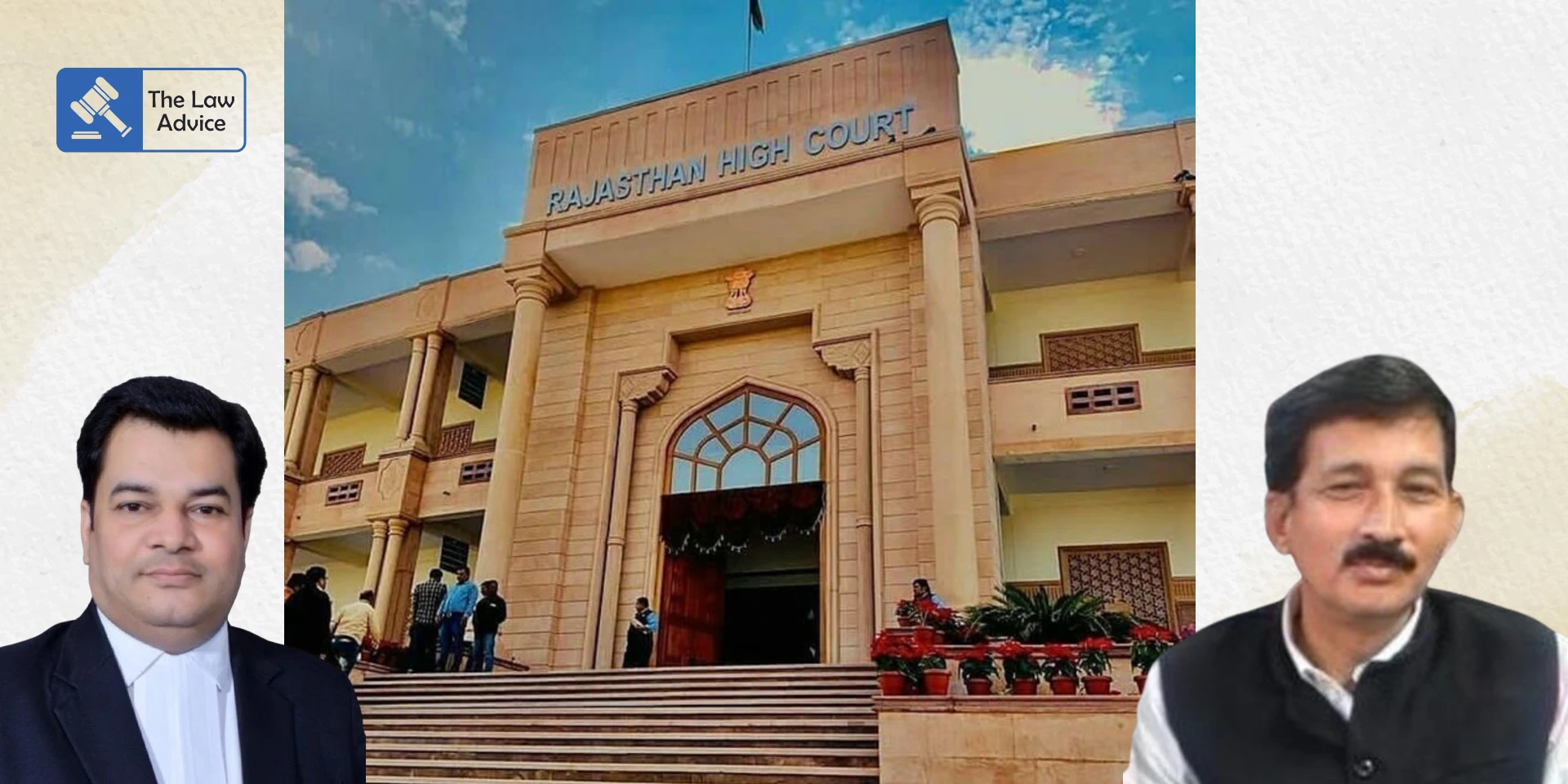
The newly elected representative body of the Bar, through President Rajeev Sogarwal and Secretary Deepesh Sharma, has submitted a formal representation to the Hon’ble Acting Chief Justice of the Rajasthan High Court, seeking reconsideration of the recent administrative directives mandating court functioning on the 1st and 3rd Saturdays of every month.
In the representation, the Bar acknowledged the High Court’s concern over the alarming pendency of cases and expressed full support for all constructive steps aimed at ensuring timely delivery of justice. However, it was respectfully contended that making Saturdays working days may not achieve the intended objective and could, in fact, adversely affect the effective administration of justice.
The Bar pointed out that Saturdays traditionally serve as the only non-court working day available for judges, advocates, and court staff to attend to personal and family responsibilities. It was highlighted that Sundays are usually spent by advocates preparing for matters listed on Mondays and for the coming week, leaving little scope for rest or recuperation.
Further, the representation emphasized that Saturdays play a crucial role in alternative dispute resolution mechanisms such as arbitration, mediation, conciliation, negotiations, and settlements, which significantly contribute to reducing litigation and pendency. Many advocates also attend proceedings before District and Sessions Courts on Saturdays. According to the Bar, holding High Court proceedings on these days could disrupt these parallel justice delivery mechanisms and defeat the very purpose of reducing backlog.
The Bar also noted that Saturdays are often utilized by judges for dictation of reserved judgments and for academic and judicial preparation. Regular court work on Saturdays, it was argued, may impact this essential exercise and affect the quality and timely pronouncement of judgments.
Expressing concern over the health and well-being of all stakeholders, the representation stated that continuous court functioning without adequate breaks could have serious physical and mental health implications for judges, advocates, and court staff, ultimately impacting justice delivery.
As alternatives to reduce pendency, the Bar suggested measures such as rationalized and effective listing of cases, strengthening the role of the Registrar (Judicial) for handling procedural and compliance-related matters, expanding alternative dispute resolution mechanisms, filling judicial and staff vacancies at the earliest, increased use of technology and virtual hearings, and constituting special benches or drive-based disposal of old cases during regular working days.
The Bar further submitted that a decision of such magnitude, affecting the professional and personal lives of the legal fraternity, ought to be implemented only after meaningful consultation with stakeholders. It asserted that, as a collective body, the Bar is not in favour of implementing the Saturday working directive in its present form.
In conclusion, the Bar has requested that the directive on working Saturdays be recalled until proper consultation and consensus with the Bar and other stakeholders is achieved, while reaffirming its faith in the leadership of the High Court and assuring full cooperation in all initiatives aimed at strengthening the justice delivery system.