
In a significant judgment reaffirming the constitutional guarantee of equality, the Supreme Court has held that a married daughter cannot be denied consideration for compassionate appointment merely because she is not divorced or deserted. Declaring the Bihar Government's policy to be discriminatory, the Court ruled that any classification treating married daughters differently from sons violates Article 14 of the Constitution.
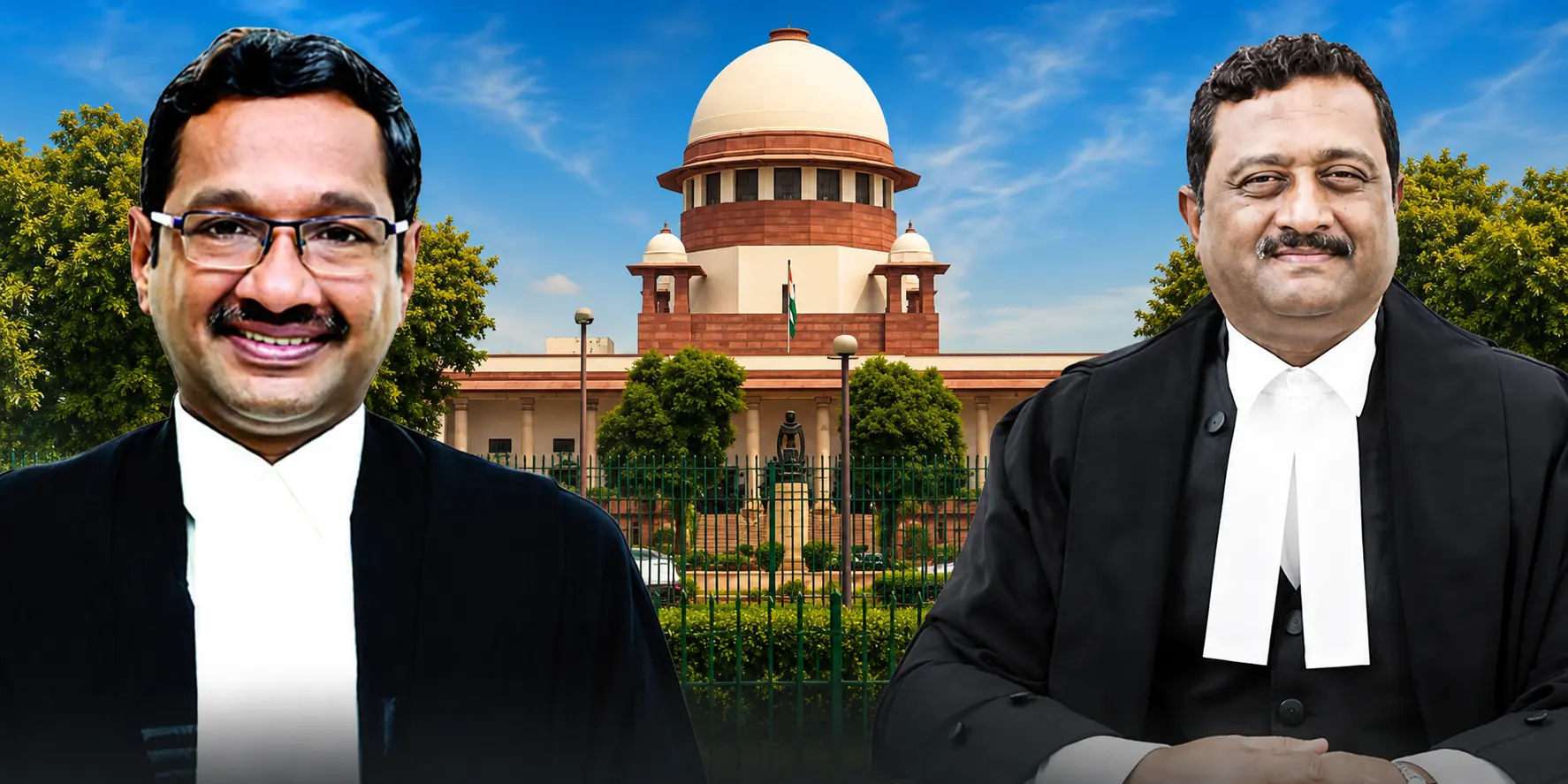
A Bench comprising Justice M.M. Sundresh and Justice Prasanna B. Varale allowed the appeal filed by Sayara Khatoon @ Shayara Khatoon and another, setting aside the orders of the Patna High Court and the State authorities rejecting the claim for compassionate appointment.
The case arose after the death of the husband of appellant No. 1 and father of appellant No. 2, following which the family sought compassionate appointment for the daughter.
However, the claim was rejected on two grounds:
An objection allegedly raised by the appellant's brother; and
A Bihar Government policy dated December 10, 2014, which restricted compassionate appointment to daughters only if they were divorced or deserted.
The Patna High Court upheld the rejection, prompting the appellants to approach the Supreme Court.
Before the Supreme Court, counsel for the appellants argued that the objection attributed to the brother had become irrelevant since he had subsequently issued a No Objection Certificate (NOC) supporting the appointment.
The Court accepted this submission and observed that this ground could no longer justify rejection of the claim.
The principal issue before the Court concerned the validity of the Bihar Government's policy restricting eligibility for compassionate appointment to only divorced or deserted daughters.
The State defended the policy by arguing that a married daughter ordinarily leaves her parental home after marriage and that compassionate appointment is governed entirely by the applicable policy rather than being a matter of right.
The Supreme Court rejected this reasoning.
The Bench reiterated that the Court has consistently held that any classification distinguishing daughters from sons is, by itself, unconstitutional unless it withstands constitutional scrutiny.
Rejecting the assumptions underlying the Bihar policy, the Court made an important observation that there can be no legal presumption that a daughter loses her connection with her parental family merely because she gets married.
The Court observed that marriage does not automatically mean that a daughter permanently shifts to her matrimonial home or ceases to be dependent upon, or connected with, her parents.
In the present case, the appellant specifically stated that although her divorce had not been formally recognised by law, she had been residing with her parental family and continued to receive support from her mother and brother.
According to the Court, such factual circumstances further demonstrated why a rigid policy based solely on marital status was legally unsustainable.
The Bench criticised the authorities for adopting what it described as a hyper-technical approach while considering the request for compassionate appointment.
The Court held that such technicalities cannot become a ground for denying consideration of an otherwise eligible claim, particularly when the object of compassionate appointment is to provide immediate financial assistance to the family of a deceased employee.
Holding that both grounds relied upon for rejecting the application had failed, the Supreme Court set aside:
The judgment of the Patna High Court; and
The order rejecting the claim for compassionate appointment.
The Court directed the Bihar Government to reconsider the appellant's application on its own merits within eight weeks from the date of receipt of the judgment.
Accordingly, the civil appeal was allowed, and all pending applications were disposed of.
The ruling is another important addition to the Supreme Court's jurisprudence on gender equality and non-discrimination. It reinforces that administrative policies governing compassionate appointments must conform to constitutional guarantees under Article 14 and cannot rely on outdated stereotypes regarding the role or dependency of married daughters.
The judgment also reiterates that a daughter's eligibility for compassionate appointment cannot be determined solely on the basis of her marital status and that authorities must assess each case on its own facts rather than applying arbitrary classifications.
Case Details:-
S.L.P. (C) NO.11623 OF 2026)
SAYARA KHATOON @ SHAYARA KHATOON & ANR.
VERSUS
THE STATE OF BIHAR & ORS

Representation:-
For Petitioner(s): Ms. Rashmi Singh, Adv., Mrs. Priyansha Sharma, AOR, Mr. Subhan Shankar Gogoi, Adv.
For Respondent(s): Mr. Manish Kumar, AOR, Mr. Divyansh Mishra, Adv., Mr. Kumar Saurav, Adv.
Website designed, developed and maintained by webexy