
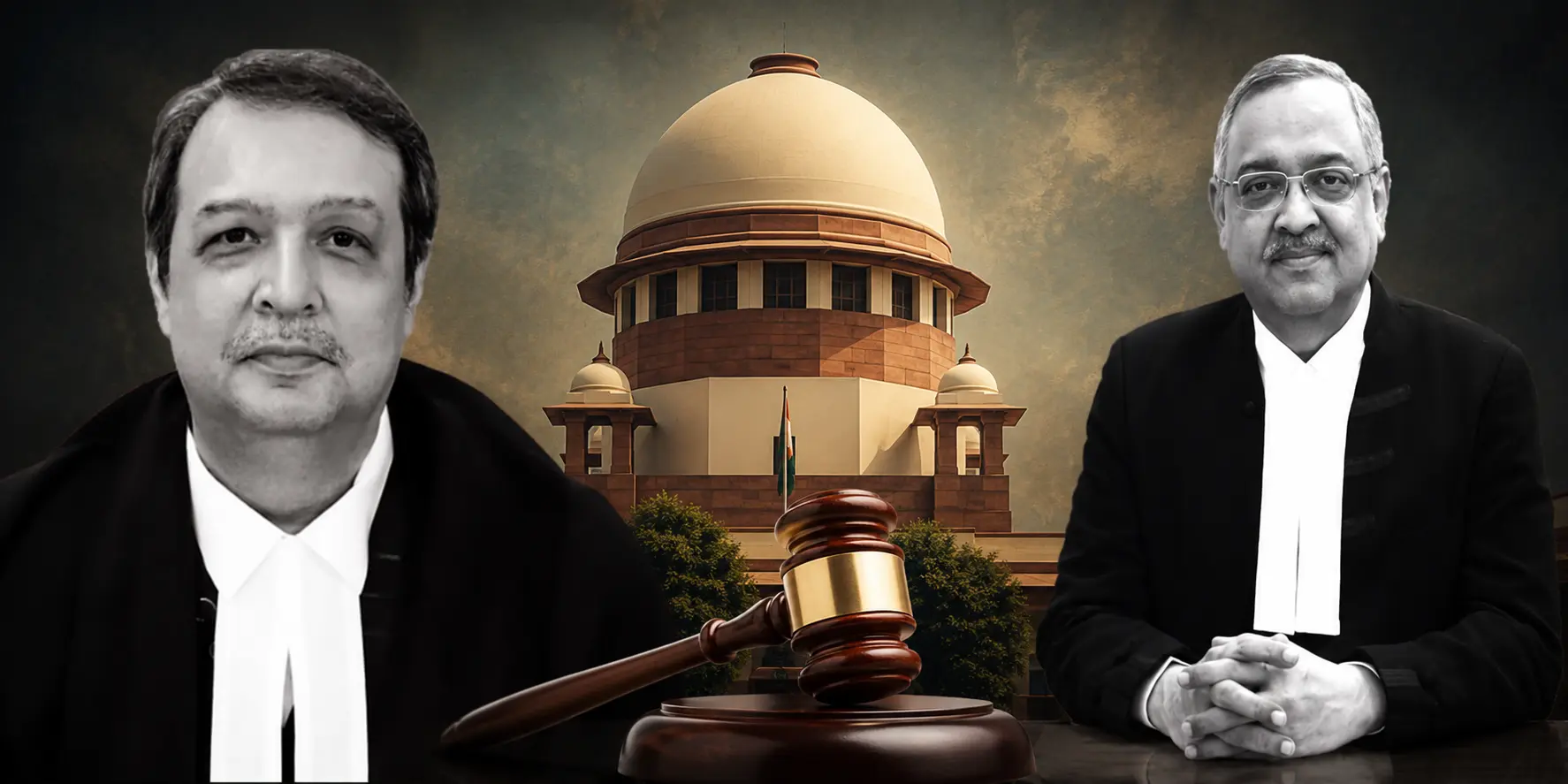
In a significant judgment on the independence of sanctioning authorities under the Prevention of Corruption Act, 1988, the Supreme Court has strongly deprecated political interference in decisions relating to sanction for prosecution of public servants. Observing that the decision-making process under Section 19 of the Prevention of Corruption Act cannot resemble "Hamlet's Soliloquy – to be or not to be," the Court held that indecisiveness or reversal of a decision without fresh material raises a presumption that extraneous considerations have influenced the process.
A Bench comprising Justice J.B. Pardiwala and Justice K. Vinod Chandran dismissed a Special Leave Petition filed by the State of Rajasthan challenging a Rajasthan High Court judgment that had quashed the sanction granted to prosecute a government doctor under the Prevention of Corruption Act. The Court also imposed costs of ₹50,000 each before the High Court and the Supreme Court on the State for pursuing the litigation.
The case arose from allegations that Dr. Dev Kant Meena, a government doctor, demanded illegal gratification from the relatives of a patient for performing knee surgery. A trap was laid by the Anti-Corruption Bureau, and cash was allegedly recovered from the doctor's office drawer.
After examining the evidence, the Joint Secretary, Department of Personnel, concluded that the available material did not establish a clear demand for bribe. The authority noted that:
The recorded telephone conversations did not unequivocally indicate a demand for illegal gratification;
The amount discussed appeared to relate to the cost of steel implants required for surgery;
The alleged earlier payments were unsupported by evidence;
The trap recovery itself appeared suspicious because the money was recovered from a locked drawer that had to be broken open; and
Political workers were seen publicly claiming credit for trapping the doctor, suggesting the possibility of a publicity-driven operation.
Based on these findings, the proposal for sanction was rejected by the competent authority.
The Supreme Court noted that despite rejection of sanction, the matter was later sent back for reconsideration by the Joint Secretary to the Chief Minister, who asserted that recovery of money and the handwash test established acceptance of bribe.
The Bench observed that no fresh material whatsoever had emerged after the initial refusal. Nevertheless, the file was reopened solely because of the intervention from the Chief Minister's office.
Even upon reconsideration, departmental authorities once again concluded that:
No explicit demand for bribe had been established;
The recovery of money remained doubtful;
The handwash test was explainable because the complainant had shaken hands with the doctor while handing over an X-ray.
Despite these findings, sanction was eventually granted.
The Supreme Court reiterated that the purpose of Section 19 of the Prevention of Corruption Act is to prevent honest public servants from facing frivolous or politically motivated prosecutions.
The Bench observed that where the sanctioning authority itself entertains serious doubts regarding the allegations, the law does not permit sanction merely because another view is possible.
The Court held that if two views are reasonably possible, particularly in criminal prosecution of public servants, the view favouring the officer should ordinarily prevail because criminal guilt ultimately requires proof beyond reasonable doubt.
Relying upon earlier precedents including Mansukhlal Vithaldas Chauhan v. State of Gujarat, State of H.P. v. Nishant Sareen, Gopikant Choudhary v. State of Bihar, and State of Punjab v. Mohd. Iqbal Bhatti, the Court reiterated that:
A sanctioning authority cannot review or reconsider its earlier refusal merely because another authority disagrees;
Reconsideration is permissible only where fresh material emerges after the earlier decision;
A mere change of opinion based on the same evidence is impermissible and demonstrates lack of independent application of mind.
The Court also reaffirmed the well-settled principle that sanction is "a safeguard for the innocent, but not a shield for the guilty."
The Bench found that the facts unmistakably demonstrated external interference in the decision-making process.
According to the Court, the review of the earlier refusal was prompted by the office of the Chief Minister and not by any new evidence.
Expressing strong disapproval, the Court observed that such interference leads to unnecessary harassment of honest public officers and defeats the very object of Section 19 of the Prevention of Corruption Act, which seeks to protect public servants from false, frivolous and unsubstantiated allegations.
The Supreme Court noted that once the Rajasthan High Court had set aside the sanction as illegal, the State ought to have accepted the decision instead of pursuing further litigation.
Consequently, while dismissing the State's Special Leave Petition, the Court directed the State Government to pay costs of ₹50,000 each before the High Court and the Supreme Court within two months, failing which the respondent would be at liberty to seek further directions from the Court.

Representation:-
For Petitioner(s) : Ms. Nidhi Jaswal, Adv., Mr. Saurabh Rajpal, AOR
For Respondent(s) : Mr. Siddharth Dave, Sr. Adv., Mr. Namit Saxena, AOR, Mr. Awnish Maithani, Adv., Ms. Shruti Singh, Adv., Mr. Yusuf Tariq, Adv.
Website designed, developed and maintained by webexy