
In a significant ruling, the Supreme Court has held that a husband's failure to speak with his wife for a brief period cannot, by itself, amount to "cruelty" under Section 498A of the Indian Penal Code.
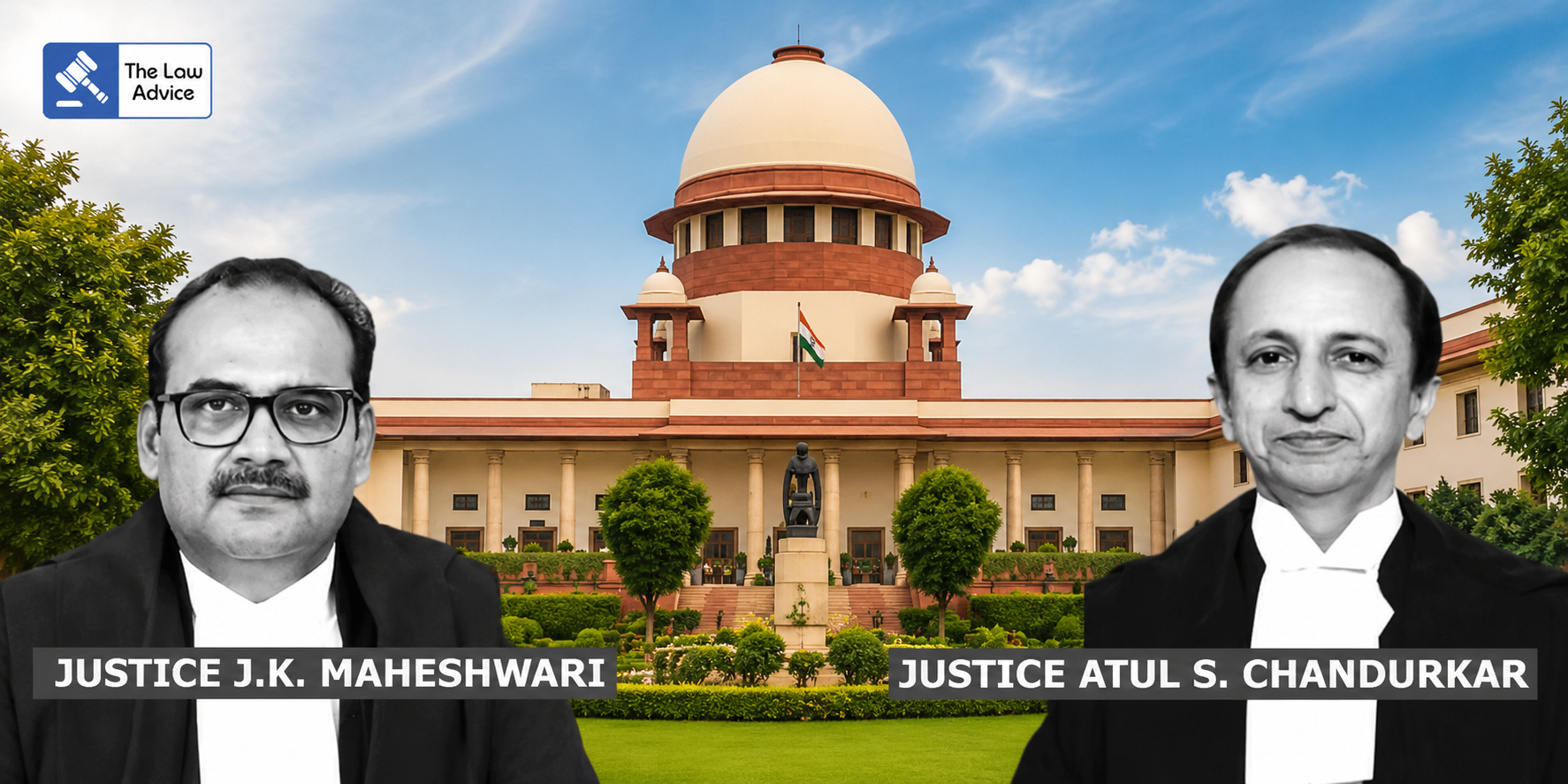
A Bench comprising Justice J.K. Maheshwari and Justice Atul S. Chandurkar set aside the conviction of a man who had been sentenced to three years' imprisonment for cruelty towards his wife, observing that the prosecution had failed to establish the essential ingredients of the offence.
The case arose after a woman committed suicide in January 2015 while staying at her parental home. The prosecution alleged that her husband and in-laws had subjected her to dowry-related harassment and cruelty. While the trial court acquitted the in-laws and found no evidence of dowry death under Section 304B IPC, it convicted the husband under Section 498A IPC on the ground that he had stopped communicating with his wife over the phone after she returned to her parental home without informing her in-laws.
The conviction was later upheld by the Madras High Court.
The Supreme Court noted that all allegations relating to dowry demand and harassment had already been disbelieved by the trial court. The only surviving allegation against the husband was that he had not spoken to his wife for about thirteen days and was upset over her decision to leave for her parental home without consulting his family.
The Court emphasized that cruelty under Section 498A IPC must be of such gravity that it is likely to drive a woman to commit suicide or cause grave injury to her mental or physical health.
Importantly, the Bench found that the prosecution had failed to produce objective evidence, such as call detail records, to substantiate the claim that the husband had completely stopped communicating with the deceased. The Court observed that oral testimony alone was insufficient when such electronic evidence could have been produced.
The Court observed that marital disagreements and temporary periods of non-communication are not uncommon and cannot automatically be treated as criminal cruelty.
It held that in the absence of evidence proving persistent harassment or conduct of a grave nature, mere non-communication for a short period could not be stretched to fall within the ambit of Section 498A IPC.
Allowing the appeals, the Supreme Court quashed the husband's conviction and sentence under Section 498A IPC. The Court also directed that his passport, which had been withheld due to the conviction, be returned to him.
The judgment reiterates that conviction under Section 498A IPC requires clear and cogent evidence of cruelty. Temporary marital discord, silence, or lack of communication, without proof of serious harassment or conduct likely to drive a spouse to suicide, cannot by themselves constitute the offence of cruelty.
Case: Jayesh Kanna v. The Assistant Commissioner Law and Order (West)
Citation: 2026 INSC 615
Decision Date: 7 May 2026.

Representation:-
For Petitioner(s):- Mr. R Basanth, Sr. Adv., Mr. A. Lakshminarayanan, AOR, Mr. K P Sivakumar, Adv., Mr. Akash Rajeev, Adv., Mr. P Venkatesan, Adv.
For Respondent(s):- Mr. Balaji Subramanian, A.A.G., Mr. Sabarish Subramanian, AOR, Mr. Akash Kundu, Adv., Mr. Veshal Tyagi, Adv.
Website designed, developed and maintained by webexy