
The Supreme Court has held that where a suit and a counterclaim are adjudicated through a single common judgment, the aggrieved party can challenge both through one composite appeal, even if separate decrees have been drawn up.
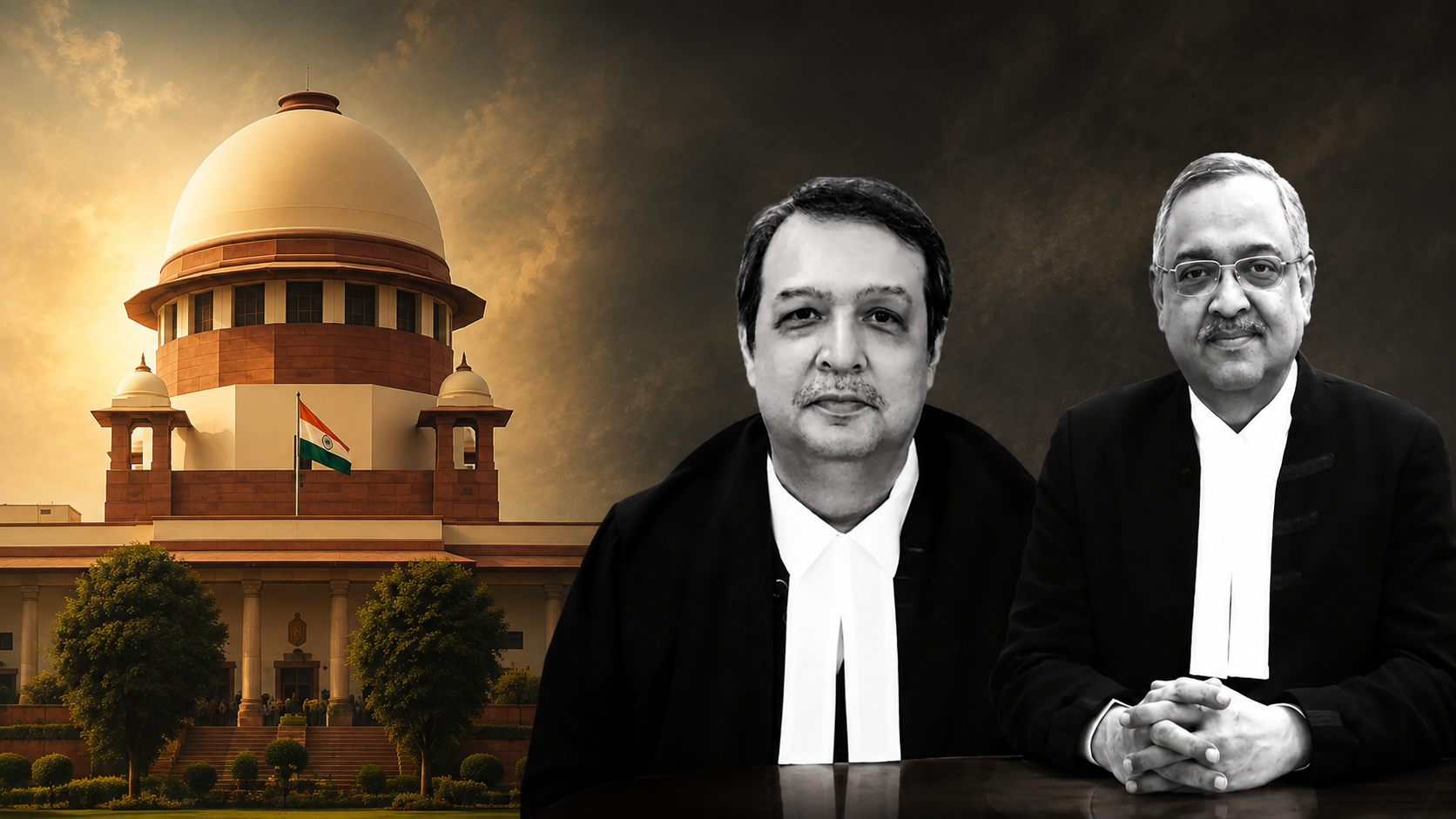
A Bench of Justice JB Pardiwala and Justice K. Vinod Chandran delivered the ruling in Basudev & Ors. v. Sanjay Kumar & Ors., 2026 INSC 831, on August 11, 2026.
The Court was considering whether two separate appeals are mandatory when a trial court disposes of both the original suit and a counterclaim through a common judgment, and whether separate decrees must necessarily be drawn up in such circumstances.
Supreme Court settles conflicting views
The Court noted that there had been a cleavage of opinion on whether two appeals were necessary when a suit and counterclaim were decided by a common judgment. It also observed that different States followed different practices regarding preparation of decrees—some drawing up two decrees while others preparing only one.
Examining Order VIII Rules 6A to 6D of the CPC, the Bench held that a counterclaim is treated as a cross-suit and is intended to be adjudicated along with the original suit through a common judgment. The Court emphasised that the scheme of the CPC is aimed at avoiding multiplicity and piecemeal adjudication.
The Supreme Court further held that Order XX Rule 19 CPC does not mandate two appeals, nor does it prohibit a single composite appeal against a common judgment dealing with the suit and counterclaim.
Composite appeal must contain separate grounds
The Court clarified that a composite appeal must separately set out the grounds challenging:
This requirement applies whether one decree or two decrees have been drawn up. The appeal must also be valued as two separate appeals, with the requisite court fees paid accordingly.
The Bench said this approach would prevent procedural technicalities from defeating adjudication on merits and would avoid unnecessary multiplicity of litigation.
Earlier appeal restored
In the case before it, the High Court had treated the single appeal filed by the defendants as incompetent on the reasoning that separate appeals were required. The Supreme Court set aside the orders of the High Court and the First Appellate Court and restored the first appeal.
The appellant was permitted to file a fresh memorandum containing separate grounds and pay the court fee applicable to the additional appeal.
Importantly, the Court clarified that in the present case, another appeal was being directed because one appeal had already been filed. Henceforth, however, a challenge to a common judgment disposing of a suit and counterclaim may be made through a composite appeal.

Representation:-
For Petitioner(s) : Mr. Jayant Bhushan, Sr. Adv. Mr. Vishal Mahajan, Adv. Mr. Anil Kumar, Adv. Amartya Bhushan, Adv. Yojit Mehra, Adv. Swantika Rajvansi, Adv. Mrs. Divya Kumari Sharma, Adv. Mr. Vinod Sharma, AOR Ms. Anu Priya, Adv.
For Respondent(s) :Mr. Sanjay R Hegde, Sr. Adv. Mr. Ankit Tiwari, Adv. Mr. Ashish Kumar, Adv. Mr. Tanay Hegde, Adv. Mr. Dinesh Jotwani, Adv. Ms. Shivalika Midha, Adv. Mr. Bhargav Baisoya, Adv., Mr. Rajat Sharma, Adv. Mr. Dhawesh Pahuja, AOR
Website designed, developed and maintained by webexy