
The Supreme Court has held that an amendment to a plaint cannot be rejected merely because it introduces additional facts and legal issues, provided the proposed amendment has a direct connection with the controversy already involved in the suit.
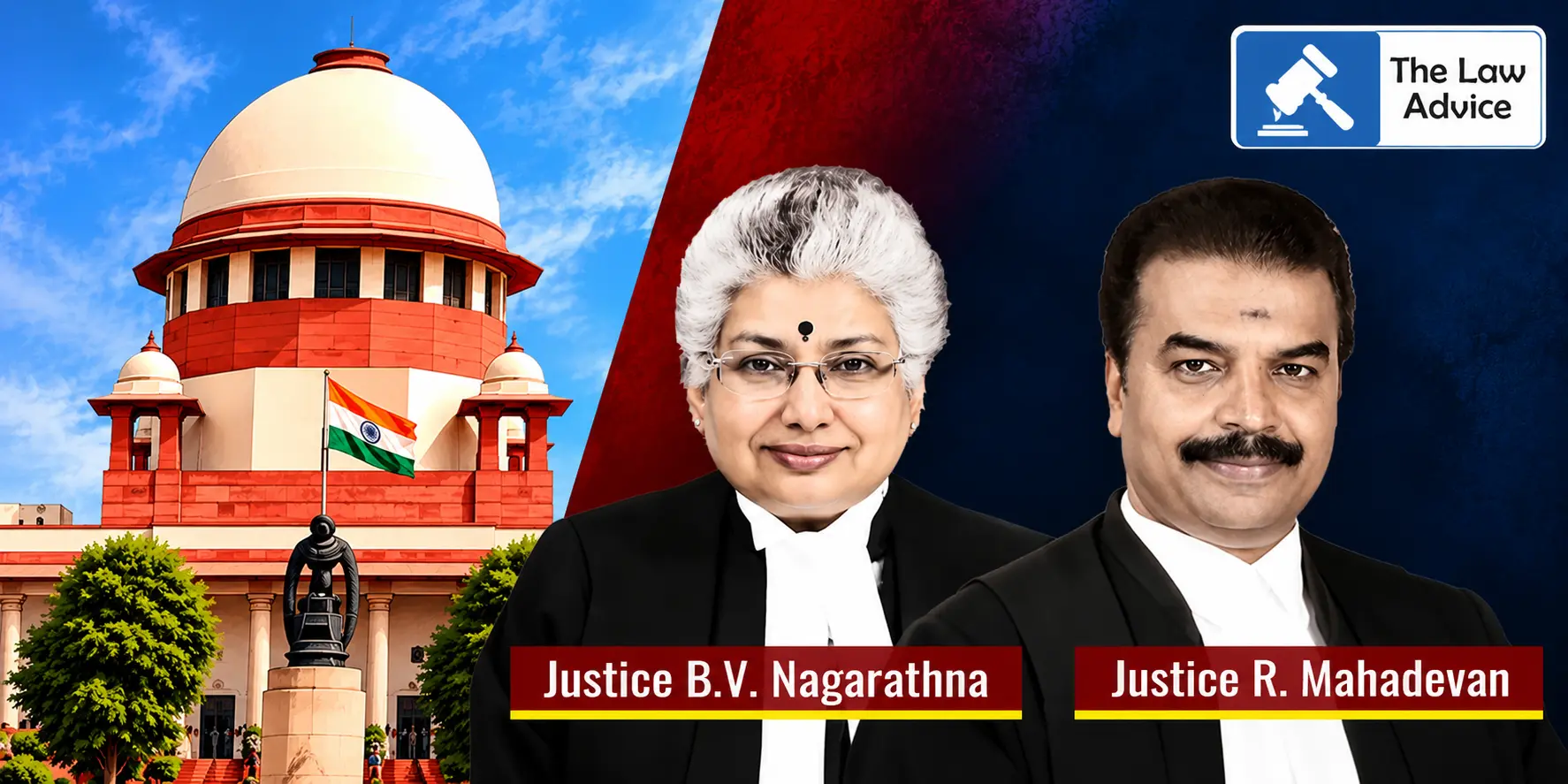
A Bench of Justice B.V. Nagarathna and Justice R. Mahadevan observed that courts must adopt a liberal approach while considering applications under Order VI Rule 17 of the Code of Civil Procedure (CPC). The primary consideration is whether the amendment introduces an entirely new and independent controversy or merely adds facts and consequential reliefs connected with the existing dispute. <Cite refs={["turn184564news0","turn184564search1"]}/>
The Court made these observations while allowing an appeal filed by the legal representatives of the original plaintiff in Haramani Sahoo and Others v. Lalita Nayak and Others, reported as 2026 LiveLaw (SC) 1041. The appeal challenged the rejection of an application seeking amendment of the plaint in a property dispute.
Background of the Case
The original plaintiff instituted a suit in 2009 seeking a declaration of title, possession and rectification of sale deeds relating to approximately 0.12 acres of land.
During the pendency of the proceedings, the plaintiff claimed to have discovered a compromise decree passed in a separate suit in 1998, under which a portion of the disputed property had allegedly been allotted to one of the defendants.
The plaintiff consequently sought to amend the plaint to bring the compromise decree on record and challenge its validity, contending that it affected the rights claimed in the pending property suit.
The trial court rejected the amendment application. The Orissa High Court also declined to interfere with that decision, following which the plaintiff's legal representatives approached the Supreme Court.
Supreme Court Examines Scope of Order VI Rule 17 CPC
The Supreme Court, in a judgment authored by Justice R. Mahadevan, held that the proposed amendment was directly connected with the existing controversy because it concerned a compromise decree allegedly affecting the same property over which the original plaintiff had asserted rights.
The Bench observed that an amendment may expand the factual and legal questions requiring adjudication, but such expansion does not, by itself, amount to a fundamental alteration of the nature and character of the suit.
The Court explained that the real inquiry is whether the proposed amendment introduces a distinct and independent controversy having no connection with the original cause of action, or whether it merely brings additional facts and consequential reliefs having a direct nexus with the existing dispute.
Finding that the proposed amendment fell within the latter category, the Court held that the amendment should be permitted so that the issues affecting the title and possession of the disputed property could be examined comprehensively. <Cite refs={["turn184564news0","turn184564search1"]}/>
Additional Written Statement Can Address Prejudice to Defendants
The Supreme Court also rejected the objection that the amendment would prejudice the defendants by requiring them to address additional factual and legal issues.
The Bench observed that such prejudice could be addressed by permitting the defendants to file an additional written statement and, where appropriate, by imposing costs.
It clarified that the mere requirement to respond to additional pleadings or issues is not, by itself, a sufficient ground to reject an amendment that is necessary for the complete and effective adjudication of the dispute.
Questions of Limitation and Maintainability Left Open
The Court clarified that allowing the amendment did not amount to accepting the plaintiff's averments or granting any substantive right in respect of the compromise decree.
All questions relating to the maintainability of the amended reliefs, limitation, the binding nature of the compromise decree, the applicability of Order XXIII Rule 3A CPC, title, possession and the merits of the respective claims were left open for determination by the trial court in accordance with law.
Thus, the permission to amend the plaint was procedural in nature and did not prejudge the merits of the plaintiff's claims.
Supreme Court Allows Appeal With Costs of ₹25,000
Accordingly, the Supreme Court allowed the appeal, subject to payment of costs of ₹25,000.
The plaintiff's legal representatives were directed to carry out the consequential amendments within four weeks of payment of costs. The respondents were permitted to file additional written statements within the timeline to be fixed by the trial court.
The ruling reiterates that the scope of an amendment application under Order VI Rule 17 CPC must be assessed by examining its connection with the existing dispute, rather than rejecting it merely because it introduces additional facts, reliefs or legal issues.
Case Details

Representation:-
Website designed, developed and maintained by webexy