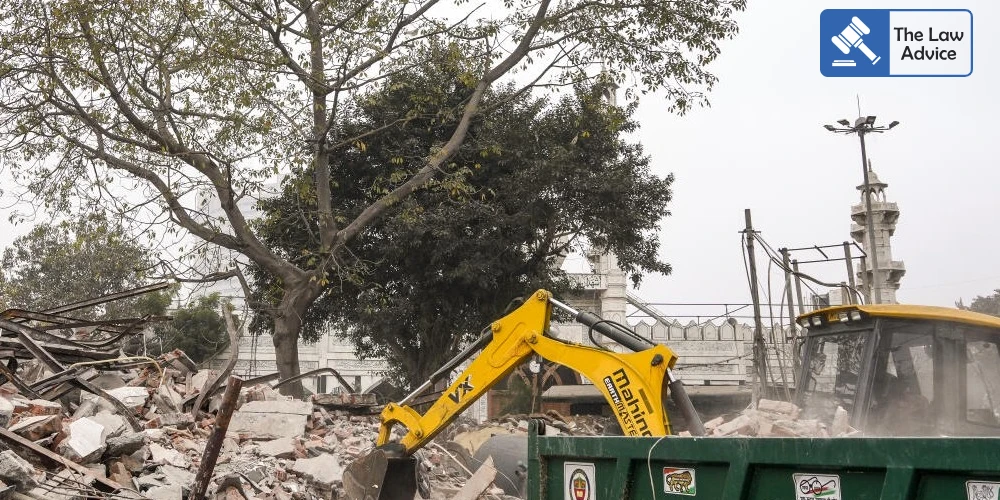
Rajasthan HC Rejects Pleas Against Demolition of Mosque Near India-Pak Border
The Rajasthan High Court on Monday dismissed a batch of petitions challenging the proposed demolition of mosques, madrasas and dargahs located within a 50-kilometre radius of the India-Pakistan border.
The bench of JusticeSameer Jain upheld the Union government's decision to strengthen and rationalise the territorial jurisdiction and operational powers of the Border Security Force (BSF), observing that the move reflects a proactive and carefully calibrated response to evolving security concerns.
Rejecting allegations that the proposed action targeted a particular religious community, the Court said the material on record showed that notices had been issued uniformly to all allegedly unauthorised structures, irrespective of religion.
“The issue at hand is one of national security and regulatory compliance, and not of religious discrimination,” the Court observed, adding that attempts to give the exercise a communal colour were "wholly misplaced" and lacked any factual basis.
The Bench noted that the structures in question appeared to have been constructed without obtaining the permissions required under the Rajasthan Religious Buildings and Places Act. It further observed that disputes relating to ownership, title, possession and land use remain contested and cannot be decided in proceedings under Article 226 of the Constitution.
The Court also pointed out that although show-cause notices had been served on the petitioners, they chose not to participate in the statutory proceedings. Having failed to avail themselves of that opportunity, they could not later invoke the writ jurisdiction on the ground that principles of natural justice had been violated.
Emphasising the significance of national security, Justice Jain remarked that procedural requirements cannot always override the need to protect the State.
“When the security of the State is at stake, the rigidity of procedure must yield to the imperative necessity of protection,” the Court said.
The High Court observed that the proximity of the disputed properties to the international border necessitates heightened vigilance and regulatory oversight. It held that in matters concerning national security, strict adherence to traditional principles of natural justice may not always be required, provided there is sufficient material justifying the action and adequate procedural safeguards have been followed.
Since the petitioners themselves had abstained from participating in the proceedings, the Court held that no prejudice had been caused to them and dismissed the writ petitions as not maintainable.
Recognising the security implications of the issue, the Court directed the constitution of a committee comprising the District Collector, Superintendent of Police and a representative of the BSF to examine sensitive properties situated along the border.
The committee has been authorised to order eviction, dispossession, demolition or any other appropriate action after considering the available material and the security requirements of each case.
The Court clarified that while principles of natural justice should not be completely excluded, their application may be suitably modified depending on the sensitivity of the matter, the perceived threat to national security and the larger public interest.
Senior Advocate Vikas Balia appeared for the petitioners, while Advocate General Rajendra Prasad and Additional Solicitor General Bharat Vyas represented the State government and the Union of India, respectively.
Case Title : Peer Mohammad Shah Jilani Dargah Samiti v. State of Rajasthan.
#Rajasthan High Court# India-Pakistan border# Border Security Force# BSF# demolition of mosques# demolition of madrasas# demolition of dargahs# national security# Justice Sameer Jain# religious structures# unauthorized construction# Rajasthan Religious Bui
Website designed, developed and maintained by webexy