
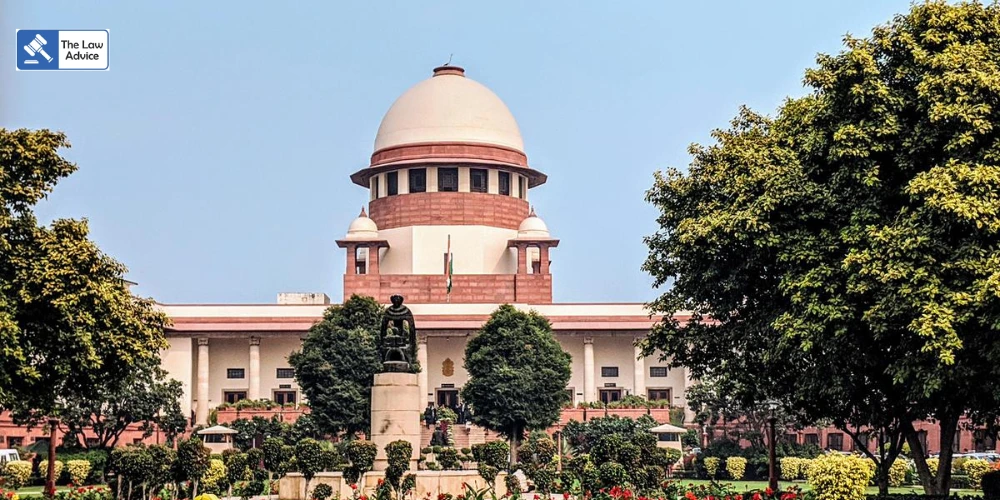
The Supreme Court has dismissed a secured creditor’s attempt to invoke the SARFAESI Act, 2002 against a borrower in Nagaland, holding that recovery proceedings initiated before the Act was formally made applicable in the State were without jurisdiction and legally unsustainable.
A Bench comprising Justice Dipankar Datta and Justice Aravind Kumar noted that the Appellant had issued a demand notice under Section 13(2) of the SARFAESI Act in 2011, whereas the Act was extended to Nagaland only in December 2021, following a notification issued by the Governor under Article 371A(1)(a)(iv) of the Constitution. Since the legislation was not in force in the State at the relevant time, the initiation of SARFAESI proceedings was held to be invalid.
The dispute stemmed from a loan sanctioned in 2001 to a Nagaland-based borrower for setting up a cold storage facility in Dimapur. Owing to constitutional restrictions on transfer of tribal land under Article 371A, a tripartite structure was adopted. The borrower mortgaged its property to the Village Council, which in turn executed a Deed of Guarantee in favour of the Appellant to secure repayment of the loan.
Upon default, the Appellant invoked the SARFAESI Act in 2011 and later took physical possession of the assets in 2019. These actions were challenged before the Gauhati High Court, which ruled against the Appellant on the ground that no valid security interest had been created in its favour, leading to the present appeal before the Supreme Court.
While taking note of the 2021 notification extending SARFAESI to Nagaland, the Court clarified that its decision did not rest solely on the issue of territorial applicability. It held that even otherwise, the Appellant lacked the authority to invoke SARFAESI since no security interest, as defined under the Act, had ever been created in its favour.
In a judgment authored by Justice Datta, the Court observed that the guarantee executed by the Village Council amounted only to a promise to repay the debt and did not constitute a security agreement under the SARFAESI framework. Since the mortgaged property stood in the name of the Village Council and not in favour of the Appellant, the Appellant could not be treated as a “secured creditor” under the Act.
Reiterating this position, the Court held that in the absence of a valid mortgage or security agreement creating a security interest in favour of the Appellant, the invocation of SARFAESI was erroneous and without jurisdiction. Consequently, there was no question of relegating the borrower to the Debts Recovery Tribunal under Section 17 of the SARFAESI Act.
The Court further clarified that under SARFAESI, creation of a mortgage or security interest is mandatory, whereas the arrangement in the present case fell short of statutory requirements. The Deed of Guarantee executed by the Village Council could not substitute a valid security agreement, particularly when the Act itself was not applicable in Nagaland at the time proceedings were initiated.
At the same time, the Court noted that the Appellant was not left remediless. It observed that recovery could have been pursued under the Recovery of Debts and Bankruptcy Act, 1993, which permits filing of applications for recovery of both secured and unsecured debts, unlike SARFAESI which requires enforcement of a security interest without court intervention.
Holding that the Appellant had wrongly invoked SARFAESI and that the High Court’s decision suffered from no infirmity, the Supreme Court dismissed the appeal.
Website designed, developed and maintained by webexy