
In a significant judgment reinforcing the constitutional right to personal liberty, the Supreme Court of India has awarded ₹11 lakh compensation to a Rajasthan convict who remained in jail for 24 days despite a judicial order directing his release on permanent parole.
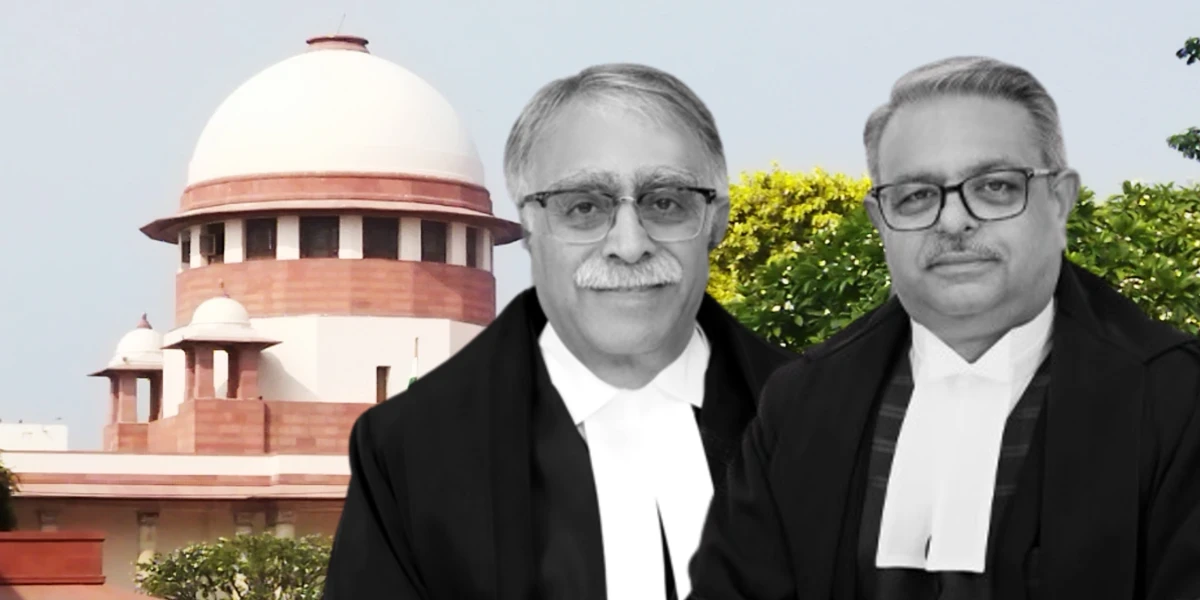
A Bench comprising Justice Sanjay Karol and Justice Augustine George Masih held that the State cannot deprive a person of liberty merely because it is considering whether to challenge a court order.
The appellant, Daudayal, had been convicted in a 1967 criminal case and sentenced to four years' rigorous imprisonment. After his conviction was affirmed in 2021, he was arrested and began serving his sentence.
In November 2024, the Rajasthan High Court granted him permanent parole and directed his release upon furnishing the required bonds and sureties. Although he complied with all conditions and the sureties were verified by November 13, 2024, he was not released from prison until December 6, 2024, after a Division Bench intervened through a habeas corpus petition.
Claiming that his continued incarceration for 24 days after the parole order amounted to illegal detention, he approached the Supreme Court seeking compensation.
The Court rejected the State's defence that it was contemplating challenging the parole order and therefore delayed its implementation.
Emphasizing the principle of "obey first, appeal later," the Court observed that a judicial order remains binding unless stayed, modified, or set aside by a higher court.
The Bench stated:
"Once the detenue has been ordered to be released, the same has to be followed no matter what. The only scenario in which it would not be so done was if a superior Court has granted stay in the matter."
The Court further noted that bureaucratic delays cannot be permitted to override an individual's fundamental right to liberty under Article 21 of the Constitution.
The judgment provides an important definition of illegal detention:
"The deprivation of liberty by the State without lawful authority or in violation of provisions of the Constitution is illegal detention."
The Court clarified that detention becomes illegal not only when there is no legal authority but also when authorities fail to comply with lawful court orders directing release.
Relying on landmark decisions such as Rudul Shah v. State of Bihar, Bhim Singh v. State of Jammu and Kashmir, and Nilabati Behera v. State of Orissa, the Court reiterated that monetary compensation is an established public law remedy for violations of fundamental rights.
The Bench observed:
"Just because a person had been convicted does not mean that his rights weigh less on the scales of justice."
Holding that the appellant suffered 24 days of illegal custody after his release order had become operational, the Supreme Court directed the State of Rajasthan to pay: ₹11,00,000 (Eleven Lakh Rupees) as compensation for the violation of his fundamental right to personal liberty.
Judicial orders must be obeyed unless stayed by a superior court.
Administrative delays cannot justify continued detention.
Convicts continue to enjoy constitutional protections under Article 21.
Illegal detention can attract monetary compensation under public law.
The Supreme Court reaffirmed that personal liberty remains a paramount constitutional value.
Case: Daudayal v. State of Rajasthan
Citation: 2026 INSC 599
Decision Date: 29 May 2026
Bench: Justice Sanjay Karol and Justice Augustine George Masih.
Representation: Tushar Bathija, Aishwarya Singh for Petitioner and Kshitij Mittal and S. Udaya Kumar Sagar, for Respondent State.

Website designed, developed and maintained by webexy