
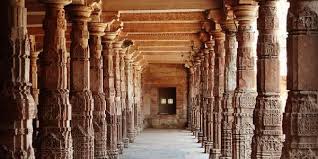
An appeal has been moved before the Supreme Court challenging the Madhya Pradesh High Court’s May 15 judgment declaring the Bhojshala-Kamal Maula Mosque complex in Dhar to be a Hindu temple.
The appeal has been filed by Qazi Moinuddin.
In its verdict delivered on May 15, the High Court held that the religious character of the disputed structure is that of a temple.
“The disputed area of Bhojshala complex and Kamal Maula Mosque is held to be a protected monument. The religious character of the disputed area of the Bhojshala complex and Kamal Maula Mosque is held to be Bhojshala with a temple of Goddess Saraswati,” the High Court observed.
A Division Bench of Justices Vijay Kumar Shukla and Alok Awasthi also set aside the 2003 order of the Archaeological Survey of India (ASI), which had permitted Muslims to offer prayers at the site.
The High Court further observed that members of the Muslim community may approach the State government for an alternative site for construction of a mosque.
Relying on historical records, archaeological material, and literary references, the Court concluded that the site functioned as a centre of Sanskrit learning and housed a temple dedicated to Goddess Saraswati.
The Bench stated that its findings were based on archaeological and historical evidence, while also taking guidance from principles laid down by the Supreme Court in the Ayodhya judgment.
The Court directed the Union government and the ASI to take a decision regarding the administration and management of the temple affairs, while clarifying that the ASI would continue to oversee the overall management of the protected monument.
On the plea seeking restoration of the idol of Goddess Saraswati, which was allegedly taken away to London during British rule, the High Court said the Union government may treat the request as a representation for consideration.
The judgment came on a batch of petitions seeking restoration of the Bhojshala complex to Hindus and a prohibition on the offering of namaz within the premises.
The petitions had challenged the ASI notification dated April 7, 2003, which permitted Muslims to offer namaz at the Bhojshala complex while allegedly restricting Hindu worship rights at the site.
One of the pleas, filed as a Public Interest Litigation by Hindu Front for Justice, stated that it sought enforcement of the Hindu community’s rights under Articles 25 and 29 of the Constitution, including the right to religion and protection of cultural heritage.
The petition also sought reinstallation of the idol of Goddess Saraswati (Vagdevi), said to have been established by King Bhoj in 1034 AD and later removed by the British after the structure was allegedly desecrated.
The petitioners further claimed that Muslims were allowed to offer prayers inside the complex based on assertions that the Kamal Maula Mosque had been constructed there during Muslim rule.
In 2024, the ASI, pursuant to directions issued by the High Court, conducted a survey of the site. In its report, the ASI stated that the existing structure appeared to have been built using components of earlier temples.
Before delivering its verdict, the High Court had also carried out a visit to the disputed site.
Website designed, developed and maintained by webexy