
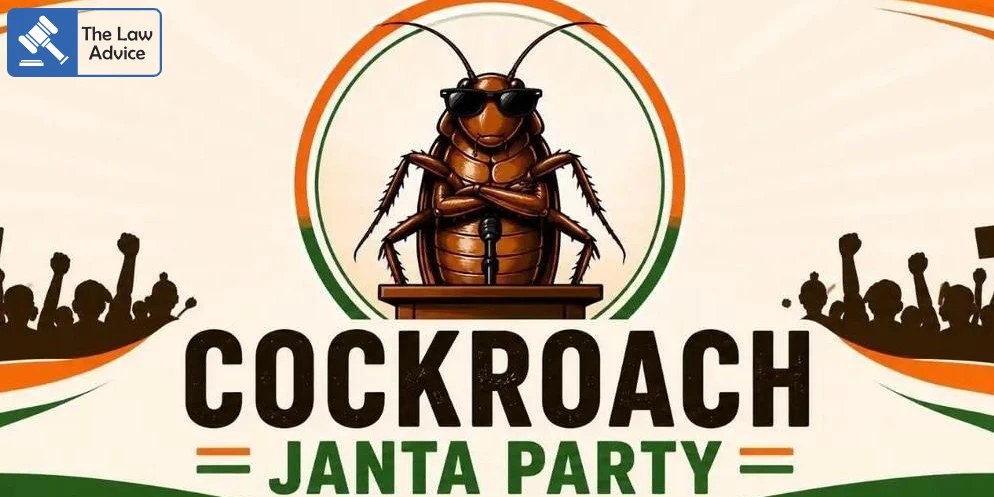
The Supreme Court on Monday declined to pass any urgent directions on a plea seeking intervention against the Cockroach Janta Party (CJP)’s proposed protest march in Delhi on September 5, observing that it could not presume a law-and-order situation would arise merely because a protest had been announced.
A Bench comprising Chief Justice of India Surya Kant, Justice Joymalya Bagchi and Justice V Mohana said it would, at this stage, presume that all those involved would conduct themselves peacefully and in accordance with the law.
“At least as of now, we will presume, and we have no reason to doubt, that everybody will act and behave in a very responsible manner and in a peaceful and lawful manner,” CJI Kant observed.
The Bench said there were presently no compelling circumstances to assume that the proposed demonstration would lead to any untoward incident.
The Court instead asked the applicant to approach the Central Government with his concerns regarding the anticipated law-and-order situation.
The CJP has announced a peaceful march from India Gate to Delhi Police Headquarters on September 5, alleging that the Union Government has failed to honour assurances given on July 25, particularly its commitment regarding the withdrawal of cases against protesters.
The political outfit had earlier withdrawn its agitation at Jantar Mantar over alleged examination paper leaks following assurances from the government.
Following the announcement of the September 5 march, retired Delhi Police officer Rajender Singh approached the Supreme Court seeking directions against holding protests in Lutyens’ Delhi without official permission.
The application has been listed for detailed hearing on September 10, along with other pending pleas concerning CJP protests.
Appearing for the applicant, advocate Rizwan argued that the proposed march could create law-and-order challenges, particularly as it coincides with the 18th BRICS Summit, which is expected to bring international dignitaries to Delhi.
The counsel referred to incidents during the AI Summit to argue that his concerns were based on past experience rather than mere speculation.
He suggested that the protest could instead be held after the BRICS Summit and that the organisers could seek the government's permission in the meantime.
“Considering BRICS, this is a sensitive area. I know sensitivity cannot be a deterrent for protest. In this present week, till the 13th, this is all the more sensitive. International media is here,” the counsel submitted.
The Bench said the application could also be placed before the Solicitor General for consideration.
The Supreme Court reiterated that the responsibility for maintaining law and order lies with the Union and Delhi Governments, along with the police authorities.
CJI Surya Kant observed that the police have the responsibility to determine what is permissible and what constitutes an unlawful activity.
The Bench also suggested that the matter could be placed before the High-Powered Committee recently constituted by the Supreme Court to examine issues arising from CJP protests.
“We are expecting them to act within that framework,” the Bench said, adding that both sides were expected to respect the law and conduct themselves accordingly.
The Court further observed that if an untoward or alarming situation actually develops, the applicant could approach it again, provided the issue falls within the Court's judicial domain.
Advocate Rizwan nevertheless pressed for an urgent hearing, suggesting that the opposite party could be asked to appear before the Court on September 3.
He also raised concerns over the absence of a specific address at which the CJP could be served notice.
The Bench, however, pointed out that there was no organised or identified group presently before it against whom directions could be issued.
CJI Kant ultimately reiterated that the applicant should first approach the Central Government with his concerns.
“We are not calling upon anyone who is not a party before us... permitting you to approach the Central Government. Please approach them. Let us see what is there,” the CJI said.
The application was filed through advocate Pulkit Agarwal.
Website designed, developed and maintained by webexy