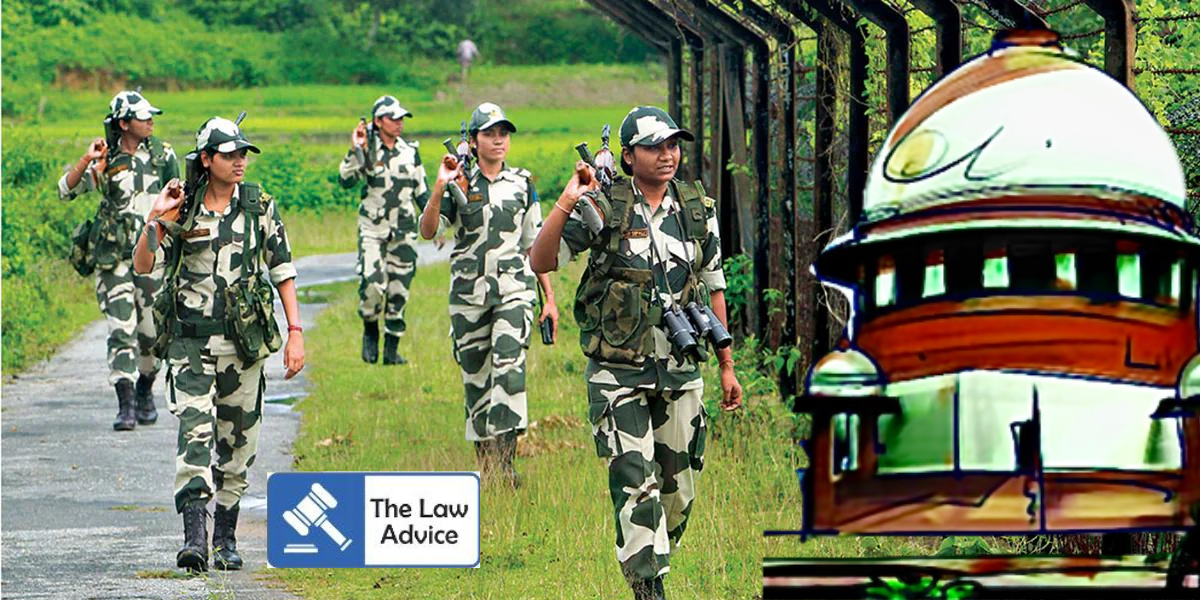
The Supreme Court of India recently dismissed a plea filed by a former Army personnel seeking disability pension, observing that the brain stroke suffered by him was attributable to smoking habits and not to his military service.
A Bench comprising Aravind Kumar and PB Varale held that compensation cannot be granted where the disability arises from factors within an individual’s own control.
The Supreme Court of India was hearing an appeal challenging the decision of the Armed Forces Tribunal, which had rejected the former Army personnel’s claim for disability pension.
Upholding the tribunal’s view, the apex court noted that it had rightly relied on the Pension Regulations for the Army and the Guide to Medical Officers to deny the claim.
"We find that Tribunal has taken note of Regulation 173 of Pension Regulations for the Army, 1961 and paragraph 6 of the Guide to Medical Officers, 2002 which would indicate that 'compensation cannot be awarded for any disablement or death arising from intemperance in the use of alcohol, ‘tobacco’ or drugs or sexually transmitted disease, as these are the matters within the member’s own control'," the Court said.
The appellant, Sarvesh Kumar, suffered a brain stroke and sought disability pension, contending that the condition was either attributable to his military service or had been aggravated by service-related conditions.
However, the Armed Forces Tribunal rejected his claim. Aggrieved by the decision, he approached the Supreme Court of India.
While examining the matter, the top court considered the first medical report as well as the opinions of the medical board and the medical review board, which recorded that the appellant was in the habit of smoking around ten bidis per day.
“In the instant case having perused the First Medical Report and the opinion of the Medical Board, it would leave no manner of doubt in us that the disease of “Stroke Ischemic RT MCA TERRITORY” was not attributable to service nor aggravated on account of service and we say so for the simple reason that in both the reports, it was clearly indicated that the appellant was in the habit of smoking bidis that too ten bidis per day," the Court said.
The Court noted that, as per medical science, an ischemic stroke occurs when a blood clot or fatty plaque obstructs an artery supplying blood to the brain, and observed that smoking is a well-recognised risk factor for such a condition.
Accordingly, the Supreme Court of India found no grounds to interfere with the decision of the Armed Forces Tribunal and dismissed the appeal.
Advocates Kaushal Yadav, Nandlal Kumar Mishra, Onkar Nath Sharma, Ritul Tandon, Naina Garg and Priyanka appeared for the appellant.
On behalf of the respondents, Satya Darshi Sanjay, Additional Solicitor General, was assisted by advocates Shubh Sharma, Shubham P. Mishra, Khushal Kolwar, Nikita Sethi, Divyam Aggarwal, Mukesh Kumar Maroria, Satya Jha, Sudhakar Kulwant, Praneet Pranav, Raman Yadav and Rekha Pandey.
Website designed, developed and maintained by webexy