
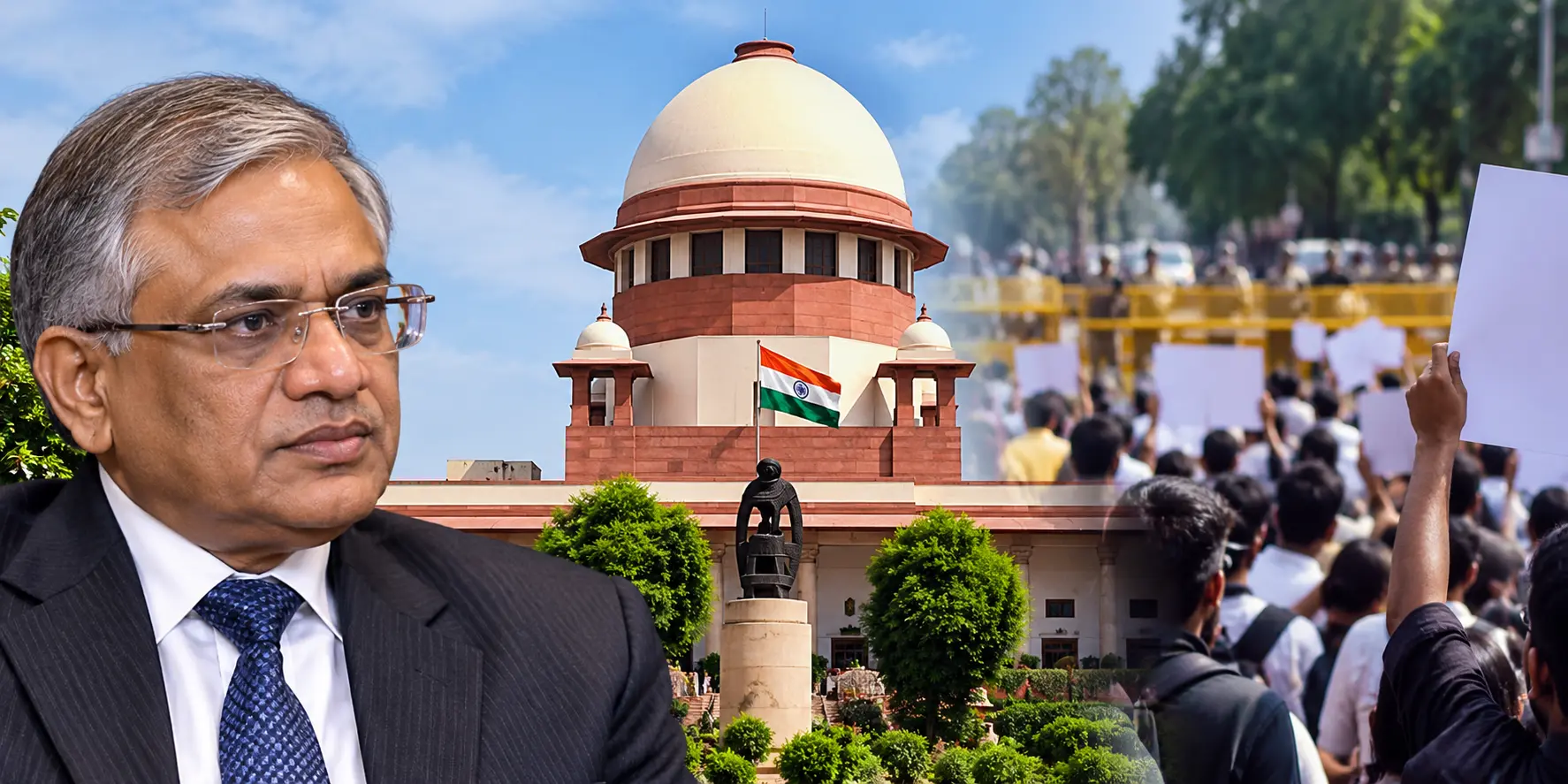
The Supreme Court on Tuesday adjourned to October 15 the petitions concerning protests in Delhi against Chief Election Commissioner (CEC) Gyanesh Kumar and the Election Commission of India's Special Intensive Revision (SIR) of electoral rolls. The matter was adjourned after Justice V. Mohana was reported to be unwell, with the parties expressing no objection to the postponement.
A Bench comprising Chief Justice of India Surya Kant, Justice Joymalya Bagchi and Justice V. Mohana was scheduled to hear the matter on October 13. Senior Advocates Gopal Sankaranarayanan, Menaka Guruswamy, Arundhati Katju, C.U. Singh, Nitya Ramakrishnan and Indira Jaising, along with Solicitor General Tushar Mehta, appeared in the proceedings.
During the hearing, the Court sought the presence of a senior Delhi Police officer to respond to allegations by women journalists that they were assaulted by police personnel while covering the protests. At the request of the Solicitor General, the Court also extended the deadline until October 15 for filing a compliance report concerning its earlier directions and responses to pending petitions.
Supreme Court's Earlier Directions on Protest Restrictions
The proceedings arise from petitions challenging restrictions imposed by the authorities ahead of protests held on October 10 against CEC Gyanesh Kumar and the Election Commission.
On October 9, the Supreme Court directed the authorities not to completely suspend train and Metro services in Delhi in anticipation of the protests. The Court had taken note of communications concerning the closure of 57 Metro stations and the cancellation of trains arriving at New Delhi and Hazrat Nizamuddin railway stations, observing that essential public transport could be regulated but should not be prohibited outright.
In a special sitting on October 11, the Court issued further directions concerning the treatment of peaceful protesters and access to public services. It directed that no person should be detained except in accordance with the procedure established by law, particularly in relation to peaceful and unarmed assemblies outside areas covered by prohibitory orders under Section 163 of the Bharatiya Nagarik Suraksha Sanhita (BNSS).
The Court also directed that Metro and rail services should function normally unless restrictions were necessary to address public-order concerns. It emphasised that free movement across the city should be permitted subject to traffic regulations and that lawyers, journalists and other professionals should not be obstructed from discharging their professional duties.
Additionally, the authorities were directed to review barricading arrangements and ensure that internet services remained undisturbed. The Court issued notices to the concerned authorities after finding a prima facie case of contempt and sought responses regarding compliance with its earlier directions.
Multiple Petitions Challenge Police Action
Several petitions have been filed before the Supreme Court concerning the police response to the protests. These include a contempt petition by Advocate Shailendra Mani Tripathi, a petition by Senior Advocate Menaka Guruswamy concerning the alleged detention of political leaders, and a plea by RJD Rajya Sabha MP Manoj Jha challenging the restrictions and alleged use of excessive force against protesters.
The petitions raise concerns regarding alleged illegal detention of protesters, advocates and political leaders, restrictions on public transport and mobile internet services, and the treatment of women protesters. The allegations remain subject to judicial consideration.
The Supreme Court Advocates-on-Record Association and the Supreme Court Bar Association have also approached the Court over the alleged detention and manhandling of lawyers during the protests, seeking accountability and an inquiry into the incidents.
Fresh Challenge to Immunity Granted to Election Commissioners
During Tuesday's proceedings, the Supreme Court also issued notice on a fresh petition filed by the Association for Democratic Reforms challenging Section 16 of the Chief Election Commissioner and Other Election Commissioners Act, 2023. The provision grants immunity to the Chief Election Commissioner and other Election Commissioners in respect of acts done in the discharge of their official duties.
The Delhi protest-related petitions are now scheduled to be taken up on October 15, when the Court is expected to consider the pending responses and compliance reports.
Website designed, developed and maintained by webexy