
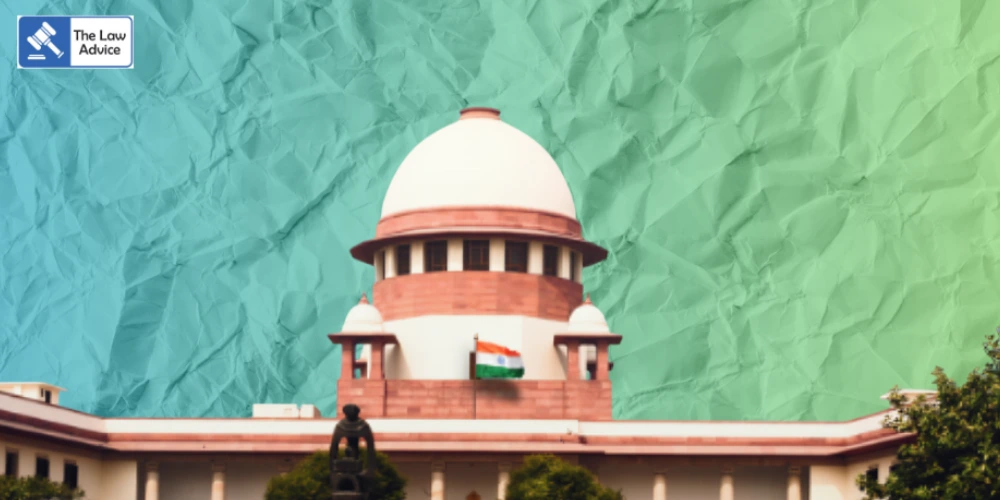
The Supreme Court on Thursday (December 11) refused to stay the 20-year imprisonment imposed on former IPS officer Sanjiv Bhatt in the 1996 drug planting case, declining to grant him suspension of sentence.
The matter came up before a Bench of Justices JK Maheshwari and Vijay Bishnoi. Appearing for Bhatt, Senior Advocate Kapil Sibal opened arguments by pointing out that Bhatt has already served 7 years and 3 months of his sentence. The Bench, however, remarked that Bhatt could pursue an early final hearing instead.
“Why should I? I have already undergone more than half the sentence,” Sibal responded. Justice Maheshwari noted that the alleged quantity of narcotics was substantial—5 kg. Contesting this, Sibal argued that the prosecution’s case on the 5-kg quantity had not been proved, adding that Bhatt’s conviction related only to possession of 1.015 kg of opium. Since this was below the threshold for commercial quantity, he submitted that Section 21(c) of the NDPS Act was wrongly invoked.
Opposing the plea, Senior Advocate Maninder Singh, appearing for the State of Gujarat, called the facts “gross.” He submitted that Bhatt, then a District Superintendent of Police, orchestrated a conspiracy to procure opium, plant it in a guest house, and frame a lawyer. “Final recovery was 1.015 kg, but I will show 4 other kilograms. Commercial quantity for an opium derivative is 250 grams. The seized quantity is over 1 kg—that is why the 20-year sentence,” he argued.
Finding no reason to interfere, the Bench dismissed Bhatt’s application. As the order was pronounced, Sibal remarked, “That means I will be inside now for 3 more years.”
Earlier, Bhatt had approached the Gujarat High Court for suspension of sentence and bail, but the High Court rejected his plea, citing the seriousness of the offence, the rigours of Section 37 of the NDPS Act, and the presumption against the accused post-conviction.
Bhatt was arrested in September 2018 after the Gujarat High Court directed the CID to investigate allegations that Banaskantha police officers had falsely implicated Rajasthan-based lawyer Sumer Singh Rajpurohit by claiming to have recovered 1.5 kg of opium from a Palanpur hotel room in 1996. During that period, Bhatt served as the District Superintendent of Police, while local crime branch inspector IB Vyas was a co-accused.
In 2021, Vyas turned approver. According to the prosecution, Bhatt and others conspired to frame Rajpurohit under the NDPS Act.
In March 2024, a Sessions Court in Palanpur convicted Bhatt and sentenced him to 20 years’ imprisonment under Sections 21(c) and 27A of the NDPS Act—relating to possession of commercial quantities and financing illicit trafficking. He was also fined Rs. 2 lakh. Additionally, the Court found him guilty under NDPS Sections 29, 58(1) & (2), along with IPC Sections 465, 471, 167, 204, 343, 120B, and 34.
Bhatt is already serving a life sentence in a 1990 custodial death case. Earlier this year, the Supreme Court had rejected his request to suspend the sentence in that matter as well.
The SLP in the present case has been filed through Advocates Rajesh G. Inamdar and Shashwat Anand.
Case Title: SANJEEVKUMAR RAJENDRABHAI BHATT (IPS) v. STATE OF GUJARAT, SLP (Crl.) No. 15846/2025
Website designed, developed and maintained by webexy