
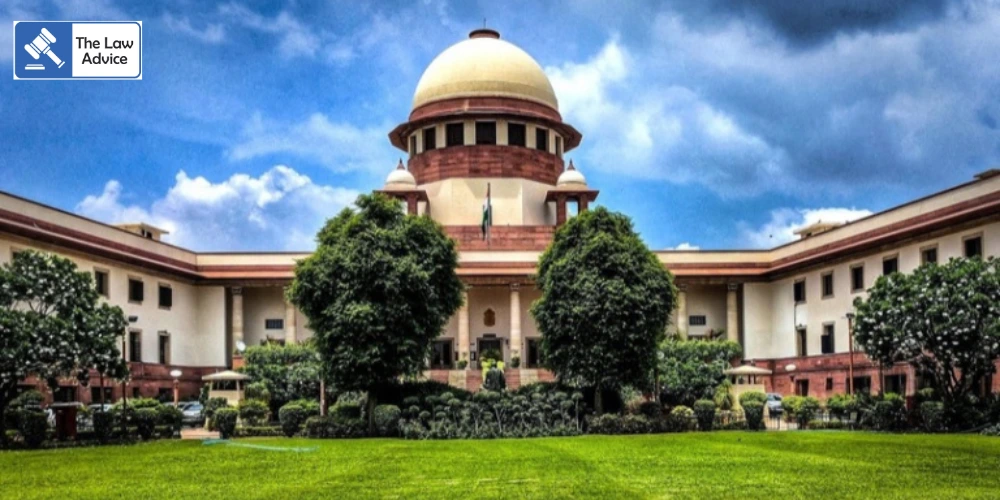
The Supreme Court on Monday expressed strong concern over instances of people being singled out on the basis of cultural and racial differences. The Court referred to a recent incident in New Delhi where a man from Kerala was mocked for wearing a lungi, and observed that discrimination against individuals, particularly those from the Northeast, remains a serious issue.
The bench of Justice Sanjay Kumar and Justice Alok Aradhe was hearing a 2015 writ petition filed under Article 32 seeking directions to ensure protection and safety of persons from the Northeastern states residing across the country. The petition seeks comprehensive guidelines to prevent racial harassment. The hearing proceeded on the basis of a status report submitted by the Union Government.
During the hearing, Advocate Gaichangpou Gangmei informed the Court that racial attacks and exclusion of Northeastern individuals continue to be reported. Additional Solicitor General KM Nataraj, appearing for the Union, submitted that a Monitoring Committee is already functioning to deal with these concerns and that the issues raised stand substantially addressed.
Justice Kumar noted a recent news report of a person being ridiculed in Delhi for wearing traditional attire and stated that such conduct cannot be tolerated in a diverse country. Addressing the ASG, he remarked, “You should be more concerned. We are one country.”
The petition has led to several orders over the years. In 2023, the Union was directed to submit an updated status report regarding the Monitoring Committee constituted pursuant to Karma Dorjee & Ors. v. Union of India, filed in 2014 on similar issues. The Committee was tasked with addressing grievances of Northeastern citizens and reviewing recommendations of the earlier Bezbaruah Committee of 2014.
According to the latest status report, the Monitoring Committee has met 14 times, most recently on July 9. Measures noted include empanelment of legal aid advocates by the Delhi State Legal Services Authority, establishment of a Special Police Unit for Northeastern residents, and the creation of a dedicated portal for filing complaints related to racial discrimination. The report also states that recent criminal law reforms under BNS provide adequate provisions against hate speech and hate crimes.
The petitioners, however, pointed out that the Committee has met only 14 times in nine years, though it is expected to meet quarterly. The Court directed the petitioner to file a response to the status report.
Case Title: Alana Golmei v. Union of India, W.P. (C) No. 53/2015
Website designed, developed and maintained by webexy