
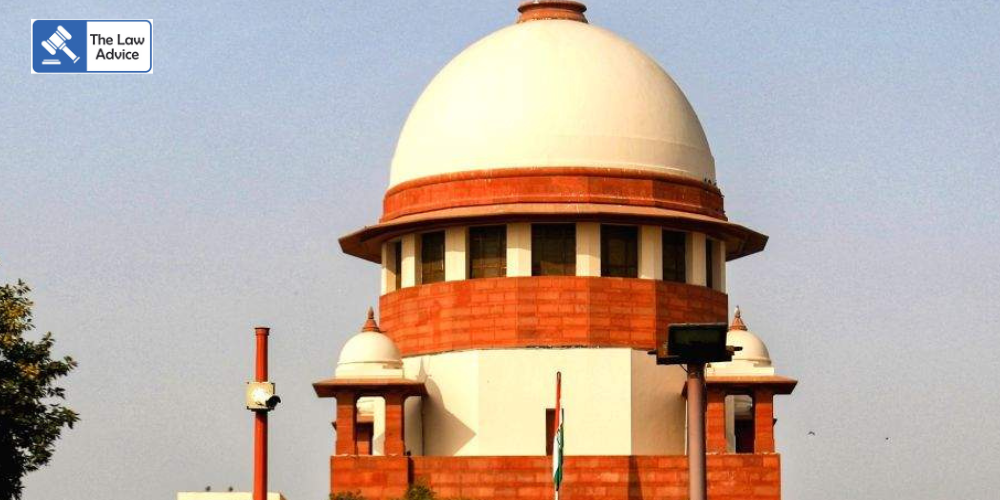
The Supreme Court on Tuesday (December 16) issued notice in a petition filed by the Kerala Private Hospitals Association questioning the constitutional validity of certain provisions of the Kerala Clinical Establishments (Registration and Regulation) Act, 2018, along with the Rules framed under it. The Court also directed that no coercive action shall be taken against the petitioners until the next date of hearing.
The challenge is directed, inter alia, against Section 39 of the Act, which requires every clinical establishment to display the fee rate and package rate for all services offered. The petitioners have argued that the Act fails to define key terms such as “fee rate” and “package rate,” rendering the provision vague, arbitrary and susceptible to subjective enforcement by regulatory authorities.
The plea has been filed against a judgment of the Kerala High Court which upheld the validity of the Act and issued further directions, including that hospitals cannot refuse life-saving treatment on the ground of non-payment of advance or absence of documents. The High Court had also directed all clinical establishments to file an undertaking of compliance within 30 days, followed by audits, making it clear that regulatory action would follow in case of non-compliance.
The matter was heard by a Bench comprising Justice Vikram Nath and Justice Sandeep Mehta. Senior Advocate Gopal Sankaranarayanan, assisted by Advocate-on-Record Zulfikar Ali PS, appeared for the petitioners. He took the Court through the impugned provisions and clarified that the hospitals had no objection to the obligation of providing emergency and life-saving treatment. However, he pointed out that the period for provisional registration had already expired and that hospitals were now required to seek permanent registration under Section 19 of the Act, which entails full compliance with all statutory requirements. He urged the Court to continue the interim protection earlier granted by the High Court against coercive measures.
The Bench sought assistance from Solicitor General Tushar Mehta. Opposing interim relief, Advocate Siddharth Gupta, appearing for a human rights organisation, submitted that the operation of the Act should not be stayed and contended that the petitioners had, for nearly seven years, stalled the effective implementation of the legislation.
After hearing all sides, the Supreme Court issued notice, returnable on February 3, 2026. Taking note that similar interim protection had earlier been granted by the Kerala High Court, the Court directed that members of the petitioners’ association shall continue the process of seeking permanent registration under Section 19 of the Act. It further ordered that no coercive steps be taken against them in the meantime.
“Considering the facts, we clarify that members of the petitioners will continue with the exercise of getting themselves registered under Section 19, and the respondent should not take coercive measures in the meantime. Interim order is limited till 3 February,” the Bench recorded.
The medical associations had initially approached the Kerala High Court. In June, a single judge dismissed the challenge, noting that in an earlier decision in Sabu P. Joseph (Adv.) v. State of Kerala & Ors. (2021), a Division Bench had already directed private hospitals to display service rates and fees in accordance with Section 39 of the Act. This was subsequently affirmed by another Division Bench, which also laid down guidelines such as prohibiting denial of life-saving treatment for non-payment of advance or lack of documents, mandating filing of compliance undertakings within 30 days, and prescribing audits within 60 days and at regular intervals thereafter. It was clarified that failure to comply would attract regulatory consequences.
The Special Leave Petition before the Supreme Court challenges the constitutional validity of key provisions, including Sections 16, 39 and 47 of the Act. With respect to Section 39, the petitioners contend that the absence of definitions for expressions like “fee rate,” “package rate,” and “type of service” makes the provision unworkable and open to arbitrary application. They argue that medical treatment varies from patient to patient, making the obligation to pre-display exhaustive pricing structures commercially oppressive and practically impossible.
The petitioners have also submitted that the High Court failed to consider material showing that government health schemes such as MEDISEP and CGHS themselves list nearly 2,000 procedures each, highlighting the impracticality of comprehensive rate disclosure. According to them, the law imposes unreasonable restrictions on the right to practise a profession under Article 19(1)(g) of the Constitution and exposes hospitals, particularly smaller establishments, to regulatory harassment.
A further challenge has been raised to Section 47 of the Act, which mandates all clinical establishments to provide life-saving treatment and ensure safe transportation of patients in emergencies. The petitioners argue that the provision applies uniformly to all establishments, irrespective of their size, infrastructure or capacity, thereby equating large tertiary hospitals with single-doctor clinics. They contend that the High Court effectively rewrote the statute by reading a tiered framework into it through executive notifications, instead of testing its constitutional validity.
The plea also raises concerns relating to informational privacy, objecting to Rules and prescribed forms that require disclosure of detailed personal information of doctors, nurses and other staff, including qualifications and registration numbers, to be uploaded and periodically updated on government portals. The petitioners argue that such data collection lacks clear statutory backing, violates the right to privacy recognised in the Puttaswamy judgment, and compromises competitive confidentiality in the healthcare sector.
Case Details: Kerala Private Hospitals Association v. State of Kerala | SLP (C) No. 36014/2025 | Diary No. 70111/2025
Website designed, developed and maintained by webexy