
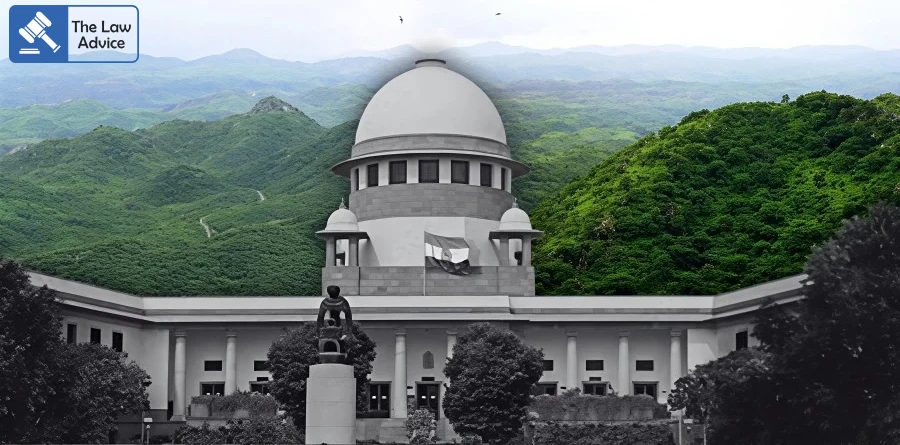
The Supreme Court of India on Thursday asked the Centre to suggest names of environmental and forest experts for inclusion in a committee to re-examine the contentious definition of the Aravalli Hills.
The Court also extended its interim stay on mining activities in the Aravalli region.
A Bench comprising Chief Justice of India Surya Kant, Justice Joymalya Bagchi and Justice Vipul M Pancholi was hearing a suo motu case concerning the definition and demarcation of the Aravalli range.
Seeking assistance to constitute an expert body, the Bench requested the government to propose a panel of domain specialists along with their profiles. Senior counsel were also invited to suggest eminent experts in environmental and forest-related disciplines so that the preliminary issues could be examined in a phased and structured manner.
While acknowledging the ground-level impact of its earlier directions on licensed mining operations, the Court declined to lift the existing stay. It observed that although mining activities had come to a halt, the status quo would need to continue until key preliminary questions were addressed.
The matter has been posted for further hearing on the constitution of the expert committee. Senior Advocate K Parameshwar, appearing as amicus curiae, submitted his report during the hearing.
In a lighter exchange, the CJI remarked on the historical expanse of the Aravalli range, noting that even the Supreme Court building could fall within it, to which the amicus responded that the range “starts from Rashtrapati Bhavan.”
The proceedings arise from the Court’s November 20, 2025 judgment delivered by a Bench led by former CJI B R Gavai, which had accepted an elevation-based definition of the Aravalli Hills and Range for regulating mining. While the judgment prohibited mining in core or inviolate areas, it stopped short of imposing a complete ban, citing concerns over illegal mining.
That definition triggered widespread criticism and protests, with apprehensions that a large portion of the Aravalli region would fall outside environmental protection. In response, a Bench led by CJI Surya Kant on December 29, 2025 stayed the earlier judgment and kept the committee’s recommendations in abeyance, noting that an independent expert assessment might be necessary to evaluate the ecological implications.
The interim stay imposed on December 29, 2025 continues to remain in force.
Website designed, developed and maintained by webexy