
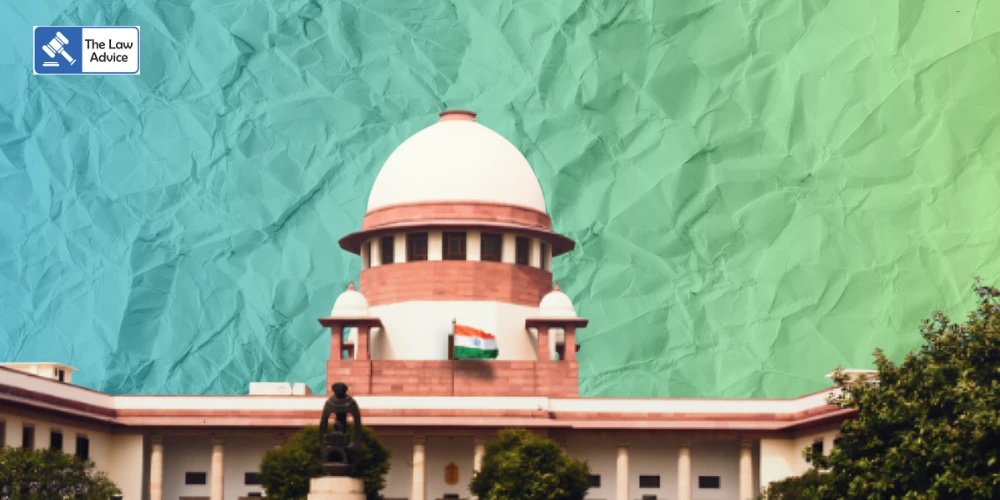
The Supreme Court on Monday (December 15) strongly disapproved of the practice of permitting affluent devotees to perform “special pujas” in temples by paying large sums, especially during the deity’s designated resting hours.
A Bench comprising Chief Justice of India Surya Kant, Justice Joymalya Bagchi and Justice Vipul Pancholi was hearing a writ petition concerning the Banke Bihari Temple at Vrindavan. The plea primarily challenged changes made to the temple’s darshan timings and the alleged discontinuation of certain essential religious practices, including Dehri Pooja. Earlier in August, the Court had placed the temple’s administration under the supervision of a High-Powered Committee constituted by the Supreme Court.
Senior Advocate Shyam Divan, appearing for the petitioners (temple sewayats), objected to the alteration in darshan timings. He argued that these timings were deeply rooted in long-standing traditions and rituals. “The hours during which the temple remains open to devotees are part of an age-old tradition,” he submitted.
Divan further contended that historically, the temple followed rigid schedules. He stated that any change in darshan timings had a cascading effect on internal rituals, including the times at which the deity awakens in the morning and retires for rest at night.
At this juncture, CJI Surya Kant made a broader observation, stating that after the temple closes at noon, the deity is often not allowed to rest even momentarily. “The deity is exploited in every possible manner. So-called affluent devotees, who can afford to pay hefty amounts, are permitted to perform special pujas,” the CJI remarked.
Responding to this, Divan agreed with the concern and submitted that such practices, if happening, should be expressly prohibited. He emphasised that the resting period of the deity is extremely significant and sacrosanct. “Your Lordships have raised a crucial issue. The prescribed timings must be strictly adhered to,” he said.
The CJI further observed that it is during these closed hours that practices such as paid special pujas are carried out for those who can afford them. However, Divan clarified that no such complaint had been raised in the present case. He added that while the Court’s apprehension was valid, it could be addressed independently.
Reiterating that the petition was limited to the issue of altered puja timings, Divan argued that puja schedules cannot be treated as mere administrative matters, as they are intrinsically linked to religious traditions. He fully supported the Court’s view that no privileged darshan or puja should be permitted during the deity’s resting hours.
After considering the submissions, the Bench directed that notice be issued to the High-Powered Committee and listed the matter for further hearing in the first week of January.
In August, the Supreme Court had constituted a High-Powered Committee headed by Justice Ashok Kumar, former Judge of the Allahabad High Court, to supervise and manage the daily functioning of the Bankey Bihari Ji Maharaj Temple at Vrindavan, Mathura, Uttar Pradesh.
This Committee was formed after the Court stayed the operation of the committee established under the Uttar Pradesh Shri Bankey Bihari Ji Temple Trust Ordinance, 2025. The challenge to the constitutional validity of the Ordinance was left to be decided by the Allahabad High Court. Until then, the Supreme Court-appointed High-Powered Committee will continue to manage the temple affairs.
The petitioners in the present case are the Management Committee of Thakur Shree Bankey Bihari Ji Maharaj Temple, represented through Gopesh Goswami from Shayan Bhog Seva and Rajat Goswami. The petition was filed through Advocate-on-Record Tanvi Dubey.
Case Title:
Management Committee of Thakur Shree Bankey Bihari Ji Maharaj Temple & Anr. v. Shree Bankey Bihari Ji Mandir High Powered Management Committee & Ors.
W.P.(C) No. 1228/2025
Website designed, developed and maintained by webexy