
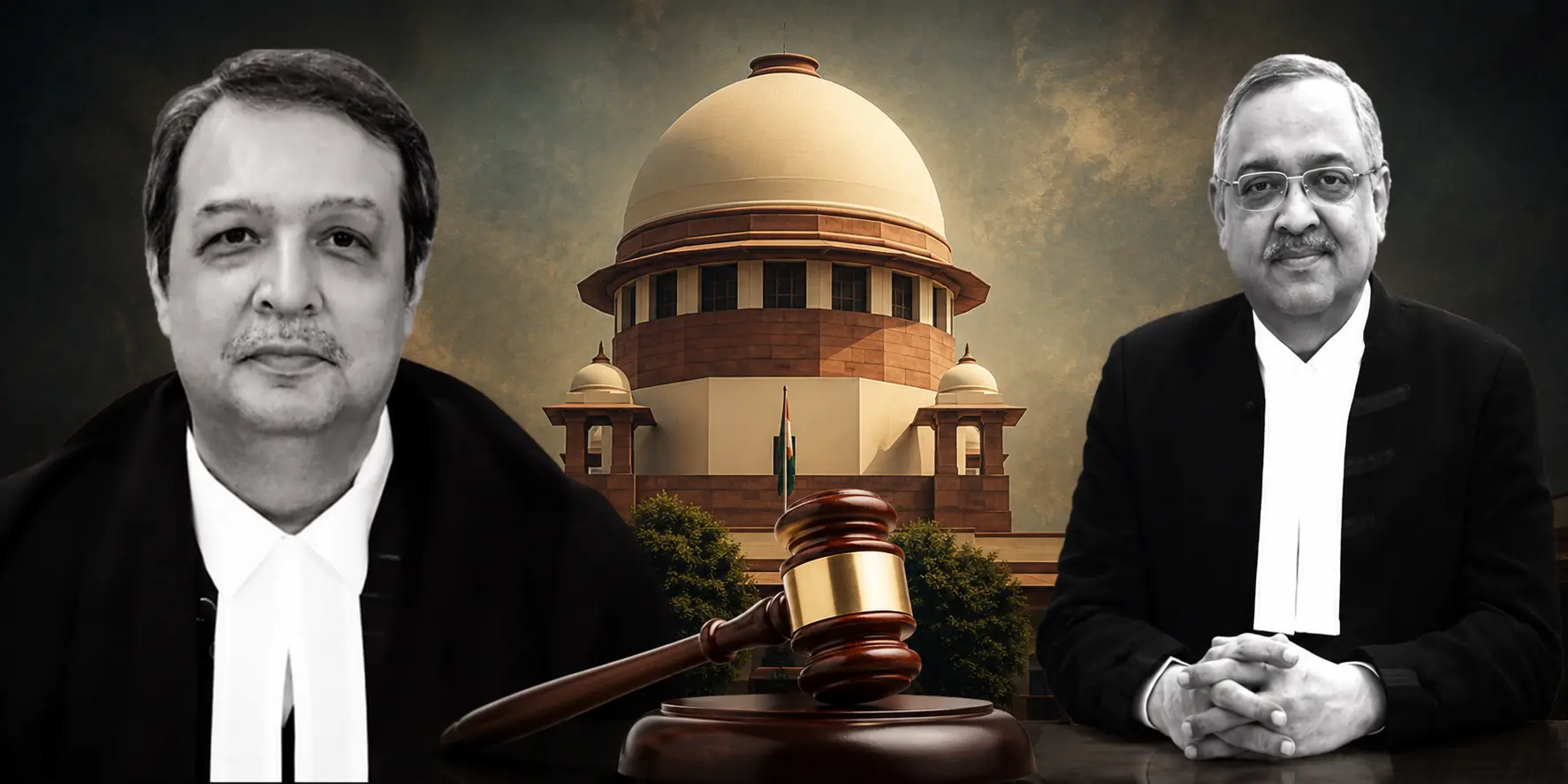
The Supreme Court of India delivered a significant judgment in Srinivasa Reddy Velagala v. Sravanthi Infratech Pvt. Ltd. on August 12, 2026, allowing Civil Appeal No. 876 of 2021 and setting aside concurrent rulings by the NCLAT and NCLT. The dispute originated from an Engineering, Procurement, and Construction (EPC) contract awarded in December 2010 to set up a 225 MW gas-based combined cycle power station in Andhra Pradesh. After work was suspended in July 2011 due to non-payment of milestone advances, the operational creditor issued legal notices between 2014 and 2015 and eventually filed a Section 9 insolvency application under the IBC in October 2018, which was admitted by the tribunals.
Upon reviewing the matter, the Bench of Justice J.B. Pardiwala and Justice Manoj Misra ruled that the insolvency application was clearly time-barred. The Court clarified that while the EPC contract technically continued to subsist because neither party formally exercised the contractual termination clauses, this subsistence did not grant a "continuing cause of action" for statutory defaults under the IBC. Reaffirming the principle that the IBC cannot be utilized to revive time-barred claims, the Court noted that the default occurred over three years prior to the application, and the unresponded legal notices sent by the respondent could not unilaterally reset the limitation period under Section 18 of the Limitation Act without a written acknowledgment of liability from the corporate debtor. Furthermore, while milestone payments qualified as "operational debt," claims for suspension and demobilization charges constituted unliquidated damages that required prior adjudication. Consequently, the Supreme Court set aside the admission of the insolvency application while granting the respondent liberty to pursue its claims in the appropriate alternative dispute resolution forum outlined in the EPC contract.
Key Highlights of the Judgment
Background and Factual Matrix
1. The Contract: On December 24, 2010, the appellant issued a Letter of Award (LOA) worth Rs. 827 crore to the respondent for setting up a 225 MW gas-based combined cycle power station in Andhra Pradesh, followed by an EPC agreement dated February 9, 2011.
2. Suspension of Works: Following non-payment of initial advances and milestone dues, the respondent suspended work on July 30, 2011. Although neither party formally invoked the termination clauses, the project remained stalled.
3. Litigation Path: After sending legal notices between 2014 and 2015, the respondent issued a statutory demand notice under Section 8 of the IBC on July 2, 2018, followed by a Section 9 application on October 12, 2018. The NCLT admitted the application on December 13, 2019, and the NCLAT dismissed the corporate debtor's appeal on February 1, 2021.
The Supreme Court allowed the appeal, setting aside both the NCLAT and NCLT orders. However, considering the unique facts of the litigation, the Court granted liberty to the respondent to approach the appropriate alternative dispute resolution forum stipulated under the EPC contract to pursue its substantive claims.

Representation:-
For Appellant(s):- Mr. Shyam Divan, Sr. Adv. Mr. Shoeb Alam, Sr. Adv. Mr. Shashank Manish, AOR Ms. Nidhi Sahay, Adv. Mr. Rongon Choudhuri, Adv.
For Respondent(s):- Mr. Nitin Bhardwaj, AOR Mr. Akash Mehta, Adv. Mr. Sachit Sahijpal, Adv.
Website designed, developed and maintained by webexy