
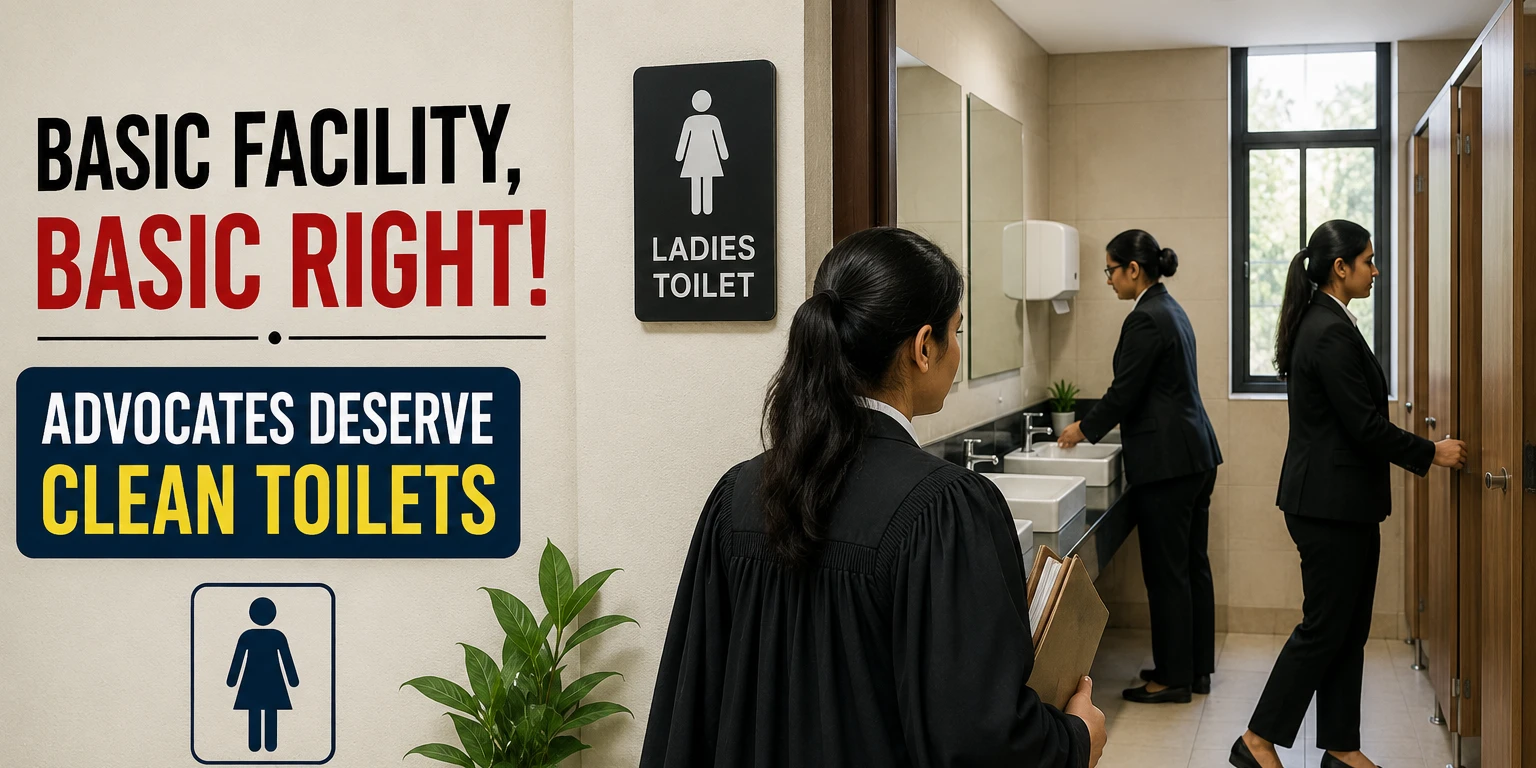
In a significant move aimed at improving basic infrastructure in courts across the country, the Supreme Court on Friday observed that States and Union Territories could impose an additional excise duty on liquor and cigarettes to generate funds for the construction and maintenance of washroom facilities in courts.
A Bench comprising Chief Justice of India Surya Kant, Justice Joymalya Bagchi and Justice V. Mohana was hearing a petition filed by a group of women advocates highlighting the absence of ladies’ bar rooms and adequate sanitation facilities in several courts across India.
Expressing concern over the condition of women lawyers, the Bench remarked that lack of funds or revenue deficit could never be a valid excuse for denying access to basic sanitation, which it described as a fundamental human right. The Court observed that if necessary, governments could levy additional taxes on liquor or cigarettes to raise resources for such facilities, adding that such a measure would receive judicial support.
The Court directed all State Advocate Generals to undertake a fact-finding exercise within two weeks regarding the availability of washrooms for women advocates in High Courts, district courts and taluka courts. Based on the findings, they have been instructed to submit proposals to their respective State governments to ensure the provision of adequate water and sanitation facilities.
Further, the Court directed the Public Works Departments (PWDs) of all States and Union Territories to commence construction work within four weeks of receiving the reports from the Advocate Generals wherever deficiencies are found. All States and Union Territories have also been asked to file status reports before the Supreme Court within six weeks.
During the hearing, Senior Advocate Monika Gusain informed the Court that several taluka courts, particularly in Karnataka and other parts of the country, lacked separate washroom facilities for women. Taking serious note of the issue, Chief Justice Surya Kant remarked that women lawyers, including young professionals and senior members of the Bar, were being forced to work in poor conditions.
The Court specifically directed the Karnataka Advocate General to obtain an immediate report on the status of washroom facilities in taluka courts across the State and to coordinate with the PWD for prompt construction through special budgetary allocations. “Become an example now,” the Chief Justice observed.
Attorney General R. Venkataramani also informed the Bench that he intended to convene a meeting of all Advocate Generals and standing counsel representing States and Union Territories to assess the availability of sanitation facilities and discuss possible funding mechanisms. The Supreme Court welcomed the proposal and requested that the meeting be held at the earliest.
The order is expected to trigger a nationwide review of court infrastructure and could lead to significant improvements in sanitation facilities for women lawyers and litigants across the country.
Website designed, developed and maintained by webexy