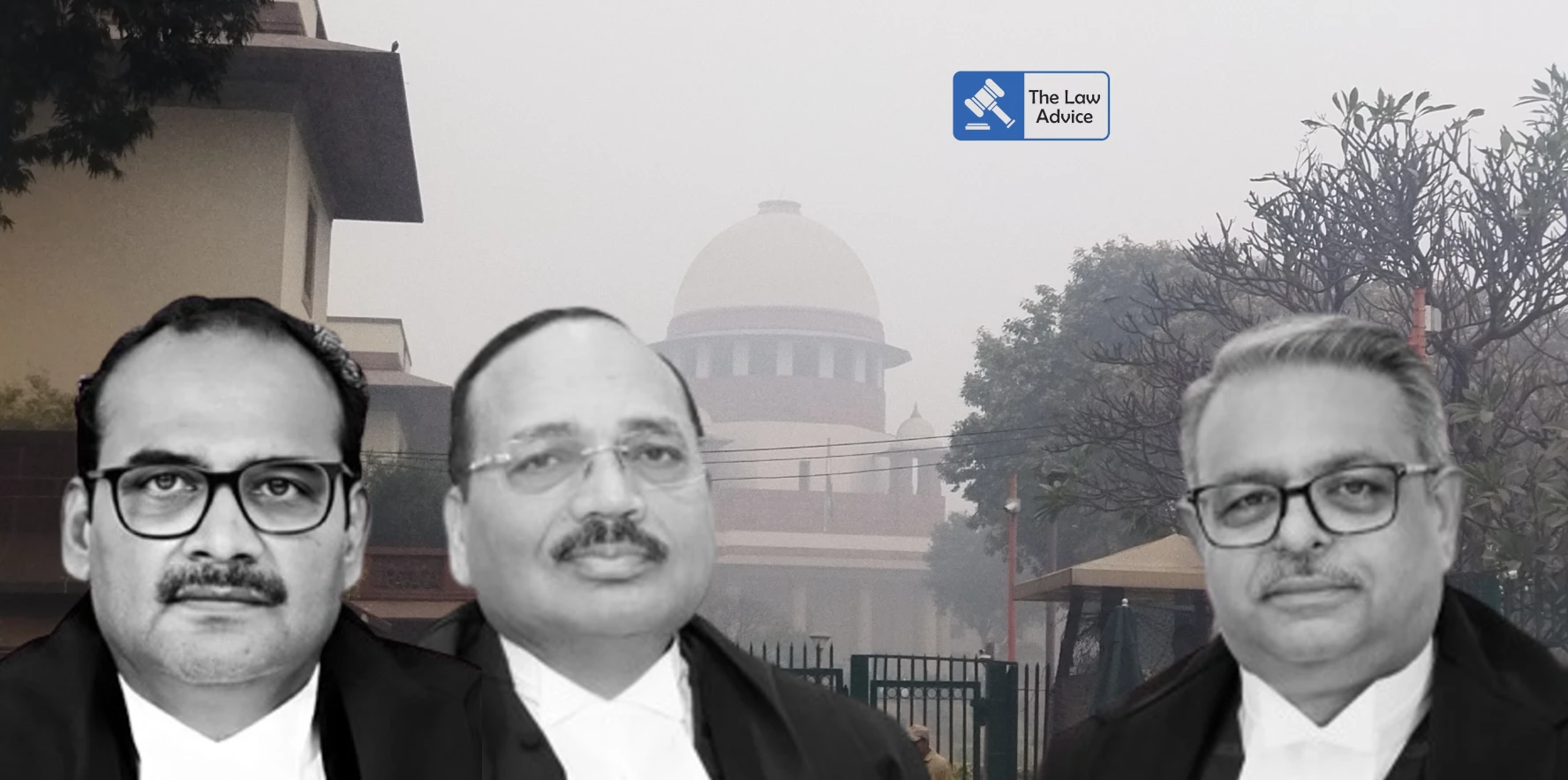
The Supreme Court of India will hear two significant cases on December 29, among 10 cases, even as the Court remains closed for its winter break. Both matters will be taken up by a three-judge vacation bench comprising Chief Justice of India Surya Kant, Justice JK Maheshwari and Justice Augustine George Masih.
The apex court will hear the Central Bureau of Investigation’s (CBI) plea challenging the Delhi High Court’s order suspending the life sentence awarded to former Uttar Pradesh MLA Kuldeep Singh Sengar in the Unnao rape case.
Sengar was convicted in December 2019 by a Delhi trial court for offences under the IPC and the POCSO Act, and sentenced to imprisonment for the remainder of his natural life.
On December 23, the Delhi High Court suspended the sentence, holding prima facie that the offence of aggravated penetrative sexual assault under Section 5 of the POCSO Act was not made out.
The High Court ruled that Sengar could not be treated as a “public servant” under Section 5(c) POCSO Act or Section 376(2)(b) IPC, nor as a person in a “position of trust or authority” under Section 5(p) POCSO Act.
CBI’s Stand:
The High Court committed a serious error of law.
A sitting MLA holds a constitutional position of trust and authority, performs public duties, and therefore falls within the ambit of aggravated offences.
Sengar’s release poses a grave threat to the survivor and her family, and undermines public confidence in the justice delivery system.
The Court will also hear a suo motu matter titled
“In Re: Definition of Aravalli Hills and Ranges and Ancillary Issues.”
The case concerns the uniform definition and protection of the Aravalli range, which spans Delhi, Haryana, Rajasthan and Gujarat.
The Court had earlier taken note of inconsistent definitions adopted by different States, particularly in cases relating to illegal mining.
Key Developments:
A court-appointed committee submitted its report in October 2025, recommending:
Any landform with an elevation of 100 metres or more in Aravalli districts be classified as Aravalli Hills.
Aravalli Range to mean two or more Aravalli Hills within 500 metres proximity.
A Bench led by then CJI BR Gavai had accepted the committee’s recommendations, including:
Ban on mining in core/inviolate areas
Rejection of a blanket mining ban, noting that it fuels illegal mining and criminalisation.
The Sengar case has far-reaching implications for victim protection, interpretation of “public servant” under POCSO, and sentencing in serious sexual offences.
The Aravalli case directly impacts environmental protection, mining regulation, and federal consistency in ecological governance.
Website designed, developed and maintained by webexy