
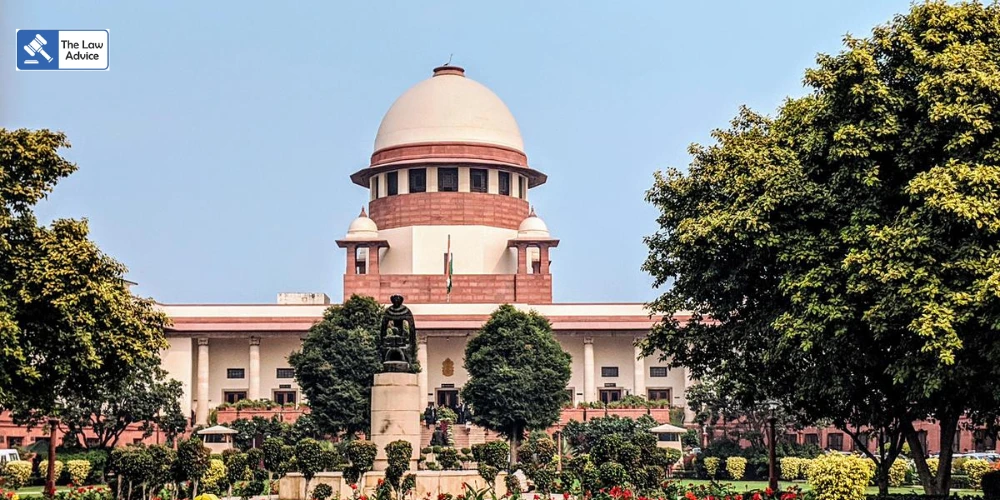
The Supreme Court on Monday (December 15) observed that courts should not prolong a marriage that survives merely in form and not in substance, and dissolved the marriage of a couple who had been living separately for nearly 24 years. The Court held that the parties’ fundamentally incompatible approaches to matrimonial life, coupled with their prolonged unwillingness to accommodate each other, amounted to mutual cruelty and resulted in an irretrievable breakdown of the marriage.
Relying on precedents including Rakesh Raman v. Kavita (2023), the Court reiterated that a long period of separation with no real possibility of reconciliation constitutes cruelty to both spouses.
A Bench comprising Justices Manmohan and Joymalya Bagchi noted that prolonged pendency of matrimonial litigation only leads to a marriage continuing on paper. It observed that in cases where litigation has continued for a considerable length of time, it is in the interest of both the parties and society at large that the marital tie is brought to an end. Accordingly, the Bench allowed the husband’s appeal and restored the decree of divorce granted by the Trial Court.
“This Court is of the view that pendency of matrimonial litigation for a long duration only results in perpetuation of a marriage on paper. No useful purpose is served by keeping such litigation alive without granting effective relief to the parties,” the Court observed.
The marriage between the appellant-husband and the respondent-wife was solemnised in the year 2000. The couple separated in November 2001, within a year of the marriage, and have lived apart ever since. The parties have no children from the wedlock.
The husband initially filed a divorce petition in 2003, which was dismissed as premature. A subsequent petition filed in 2007 was allowed by the Trial Court on the ground of desertion. However, in 2011, the Gauhati High Court set aside the divorce decree, holding that the wife had sufficient cause to leave the matrimonial home and that the husband could not be permitted to take advantage of his own wrong. Aggrieved by this decision, the husband approached the Supreme Court.
Allowing the appeal and setting aside the High Court’s judgment, the Supreme Court, in a decision authored by Justice Manmohan, held that the High Court erred in examining issues of fault when the parties had been living separately for almost 24 years with no offspring from the marriage. The Court held that such prolonged separation, by itself, amounts to cruelty to both spouses and justified the exercise of the Court’s extraordinary powers under Article 142 of the Constitution to do complete justice by dissolving the marriage.
The Court observed that the spouses had rigid and incompatible views regarding matrimonial life and had consistently refused to adjust or accommodate each other over a long period. It emphasised that in matrimonial disputes, it is neither the role of society nor the Court to determine which spouse’s approach is right or wrong; rather, the persistent incompatibility and refusal to coexist peacefully itself constitutes cruelty.
“In the present case, the spouses have strongly held and divergent views on matrimonial life and have failed to accommodate each other for decades. Their conduct, therefore, amounts to cruelty to one another,” the Court said.
The Bench also relied on the Constitution Bench judgment in Shilpa Sailesh v. Varun Sreenivasan (2023), which held that the Supreme Court’s power under Article 142 to render “complete justice” is not constrained by the fault theory embedded in statutory divorce laws. Reference was further made to Kumari Rekha v. Shambhu Saran Paswan (2025), wherein it was held that the absence of statutory grounds for dissolution of a Hindu marriage does not prevent the Supreme Court from exercising its powers under Article 142, particularly in cases involving irretrievable breakdown of marriage.
Cause Title: N v. A
Website designed, developed and maintained by webexy