
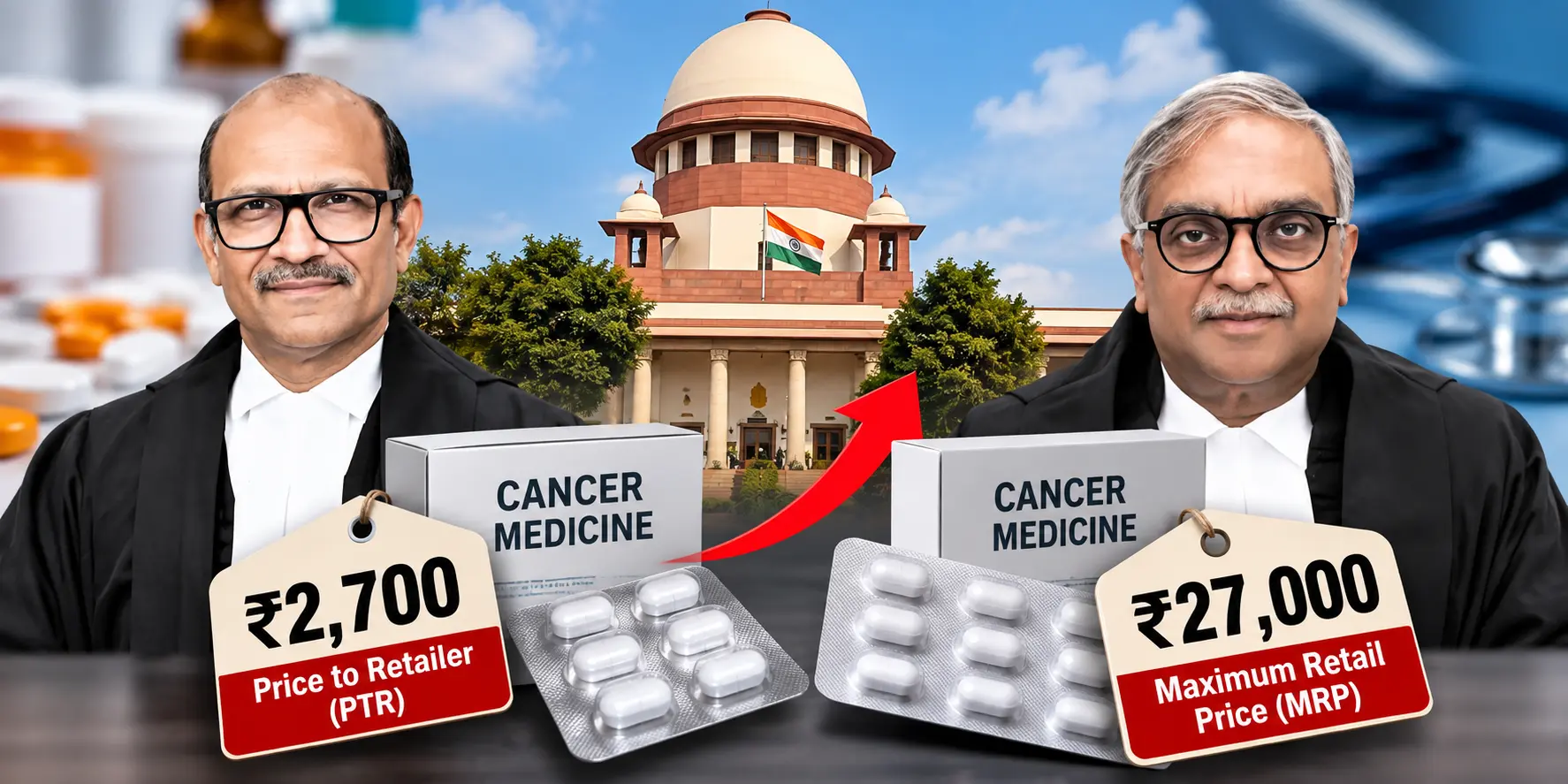
Supreme Court ने life-saving medicines, खासकर Cancer Medicines, की कीमतों में भारी अंतर को लेकर मंगलवार को गंभीर चिंता जताई। Kishan Chand Jain v. Union of India मामले की सुनवाई कर रही Justice Vikram Nath और Justice Sandeep Mehta की Bench ने उस स्थिति पर सवाल उठाया, जहां किसी दवा का Price to Retailer (PTR) करीब ₹2,700 है, जबकि उसका Maximum Retail Price (MRP) ₹27,000 निर्धारित किया गया है।
Justice Sandeep Mehta ने इस भारी price difference पर टिप्पणी करते हुए कहा कि यह मरीजों के साथ “broad daylight dacoity” जैसा है।
“There are essential medicines for cancer for which MRP is ₹27,000 and PTR is ₹2,700... broad daylight dacoity with the patients.”
Bench ने कहा कि अगर ऐसी महंगी medicines को Ayushman Bharat जैसी taxpayer-funded health schemes के तहत reimburse किया जाता है, तो इसका सीधा financial burden taxpayers पर पड़ता है।
Court ने सवाल उठाया कि अगर hospitals दवाएं ऊंची कीमतों पर खरीदते हैं और बाद में उसका reimbursement Government से लेते हैं, तो आखिरकार इसका भुगतान public money से होता है।
Petitioner Kishan Chand Jain की ओर से Court को बताया गया कि Drug Price Control Order (DPCO), 2013 के तहत National Pharmaceutical Pricing Authority (NPPA) करीब 1,000 scheduled medicines की ceiling prices तय करता है।
Petitioner के अनुसार, market में लगभग 82% medicines non-scheduled हैं और इनके लिए initial price fixation पर प्रभावी नियंत्रण नहीं है।
उनका कहना था कि manufacturers non-scheduled medicines को market में launch करते समय ऊंची कीमतें तय कर सकते हैं, जिससे retailers और private healthcare establishments के स्तर पर बड़े margins पैदा हो सकते हैं।
सुनवाई के दौरान Justice Sandeep Mehta ने cholesterol कम करने वाली medicine Rosuvas का उदाहरण देते हुए pricing disparity पर सवाल उठाया।
Court ने कहा कि एक strip की कीमत लगभग ₹214 है क्योंकि वह DPCO के तहत scheduled medicine नहीं है, जबकि aspirin के साथ combination होने पर वह scheduled medicines के framework में आती है और उसकी कीमत करीब ₹70 बताई गई।
Bench ने इस तरह की price disparity को लेकर सवाल उठाया।
Court ने यह भी कहा कि आम नागरिकों को life-saving treatment के लिए अपनी property और jewellery तक बेचनी पड़ती है।
Bench ने टिप्पणी की:
“If that is not extortion, what else is it? A ₹100 medicine is being purchased by him for ₹2,000.”
Supreme Court ने कहा कि अगर सभी medicines को एक comprehensive price-fixation mechanism के दायरे में लाया जाता है, तो mandatory generic medicines की अलग व्यवस्था की आवश्यकता भी कम हो सकती है।
Court ने कहा:
“If all medicines are brought within that umbrella of price fixation, we may not need even a system of generic medicine.”
Indian Pharmaceutical Alliance (IPA) की ओर से पेश Senior Advocate Kapil Sibal ने कहा कि pharmaceutical companies स्वयं इतने बड़े margins retain नहीं करतीं और pricing में बड़ी वृद्धि retail तथा hospital level पर हो सकती है।
उन्होंने Court से यह देखने का आग्रह किया कि medicines stockists और retailers को किस कीमत पर बेची जाती हैं।
Union Government की ओर से Additional Solicitor General KM Nataraj ने कहा कि Government इस मामले को adversarial तरीके से नहीं देख रही है और affordable medicines को देश के हर व्यक्ति तक पहुंचाने के लिए प्रतिबद्ध है।
उन्होंने Jan Aushadhi Kendras का भी उल्लेख किया।
हालांकि, petitioner ने कहा कि देश के कुल pharmaceutical market की तुलना में Jan Aushadhi Kendras की बिक्री बहुत कम है। इस पर Justice Mehta ने पूछा:
“The issue is, for those medicines which are not available in Jan Aushadhi Kendras, where does the patient go?”
Supreme Court ने मामले की सुनवाई 29 सितंबर 2026 तक स्थगित कर दी है।
Case: Kishan Chand Jain v. Union of India
Bench: Justice Vikram Nath और Justice Sandeep Mehta
Next Hearing: 29 सितंबर 2026
Website designed, developed and maintained by webexy