
Supreme Court Sets Aside Calcutta High Court Order Allowing Defendant to Change Stand Mid-Trial
The Supreme Court has held that a defendant cannot be permitted to completely alter her defence during the course of a trial by filing an additional written statement containing a contradictory stand. The Court restored a trial court order rejecting such an attempt and set aside a contrary ruling of the Calcutta High Court.
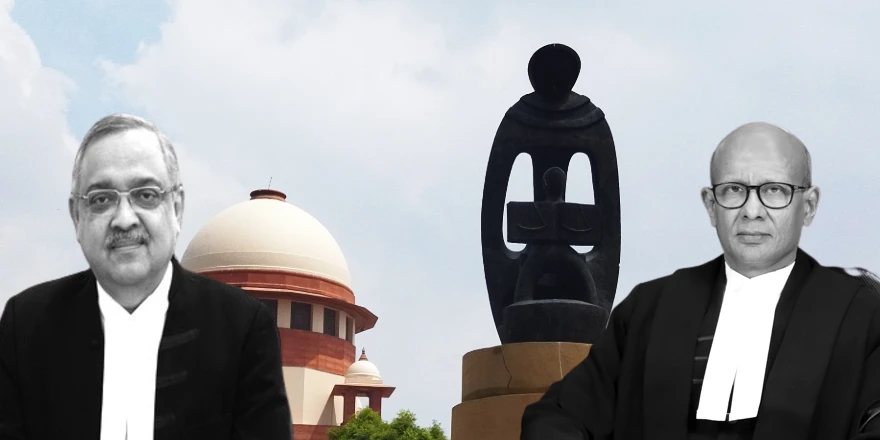
A Bench comprising Justices Sanjay Kumar and K. Vinod Chandran delivered the judgment in Mondira Ghosh v. Chaitali Ghosh, observing that procedural provisions cannot be used to circumvent restrictions on amending pleadings after the commencement of trial.
The dispute arose from a civil suit filed by Mondira Ghosh seeking a declaration that Chaitali Ghosh was in unlawful possession of certain premises and for her eviction. In her original written statement filed in 2022, the defendant claimed that she was a bona fide co-sharer of the property and denied the plaintiff's claims.
However, after issues had been framed and the trial had substantially progressed, including extensive cross-examination of the plaintiff's first witness, the defendant sought permission to file an additional written statement along with a counterclaim. In the proposed pleading, she abandoned her earlier claim of being a co-sharer and instead asserted that she was a tenant under the plaintiff.
The trial court rejected the application, holding that a party could not retract from an earlier stand and introduce a completely inconsistent case at such an advanced stage of the proceedings. It also noted that the move violated the principles embodied in the Code of Civil Procedure and imposed costs on the defendant.
The Calcutta High Court later permitted the filing of the additional written statement, though it refused to allow the counterclaim. The High Court reasoned that the new facts were relevant for determining the real controversy between the parties and that the delay had been satisfactorily explained.
Reversing the High Court's decision, the Supreme Court observed that this was not a case where certain facts had been omitted inadvertently from the original written statement. Rather, the defendant was attempting a complete volte-face by replacing her claim of co-ownership with a claim of tenancy.
The Court held that such a drastic shift in position was contrary to the scheme of the Code of Civil Procedure and amounted to introducing an entirely inconsistent and contradictory case. It further noted that the application appeared to be an attempt to bypass the restrictions contained in the proviso to Order VI Rule 17 CPC, which limits amendments after the commencement of trial.
Calling the move an abuse of process, the Supreme Court concluded that the trial court's decision was legally sound and justified on the facts. Accordingly, it set aside the Calcutta High Court's order and restored the trial court's rejection of the additional written statement.
The ruling reinforces the principle that litigants cannot use procedural devices to fundamentally alter their case after a trial has commenced, particularly when doing so would prejudice the opposing party and undermine the integrity of judicial proceedings.
Case Details:-
Special Leave Petition (C) No. 34411 of 2025)
Mondira Ghosh … Appellant
versus
Chaitali Ghosh … Respondent
Citation:- 2026 INSC 545

Representation:-
For Petitioner(s) : Mr. Dibyadyuti Banerjee, Adv., Ms. Sumedha Halder, Adv., Mr. Abhijit Sengupta, AOR, Mr. Amit Kumar Sinha, Adv., Mr. Aditya Prasad, Adv.
For Respondent(s) : Mr. Tapan Bijoy Deb Choudhury, AOR, Mr. Tapan Choudhury, Adv., Mr. Tarun Choudhury, Adv.
Website designed, developed and maintained by webexy