
The Bombay High Court has indicated that it may consider imposing a complete ban on firecrackers in Mumbai, except for controlled community fireworks displays at designated locations, in view of the worsening air and noise pollution and repeated violations of existing restrictions.
A Division Bench comprising Justice Girish Kulkarni and Justice Neela Gokhale made the observations while hearing a suo motu Public Interest Litigation (PIL) along with connected petitions concerning noise pollution and the use of firecrackers during religious and festive celebrations across Maharashtra.
The Bench expressed serious concern over the continued violation of its directions regulating the bursting of firecrackers, observing that existing restrictions had failed to prevent widespread violations during Diwali celebrations.
The Court noted that despite repeated directions and enforcement measures, firecrackers continued to be burst beyond permissible hours, resulting in excessive noise pollution and deterioration in air quality.
During the hearing, the Bench referred to reports of 332 fire incidents in Mumbai during the Diwali period, including incidents allegedly caused by aerial firecrackers that resulted in fires in buildings.
Justice Kulkarni observed that the reported number of fire incidents was alarming and expressed concern over the potential threat posed by firecrackers to life and property, particularly in densely populated urban areas.
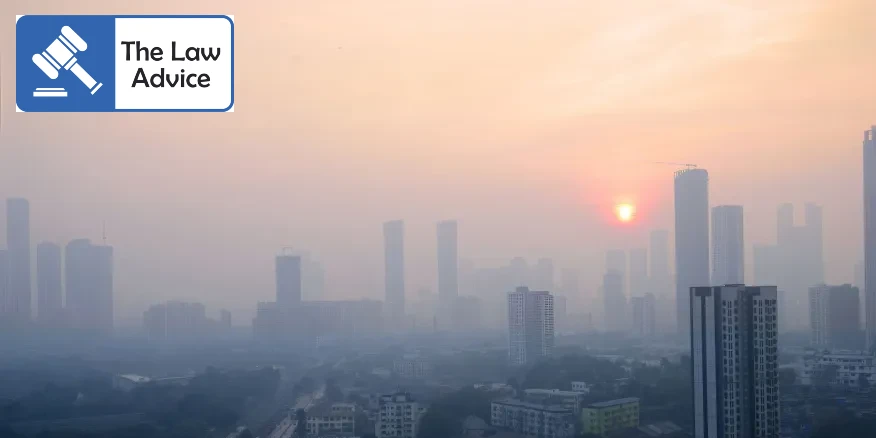
The Bench also took note of the deterioration in Mumbai's Air Quality Index (AQI), which reportedly touched around 400 during the Diwali period. It observed that the continued disregard for pollution-control measures demonstrated a lack of public sensitivity towards the health and well-being of fellow citizens.
Expressing dissatisfaction with the effectiveness of the existing regulatory framework, the Court indicated that more stringent measures might be necessary in the larger public interest.
The Bench observed that a complete prohibition on firecrackers in Mumbai, with an exception for organised community fireworks at designated grounds, could be considered as a possible solution.
It suggested that fireworks displays could be conducted at specified locations under controlled conditions, rather than permitting individuals to burst crackers across residential areas and public spaces. The Court indicated that such an arrangement could help minimise pollution and facilitate better enforcement.
The proceedings also involved arguments seeking restrictions on the sale and manufacture of firecrackers. Senior Advocate Sanjeev Gorwadkar, appearing for petitioner Dr Mahesh Bedekar, and amicus curiae Anand Pai supported a complete ban, submitting that the protection of citizens' health must remain paramount.
The petitioners also raised concerns regarding the authenticity of so-called green crackers, alleging that laboratory findings had revealed instances of allegedly fake QR codes and the use of prohibited chemicals.
The Bench observed that practices posing a threat to human life and public health could not automatically claim constitutional protection under Article 25, which guarantees freedom of conscience and the right to freely profess, practise and propagate religion.
On the other hand, the Maharashtra Government informed the Court about the enforcement measures undertaken by the authorities during the Diwali period. It submitted that Mumbai Police had registered 491 cases and seized firecrackers worth approximately ₹21 lakh between November 4 and November 13.
However, the Court remained concerned about the continued violations despite these enforcement efforts. It also indicated that any directions eventually issued could extend beyond Mumbai and apply across Maharashtra.
The proceedings arise against the backdrop of the Court's earlier directions prohibiting the bursting of firecrackers on public roads and streets. The Bench had clarified that the restriction was not confined to a particular festival or festive season but was intended to operate throughout the year.
After hearing the petitioners, the State Government, civic authorities and other intervenors, the High Court reserved its order.
The matter raises significant questions concerning the balance between religious and cultural practices, environmental protection and the fundamental right to life under Article 21 of the Constitution.
The Court's observations indicate a possible shift towards stricter regulation of firecrackers, with public health, environmental protection and public safety emerging as central considerations in determining the permissible limits of festive celebrations.
Website designed, developed and maintained by webexy