
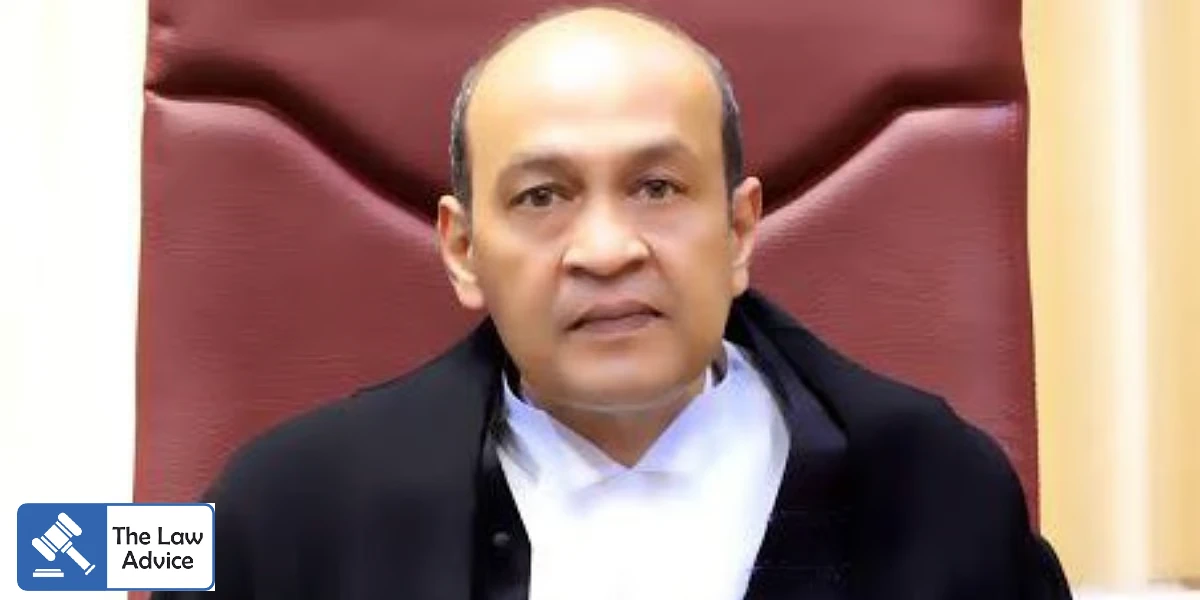
Recently, former Allahabad High Court Judge Justice Yashwant Varma has asserted that his resignation from judicial office should not be construed as an admission of guilt or acceptance of the allegations levelled against him in connection with the discovery of burnt currency notes at his official residence.
In a letter dated September 10 addressed to Lok Sabha Secretary General Utpal Kumar Singh, Justice Varma contended that the proceedings initiated for his removal from office had become infructuous following his resignation on April 9, 2026. He maintained that any attempt to continue the removal process would lack constitutional foundation.
Referring to Article 217(1)(a) of the Constitution and the Supreme Court's 1978 Constitution Bench judgment in Union of India v. Gopal Chandra Misra, Justice Varma submitted that the resignation of a High Court judge takes effect upon its own force and does not require acceptance by the President or any other constitutional authority.
He argued that the constitutional mechanism for removal of judges applies only to those who continue to hold judicial office and cannot be invoked against a person who has already ceased to be a judge.
"Upon my resignation, proceedings directed towards my removal from office did not survive and cannot be continued," he stated in the letter.
Justice Varma further maintained that he had participated in the proceedings before the three-member Judges Inquiry Committee until April 9, when he tendered his resignation to the President with immediate effect.
He also referred to objections previously raised regarding the manner in which the inquiry was conducted and reserved his right to challenge the committee's findings. Declining to submit a response to the inquiry report or participate in any further proceedings, he requested that his letter, along with the accompanying documents, be circulated among members of both Houses of Parliament and that the matter be closed.
The development follows the Judges Inquiry Committee's report, which was tabled in Parliament on August 12. The three-member committee, constituted by Lok Sabha Speaker Om Birla, found all three charges levelled against Justice Varma to have been established.
The charges concerned his failure to explain the presence, source and ownership of the cash discovered at his official residence, failure to ensure the preservation of material evidence, and the allegedly evasive and unsatisfactory explanations furnished during the inquiry.
The controversy originated on March 14, 2025, when burnt bundles of currency notes were discovered at Justice Varma's official residence in Delhi following a fire incident.
A Supreme Court in-house committee subsequently examined the allegations and found circumstances warranting action. Its findings led then Chief Justice of India Sanjiv Khanna to recommend Justice Varma's removal.
At the time, Justice Varma was serving as a judge of the Delhi High Court. He was subsequently repatriated to the Allahabad High Court, his parent court, and took oath there on April 5, 2025, although he ceased to discharge judicial functions.
Thereafter, nearly 150 Members of Parliament submitted a notice seeking his removal, following which the Lok Sabha Speaker constituted the three-member inquiry committee under the Judges (Inquiry) Act, 1968.
Justice Varma challenged the constitution of the committee before the Supreme Court, but his plea was dismissed. He subsequently withdrew from the inquiry, alleging procedural unfairness and lack of due process. The committee nevertheless proceeded with the inquiry and submitted its report to Parliament.
The latest communication brings the constitutional question surrounding the continuation of removal proceedings against a judge who has resigned into focus. While Justice Varma maintains that his resignation rendered the proceedings infructuous, the inquiry committee has already recorded findings against him.
The matter also raises questions concerning the scope of Parliament's constitutional authority under Articles 124 and 217, and the extent to which proceedings under the Judges (Inquiry) Act, 1968 can continue after a judge ceases to hold office.
Website designed, developed and maintained by webexy