
In a significant ruling on the scope of anti-corruption laws, the Supreme Court has held that a public servant cannot escape prosecution merely because an alleged bribe demand was made through subordinates or third parties. The Court restored a corruption case against a Karnataka Police Sub-Inspector (PSI) after setting aside a Karnataka High Court order that had quashed the FIR.
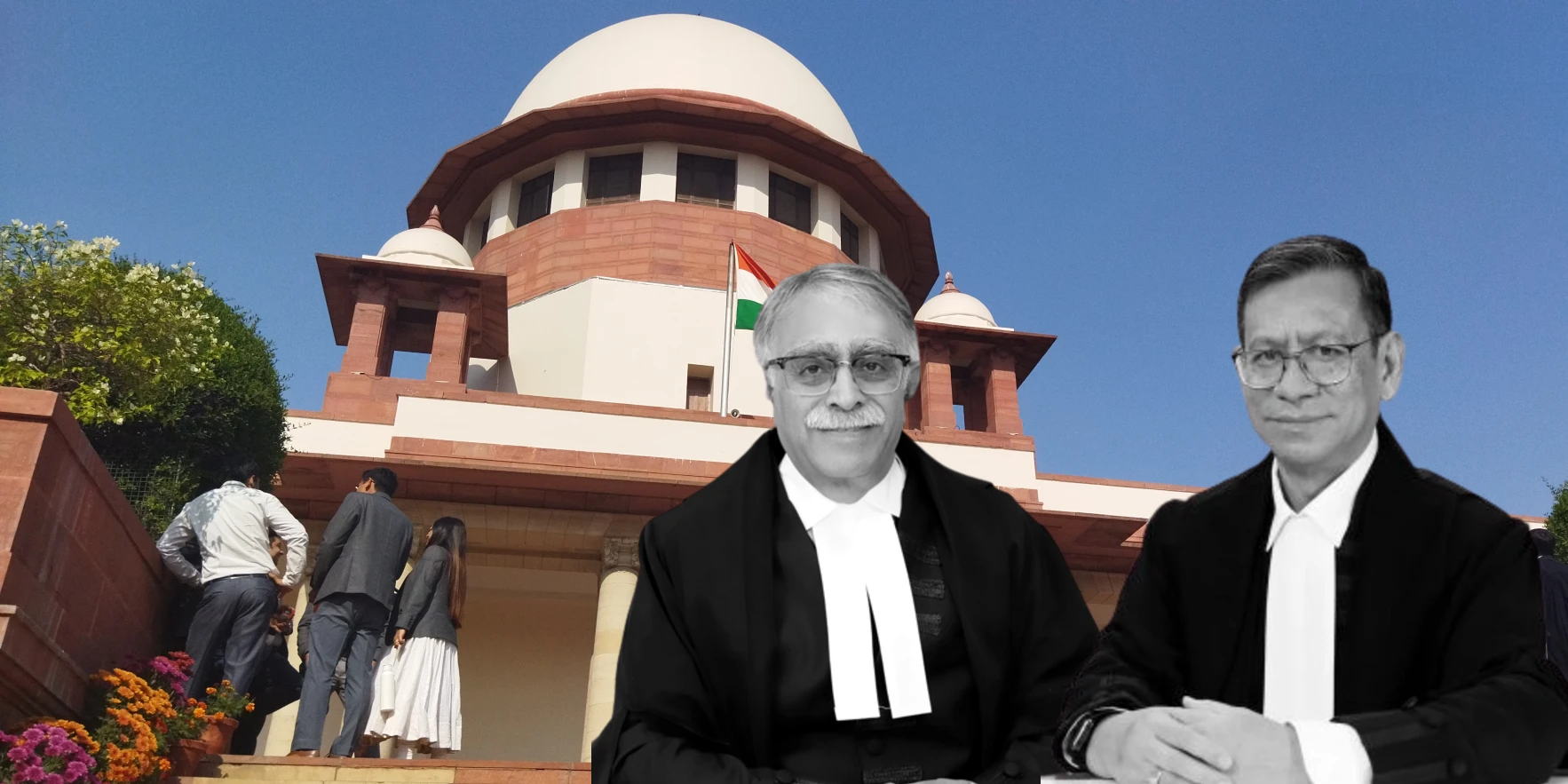
A Bench comprising Justices Sanjay Karol and Nongmeikapam Kotiswar Singh ruled that Section 7 of the Prevention of Corruption Act, 1988, covers not only the actual acceptance of a bribe but also an "attempt to obtain" an undue advantage, whether for oneself or for another person and whether directly or through intermediaries.
The case arose from allegations that PSI K. Rangayya, posted at Siruguppa Police Station in Karnataka's Bellary district, had caused the seizure of a complainant's motorcycle and mobile phone in connection with a ration rice transportation case. According to the complaint, when the complainant repeatedly sought the return of his belongings, a private individual allegedly demanded ₹50,000 on behalf of the PSI. Later, a police constable allegedly demanded ₹5,000, which was negotiated down to ₹3,000.
The complainant approached the Karnataka Lokayukta Police, leading to registration of an FIR under Section 7(a) of the Prevention of Corruption Act.
However, the Karnataka High Court quashed the FIR in January 2024, holding that there was no direct demand or acceptance of bribe by the PSI.
Reversing the High Court's decision, the Supreme Court observed that while exercising powers to quash an FIR, courts are only required to examine whether the allegations, if taken at face value, disclose the commission of an offence.
The Court noted that the High Court exceeded its jurisdiction by analysing evidence such as trap proceedings, recovery of money, phenolphthalein test results, and departmental inquiry findings, which are matters to be assessed during trial.
The Bench observed:
"The High Court has in effect conducted a mini-trial, which is fundamentally contrary to the settled principles governing the exercise of the quashing jurisdiction."
The Supreme Court gave an expansive interpretation to Section 7(a) read with Explanation 2 of the Prevention of Corruption Act.
According to the complaint, the PSI allegedly told the complainant that he should "do something for those boys" (referring to subordinate police officials) while arranging release of the seized motorcycle.
The Court held that such a statement, followed by a demand for money by a subordinate constable, could prima facie amount to an attempt to obtain an undue advantage.
The judgment emphasized that the law does not require the public servant to personally receive the bribe. A public servant may still be liable if he attempts to secure an illegal benefit for another person or uses subordinates to facilitate the collection of bribes.
The Court warned that accepting the High Court's interpretation would create a dangerous loophole:
"It would permit senior public officials to orchestrate and direct the collection of illegal gratification through their subordinates while maintaining personal deniability."
The Court distinguished earlier decisions such as K. Shanthamma v. State of Telangana, Soundarajan v. State, and Jagtar Singh v. State of Punjab, noting that those cases were decided after full-fledged trials and dealt with proof beyond reasonable doubt, whereas the present matter concerns only the threshold question of whether investigation and prosecution can proceed.
Holding that the allegations in the FIR disclose a prima facie offence under Section 7(a) of the Prevention of Corruption Act, the Supreme Court restored the FIR and all consequential proceedings against the PSI.
The Court clarified that its observations are confined to the issue of quashing and shall not influence the trial court's final determination of guilt or innocence.
The judgment reinforces that under the Prevention of Corruption Act, a public servant may face prosecution even where the alleged bribe demand is routed through subordinates or third parties. At the stage of quashing an FIR, courts must not evaluate evidence or conduct a mini-trial and should only examine whether the allegations disclose a prima facie offence.
Case: State by Lokayuktha Police v. Sri K. Rangayya & Anr.,
Citation: 2026 INSC 574

Representation:-
For Petitioner(s) : Nishanth Patil, AOR, Mr. Arijit Dey, Adv., Mr. Awanish Gupta, Adv., Ms. Bhumi Agarwal, Adv., Mr. Abhishek Gupta, Adv.,For Respondent(s) : Ms. Supreeta Sharanagouda, AOR, Mr. Sharanagouda Patil, Adv., Mrs. Supreeta Sharanagouda (aor), Adv., Mr. Jyotish Pandey, Adv., Mr. Vinod Kumar Srivastava, Adv.
Website designed, developed and maintained by webexy