
The Supreme Court has upheld the conviction and life sentence awarded to a man accused of murdering a 10-year-old adopted girl and disposing of her body in a river, reiterating that recovery of the dead body is not an indispensable requirement for securing a murder conviction if reliable evidence establishes the offence.
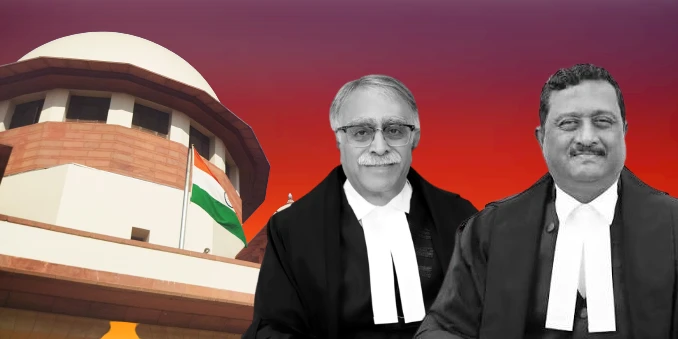
A Bench comprising Justices Sanjay Karol and Prasanna B. Varale dismissed the appeal filed by Debojit Pankika Charaideo Sonari against his conviction under Sections 302 and 201 IPC, affirming the concurrent findings of the Trial Court and the Gauhati High Court.
The case concerned the disappearance of a 10-year-old girl who had been adopted by the appellant's mother and was left in his sole custody when the mother went away for medical treatment. The child went missing and remained untraced for 22 days, during which the appellant neither informed the police nor alerted her relatives.
The prosecution relied heavily on the testimony of a witness who stated that the appellant had confessed that the child had been burnt and had compelled him, under threat, to assist in disposing of the body in the Teok River. The witness consistently maintained his version before the courts.
Rejecting the argument that the absence of a recovered body was fatal to the prosecution case, the Supreme Court explained that the doctrine of corpus delicti in murder cases refers to proof that a death occurred due to the criminal act of another person and does not necessarily require recovery of the victim's body.
The Court relied on earlier precedents and observed that if recovery of a dead body were treated as an absolute prerequisite, offenders could escape punishment simply by ensuring that the body was destroyed or could not be found.
The Bench also found it significant that the accused failed to provide any explanation regarding the child's disappearance despite her being in his exclusive custody. The Court noted that a reasonable person would have informed the police or family members if a child under his care had gone missing for such a prolonged period.
Finding the prosecution evidence reliable and the chain of circumstances complete, the Supreme Court concluded that no interference was warranted with the conviction and sentence, and accordingly dismissed the appeal.
Case: Debojit Pankika Charaideo Sonari v. State of Assam, Criminal Appeal No. 3909 of 2025, decided on July 13, 2026.
Website designed, developed and maintained by webexy