
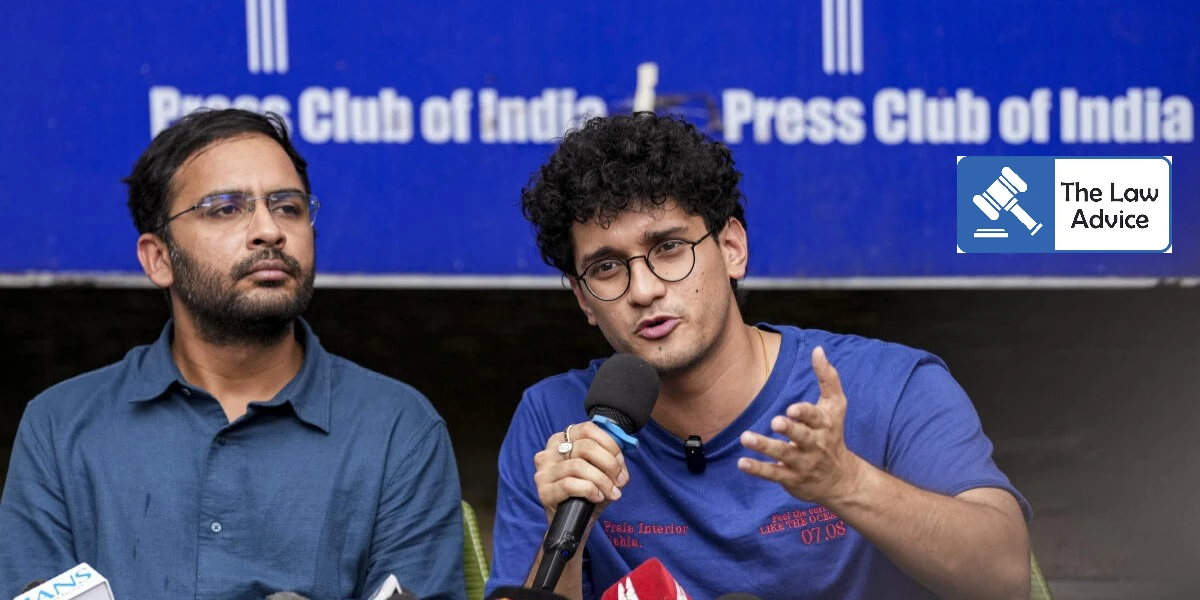
Cockroach Janta Party (CJP) activists Saurav Das and Ashutosh Ranka have approached the Delhi High Court challenging a Special Executive Magistrate (SEM) court order extending their judicial custody till October 21, alleging that their continued detention violates their fundamental right to liberty.
CJP's legal head, Ratna Singh, said the activists would seek an urgent hearing and request the Court to list the matter on Tuesday.
The Delhi Police detained Das and Ranka on October 13 for allegedly entering the barricaded Jantar Mantar protest site by climbing its gates. On October 14, they were sent to judicial custody for five days. On October 19, the SEM court extended their custody by another two days.
In its October 19 order, the SEM court observed that the activists' conduct showed a lack of respect for the law and raised serious concerns about their potential to disturb peace and tranquillity. It said their assurance that they would not repeat the alleged conduct did not inspire confidence in view of their previous actions.
The magistrate also observed that the activists had demonstrated "habitualness" by calling for protests at de-notified areas.
The SEM court further rejected the sureties furnished for Das and Ranka, finding them unfit. It noted a mismatch between the photograph on one surety's bond and his Aadhaar card. The surety failed to produce another valid identity document and gave unsatisfactory answers, the court said. The other surety could not provide basic details about Saurav Das. The magistrate also found that neither surety could ensure the activists' presence before the court.
Challenging the order, Das and Ranka have contended that they have remained in custody for six days despite repeatedly furnishing sureties.
They have argued that the magistrate wrongly extended their custody under Section 135(3) of the Bharatiya Nagarik Suraksha Sanhita (BNSS) on the ground that they had defaulted in executing the required bond, even though their sureties were furnished in accordance with law.
The petition further alleges that the SEM court mechanically relied on the police's application without independently asses
Website designed, developed and maintained by webexy