
The Supreme Court has held that criminal proceedings cannot be used as a means to recover money in a dispute that is essentially civil in nature. The Court quashed criminal proceedings against two directors of a private company, finding that the dispute arising out of a business transaction was essentially a civil dispute and that continuation of the criminal case would amount to an abuse of the process of law.
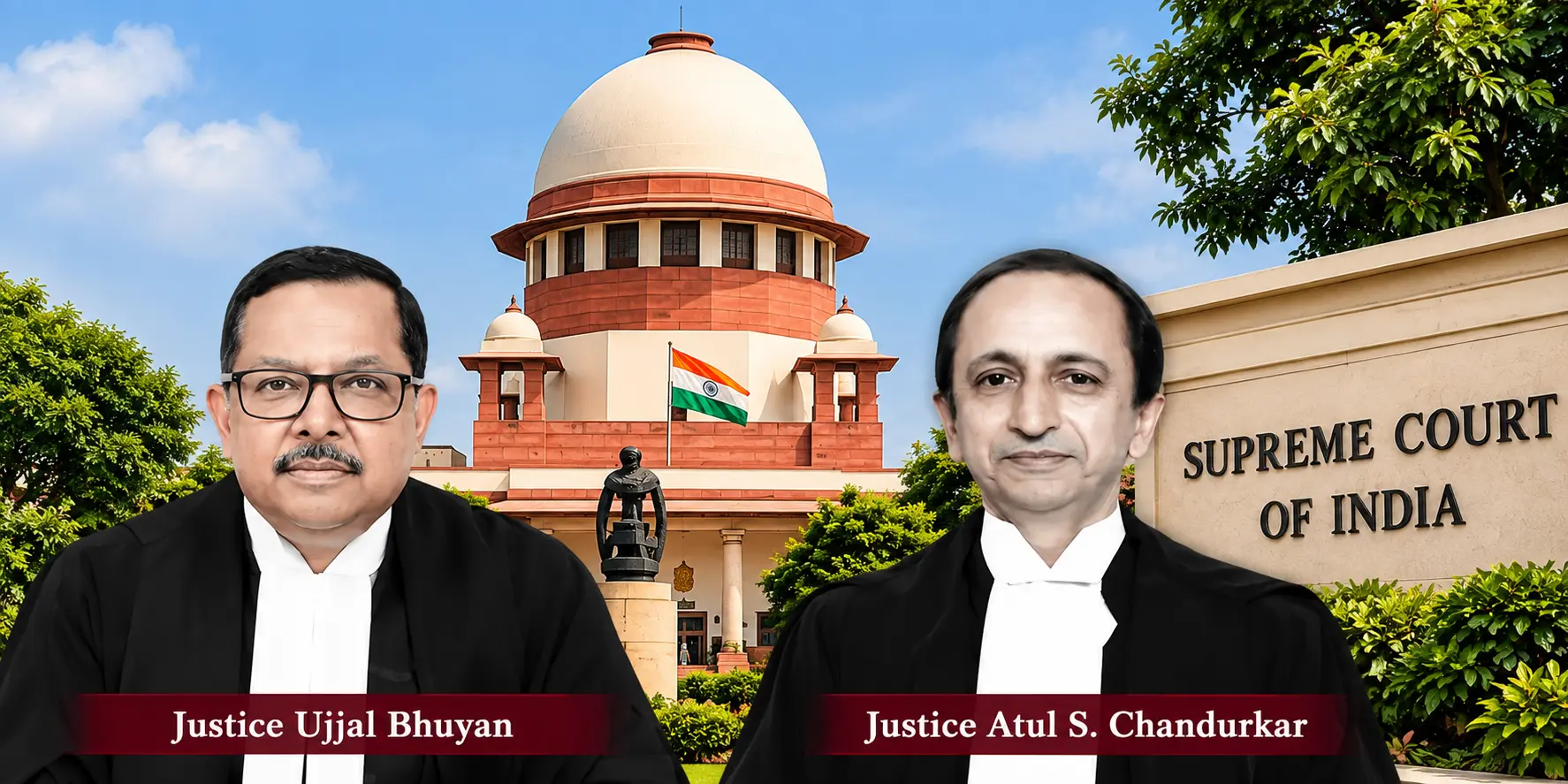
A Bench comprising Justice Ujjal Bhuyan and Justice Atul S. Chandurkar delivered the judgment in Yogesh Premjibhai Suvariya & Anr. v. State of Gujarat & Anr., 2026 INSC 1079.
The appellants were Directors of Shivamy Enterprises Pvt. Ltd., which was engaged in the steel business. The dispute arose from transactions involving the purchase of TMT bars from Hans Ispat Ltd.
According to the complaint, the appellants had purchased 293 metric tonnes of TMT bars worth ₹1.19 crore and had issued 10 post-dated cheques which were subsequently dishonoured. An FIR was registered under Sections 406, 420 and 114 IPC, followed by a chargesheet and criminal proceedings.
The appellants contended that the dispute was purely civil and that they had withheld the payment because approximately ₹2 crore deposited by them with Hans Ispat Ltd. remained outstanding. They argued that the criminal process was being misused for recovery of money instead of pursuing a civil remedy.
The Court explained that for an offence under Section 420 IPC, the ingredients of cheating under Section 415 IPC must be established. The essential requirement is the presence of fraudulence, dishonesty or intentional inducement.
The Court relied upon its earlier decision in G. Saminathan v. The State and reiterated that in the absence of such elements, a mere monetary or contractual dispute does not become a criminal offence of cheating.
The Supreme Court noted that the respondent had not instituted any civil suit for recovery of the alleged outstanding amount.
Referring to its earlier decision in Delhi Race Club v. State of Uttar Pradesh, the Court observed that where the grievance is essentially regarding money allegedly due and payable, the appropriate remedy is a civil suit for recovery, and not criminal proceedings alleging cheating or criminal breach of trust.
The Court also referred to Lalit Chaturvedi v. State of Uttar Pradesh and Shailesh Kumar Singh v. State of Uttar Pradesh, reiterating the distinction between a civil wrong such as breach of contract or non-payment of money and the criminal offence of cheating. Pasted markdown
The Bench concluded that the grievance raised by the complainant was “essentially civil in nature” and that criminal proceedings had been initiated to recover amounts allegedly withheld by the appellants.
The Court held that this cannot be the object of a criminal proceeding and that permitting the criminal case to continue would amount to an abuse of the process of the Court.
The Supreme Court accordingly set aside the Gujarat High Court's order dated March 17, 2026, as well as the order of the Additional Chief Judicial Magistrate, Anjar, dated February 8, 2016.
Consequently, Criminal Case No. 584 of 2012 pending before the Additional Chief Judicial Magistrate, Anjar, Kutch, was quashed and the criminal appeal was allowed.
Case: Yogesh Premjibhai Suvariya & Anr. v. State of Gujarat & Anr.
Citation: 2026 INSC 1079
Bench: Justice Ujjal Bhuyan and Justice Atul S. Chandurkar
Date of Judgment: September 23, 2026

Representation:-
For Petitioner(s): Mr. Nikhil Goel Sr. Adv. Mr. Ashutosh Ghade AOR, Ms. Saloni Meshram Adv.
For Respondent(s): Mr. Prashant Bhagwati Adv., Ms. Swati Ghildiyal AOR, Mr. Nimesh Bhatt Adv.
Website designed, developed and maintained by webexy