
The Supreme Court has dismissed a Special Leave Petition challenging the dismissal of an election petition, holding that the requirement under Section 81(1) of the Representation of the People Act, 1951 (RP Act) that an election petition be presented “by” the election petitioner is a mandatory statutory requirement.
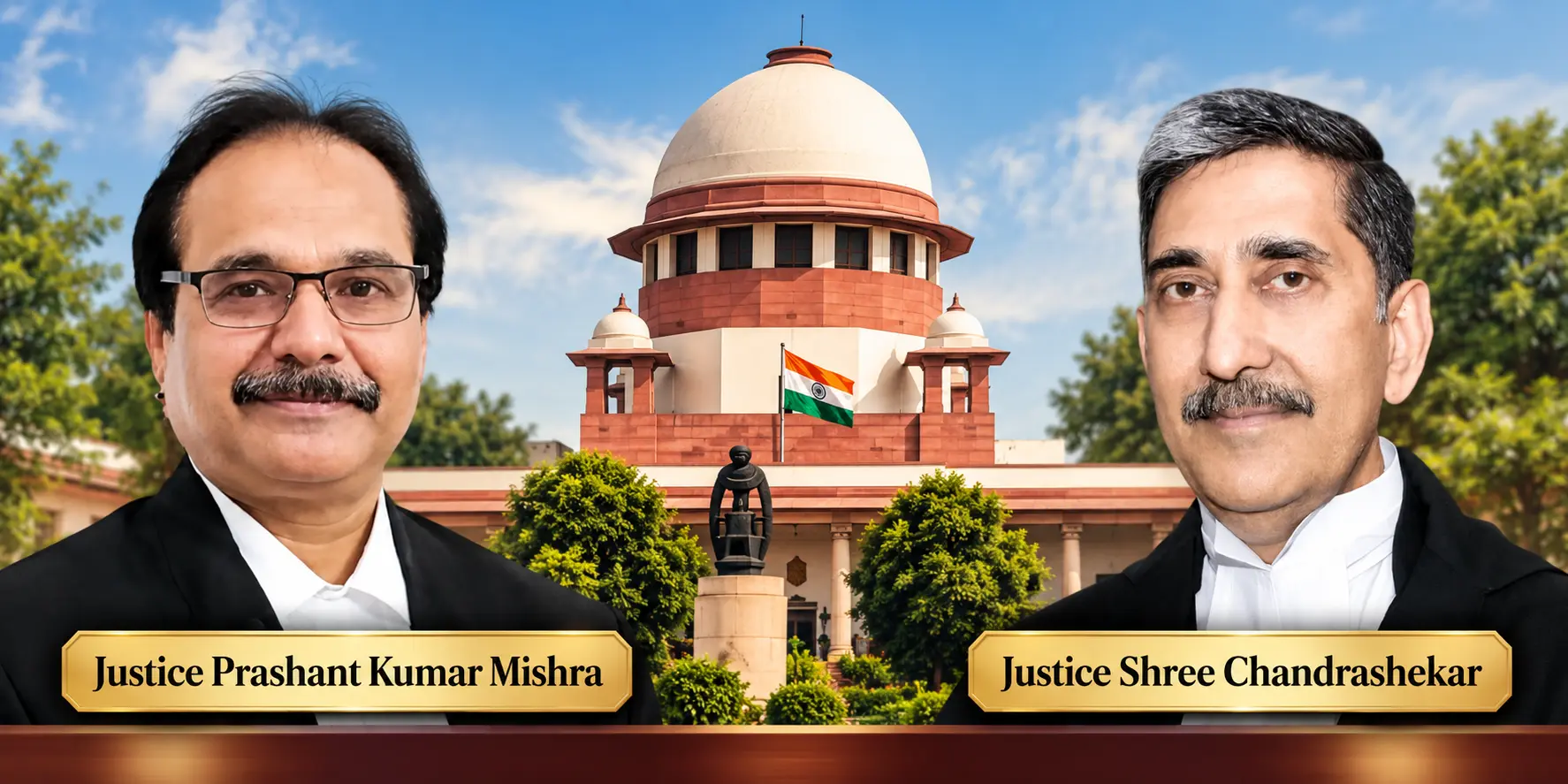
A Bench comprising Justice Prashant Kumar Mishra and Justice Shree Chandrashekhar delivered the judgment in V. Pon. Paneerselvam v. S. Regupathy & Ors., SLP (C) No. 30538/2026.
The petitioner had challenged the election of S. Regupathy from the 181-Thirumayam Assembly Constituency in the 2026 Tamil Nadu Legislative Assembly elections. He alleged, among other things, corrupt practice of undue influence arising from alleged suppression and false declaration concerning his spouse's assets and income in the statutory Form 26 affidavit.
The Madras High Court had dismissed the election petition as not maintainable after finding that it had been presented by the petitioner's counsel rather than by the petitioner personally.
The Supreme Court examined Sections 81 and 86 of the RP Act. It noted that Section 81(1) prescribes five essential requirements for an election petition, including that the petition must be presented “by” the petitioner, who must be either a candidate or an elector, before the High Court and within the prescribed 45-day period.
The Court emphasised that Section 86(1) mandates dismissal of an election petition that does not comply with Section 81. Accordingly, the requirement of presentation under Section 81 cannot be treated as a mere procedural formality.
The Bench also considered whether the Madras High Court could prescribe rules governing the presentation of election petitions.
Relying upon Jamal Uddin Ahmad v. Abu Saleh Najmuddin, the Court held that a High Court possesses the power to regulate the administrative and ministerial aspects of receiving election petitions. Therefore, Rule 7 of the Madras High Court Election Petitions Rules, 1967, which requires an election petition to be presented by the petitioner in person before the designated Registry officer, was held to be consistent with Section 81 of the RP Act.
The petitioner claimed that he had personally presented the election petition before the Registry on June 16, 2026. However, the Supreme Court found that there was no contemporaneous record establishing such personal presentation.
The CISF entry pass merely established his presence within the High Court premises, while the security deposit receipt was issued in the name of his counsel. The Court also held that the CCTV footage, even if considered, could establish at most the petitioner's presence in the premises and not that he personally presented the election petition.
The Court further distinguished Dr. Vijay Laxmi Sadho v. Jagdish, observing that the present case involved a requirement expressly contained in Section 81(1) itself, unlike the requirement considered in that case which originated solely from the High Court Rules. Pasted markdown
The Bench also noted that the petitioner was not claiming that he had been present along with his counsel at the time of presentation, as was the situation in Sheo Sadan Singh v. Mohan Lal Gautam, where substantial compliance had been accepted.
Concluding that the High Court had correctly dismissed the election petition, the Supreme Court held that the Special Leave Petition was “sans merit” and dismissed it.
The judgment was pronounced on October 7, 2026.
Case: V. Pon. Paneerselvam v. S. Regupathy & Others
Case No.: SLP (C) No. 30538/2026
Judgment Date: October 7, 2026
Bench: Justice Prashant Kumar Mishra and Justice Shree Chandrashekhar

Website designed, developed and maintained by webexy