
The Supreme Court has held that delay in filing an appeal against an externment order under the Chhattisgarh Rajya Suraksha Adhiniyam, 1990 can be condoned under Section 5 of the Limitation Act, 1963, unless the statute expressly or by necessary implication excludes such power.
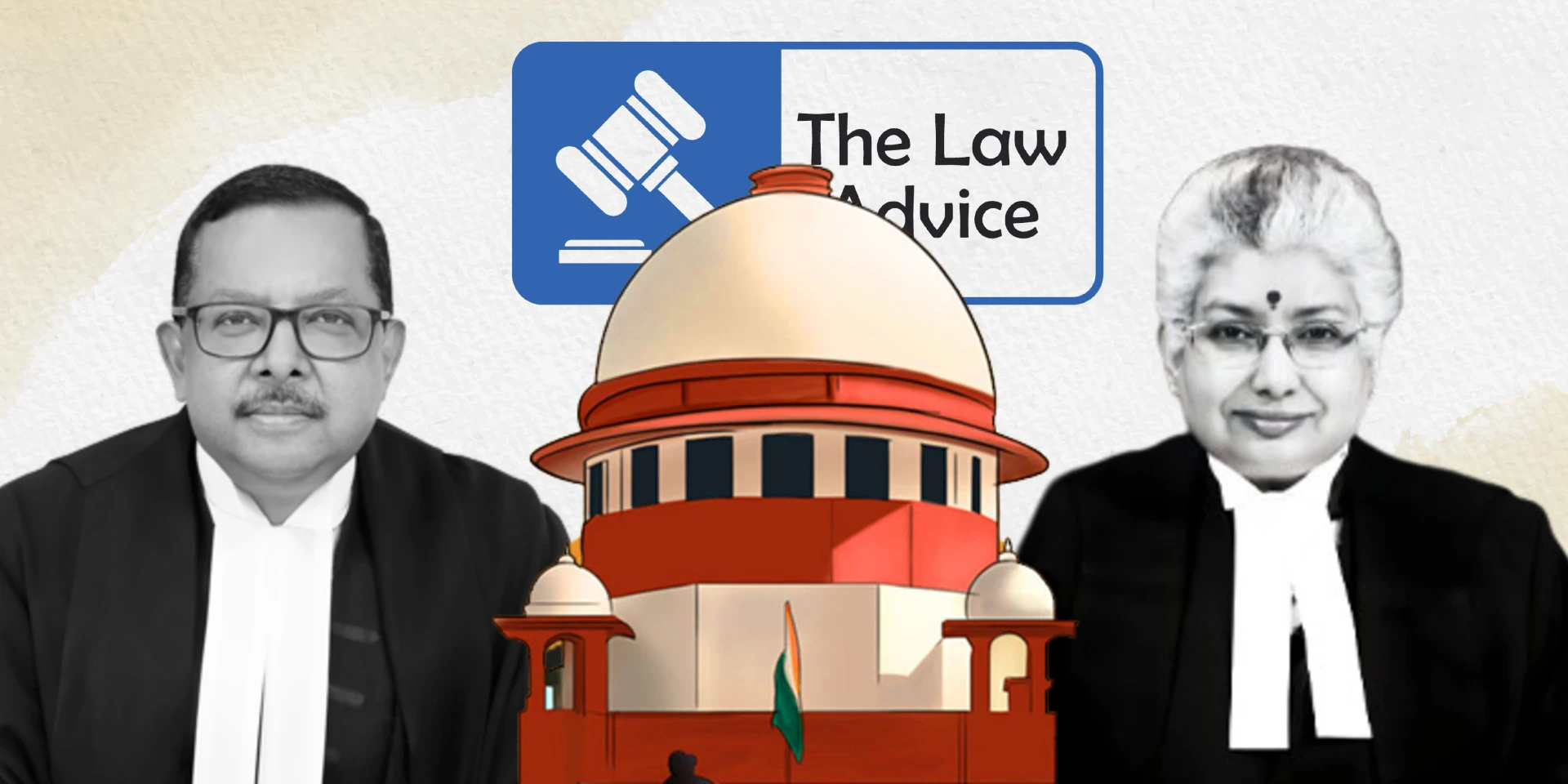
A Bench comprising Justice B.V. Nagarathna and Justice Ujjal Bhuyan set aside a judgment of the Chhattisgarh High Court, which had upheld the dismissal of an appeal against an externment order on the ground of limitation.
The Court observed:
“Unless the statute expressly or by necessary implication excludes the operation of Section 5 of the Limitation Act, the appellate authority should retain the discretion to condone delay in appropriate cases.”
The case arose from an externment order passed by the District Magistrate, Balodabazar-Bhatapara, on June 18, 2025, directing the appellant, Jittu Yadav, to remain outside the district for a period of one year.
Under Section 9 of the Chhattisgarh Rajya Suraksha Adhiniyam, 1990, an appeal against an externment order must be filed within 30 days. The appellant preferred an appeal before the State Government, but it was dismissed as time-barred because it had been filed beyond the prescribed period. The Chhattisgarh High Court subsequently affirmed the dismissal.
Aggrieved by the decision, the appellant approached the Supreme Court.
The principal question before the Court was whether Section 5 of the Limitation Act, which empowers authorities and courts to condone delay upon sufficient cause being shown, applies to appeals filed under Section 9 of the Chhattisgarh Rajya Suraksha Adhiniyam.
The Court noted that Section 9 merely prescribes a limitation period of thirty days for filing an appeal. However, the provision does not contain any express exclusion of the Limitation Act nor does it prescribe an outer limit beyond which delay cannot be condoned.
Referring to Section 29(2) of the Limitation Act, the Bench explained that Sections 4 to 24 of the Limitation Act automatically apply to proceedings under special statutes unless their application is specifically excluded.
The Court emphasized that where a special law merely prescribes a time limit but does not contain restrictive expressions such as "but not thereafter", "not exceeding", or any similar language indicating a legislative intent to bar condonation of delay, the general provisions of the Limitation Act continue to operate.
According to the Court, such legislative silence demonstrates that the legislature did not intend to completely exclude the applicability of the Limitation Act.
The Bench underscored that limitation laws are meant to ensure diligence and regulate legal remedies, but they are not intended to extinguish substantive rights in the absence of a clear legislative mandate.
The judgment observed that an interpretation preserving the right of appeal and advancing substantial justice should be preferred over one that defeats a statutory remedy merely on technical grounds.
The Court further noted that denying appellate scrutiny solely because an appeal is filed after the prescribed period, despite sufficient cause being shown, could result in irreversible prejudice and complete loss of the statutory remedy.
The Bench therefore held that appellate authorities under the Adhiniyam possess the power to condone delay under Section 5 of the Limitation Act where sufficient cause is established.
Allowing the appeal, the Supreme Court set aside the orders of the State Government and the Chhattisgarh High Court. The Court restored the appellant's appeal under Section 9 of the Chhattisgarh Rajya Suraksha Adhiniyam and directed that it be decided on merits in accordance with law as expeditiously as possible.
Case Title: Jittu Yadav v. State of Chhattisgarh & Others

For Petitioner(s): Mr. Ashish Kumar Pandey, Adv., Mr. Shivank Mishra, Adv., Mr. Suyash Rawat, Adv., Mr. Trevence Shankar Sahu, Adv., Mr. Yogisha Singh Rajput, Adv., Mr. Mayank Pandey, AOR.
For Respondent(s): Mr. Rajat Nair, A.A.G., Mr. Ambuj Swaroop, Adv., Mr. Prashant Singh, AOR, Mrs. Prerna Dhall, Adv., Mr. Digvijay Singh, Adv.
Website designed, developed and maintained by webexy