
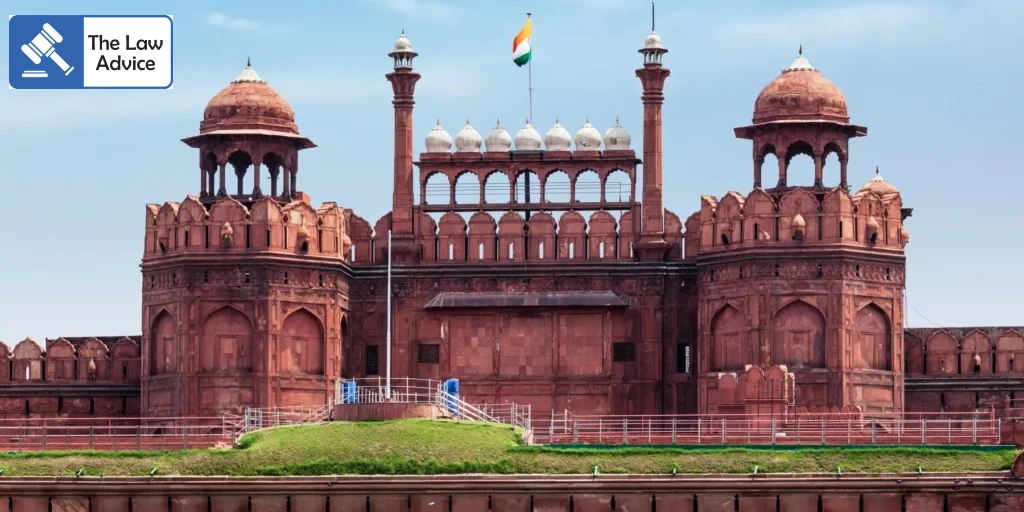
The Delhi High Court on Wednesday refused to entertain a PIL seeking directions to establish a dedicated memorial for Indian National Army (INA) martyrs at the Red Fort in recognition of their contribution and sacrifice during India's freedom struggle.
A Division Bench of Chief Justice D.K. Upadhyaya and Justice Tejas Karia observed that the decision on whether a memorial should be constructed at the Red Fort falls within the government's discretion and cannot be directed by the Court.
The PIL was filed by the Mahan Swatantrata Senani Lalti Ram Trust, which sought a writ of mandamus directing the Union Ministry of Culture, Ministry of Defence and the Archaeological Survey of India (ASI) to take steps for establishing the memorial.
The Trust relied on a written reply given by the Union Government in the Lok Sabha on August 2, 2021, stating that various proposals concerning Netaji Subhas Chandra Bose had been approved, including a proposal to establish a memorial at the Red Fort for INA martyrs.
The petitioner contended that despite the government's statement, no dedicated memorial had been established at the Red Fort.
However, the Court questioned how a writ of mandamus could be issued merely for implementing a government proposal. The Bench asked the petitioner's counsel to show the legal basis for seeking such a direction.
The Court observed that the petitioner would have to establish a constitutional or legal duty on the part of the government, or show the violation of a fundamental right, before a writ of mandamus could be issued.
“Erection of a memorial is not linked to any duty or right. How can we pass such a direction?” the Court remarked, questioning how it could direct the government to allocate land at the Red Fort and construct a memorial.
The Chief Justice further observed that the question of whether a memorial should be erected in honour of a particular individual or group cannot ordinarily become a matter for adjudication by a court.
The Court also noted that announcements made through PIB press releases, by themselves, cannot create an enforceable right on the basis of which a writ petition can be maintained.
While disposing of the PIL, the Bench granted liberty to the petitioner to approach the concerned Union Ministry by submitting an exhaustive representation along with supporting documents.
The Court directed that any such representation be considered and decided in accordance with law. It also clarified that its observations should not be treated as an expression of opinion on the merits of the petitioner's claim.
Website designed, developed and maintained by webexy