
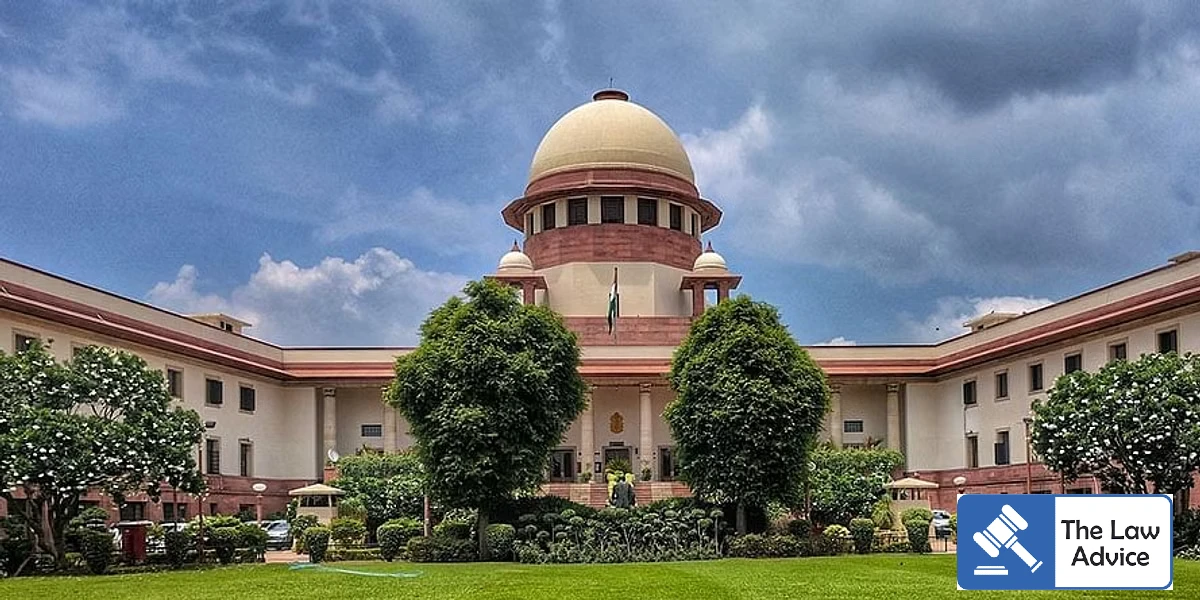
The Supreme Court has held that a Hindu widow's limited interest in agricultural land can become absolute ownership under Section 14(1) of the Hindu Succession Act, 1956. It ruled that succession must be determined according to the personal law applicable at the time of her death.
A bench of Justice S.V.N. Bhatti and Justice N.V. Anjaria dismissed an appeal concerning around 45 bighas of agricultural land.
The dispute concerned Khajano, who inherited an interest in land linked to her first husband, Mauji Ram, and their son, Ram Chander. She later married Bal Kishan and had two sons, Chand Ram and Chander Bhan. Recognised as a Bhumidhar under the Delhi Land Reforms Act, 1954, she died in 1973.
After her death, her sons sought mutation of the land in their favour, which Mauji Ram's family opposed, arguing that the property should revert to the heirs of the last male proprietor.
The Court held that Section 14(1) of the Hindu Succession Act had converted Khajano's limited interest into absolute ownership when the law came into force in 1956. Her succession rights, therefore, had to be determined under the law applicable at the time of her death, rather than the law in force when she originally acquired the property.
"The personal law is not frozen on the enactment of the Act, 1954, and it keeps open the classes of persons entitled to succeed to an interest of a female Bhumidhar to the personal law applicable on the date of her demise," the Court observed.
The bench clarified that the nature of the woman's ownership at the time of her death and the personal law then applicable would determine succession. Finding no merit in the appellants' challenge, the Court dismissed the appeal.
Case Title: Sultan Singh (Dead) Through LRs v. The Financial Commissioner, Government of NCT of Delhi.
Website designed, developed and maintained by webexy