
In a significant ruling, the Supreme Court has reiterated that an insurance policy is a personal contract between the insured and the insurance company, and a third party cannot claim insurance benefits unless there is a direct contractual relationship (privity of contract) with the insurer.
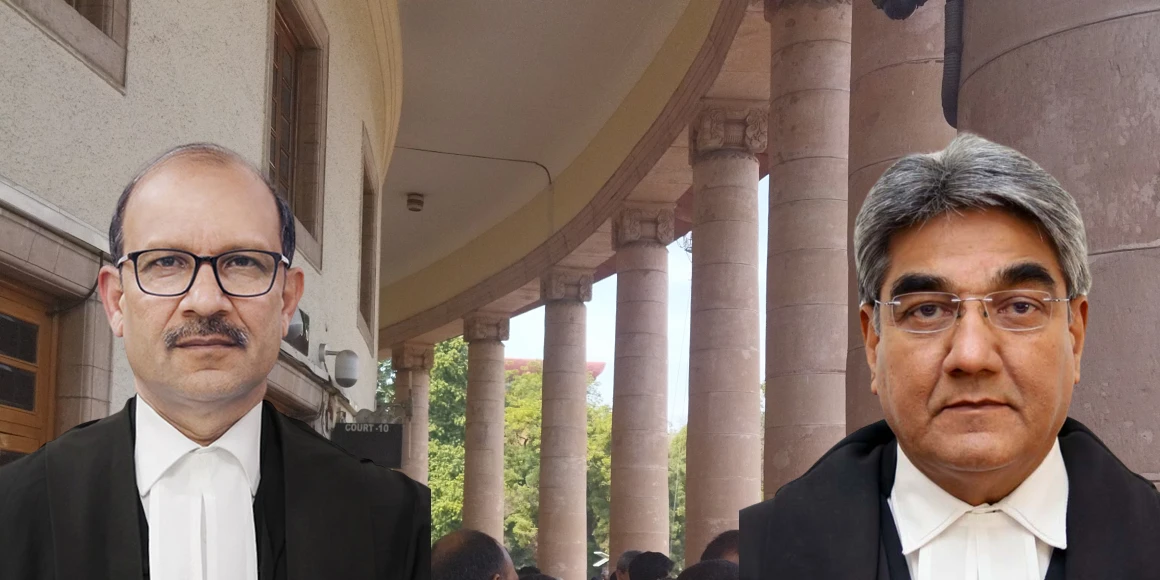
A Bench comprising Justice Sandeep Mehta and Justice Vijay Bishnoi dismissed an appeal filed by K. Prakashchand against National Consumer Disputes Redressal Commission (NCDRC), which had rejected his claim for insurance proceeds arising from the theft of a financed vehicle.
The appellant had financed the purchase of a vehicle by one Somashekhar. The vehicle was insured under a comprehensive policy issued by Oriental Insurance Company Limited for the period between February 8, 2003 and February 7, 2004.
According to the appellant, the borrower defaulted on loan repayments and surrendered the vehicle to him in December 2003. Shortly thereafter, the vehicle was allegedly stolen, and a police complaint was lodged. When the vehicle could not be traced, the financier sought compensation from the insurer.
While the District Consumer Forum and the Karnataka State Consumer Commission ruled in favour of the financier, the NCDRC reversed those findings, holding that there was no contractual relationship between the financier and the insurance company.
Upholding the NCDRC's decision, the Supreme Court held that the insurance company was not a party to the agreement between the financier and the borrower and had no notice of any arrangement allegedly transferring possession of the vehicle.
The Court observed:
"Since the Insurance Company did not have any notice of any agreement taking place in between the parties, it cannot be called upon to make good the loss of the appellant."
The Bench emphasized that an insurance contract is personal in nature and only the insured, or a person having a direct contractual relationship with the insurer, can enforce rights under the policy.
The Court also noted several shortcomings in the appellant's case, including the absence of documentary proof showing that the vehicle had actually been surrendered by the borrower and insufficient details regarding the alleged theft.
The appellant had relied on the Supreme Court's decision in Sundaram Finance Ltd. v. State of Kerala to argue that the financier retained ownership rights. However, the Court rejected this contention, observing that the nature of the underlying agreement—whether it was a hire-purchase, hypothecation, or lease arrangement—had never been clearly established.
The Court further held that the proposed letter of subrogation could not assist the appellant because it had not been executed by the insured person.
Finding no error in the NCDRC's reasoning, the Supreme Court dismissed the appeal and reaffirmed the principle that insurance benefits cannot be claimed by strangers to the insurance contract.
Case: K. Prakashchand v. Oriental Insurance Co. Ltd.
Bench: Justice Sandeep Mehta and Justice Vijay Bishnoi
Date of Judgment: June 18, 2026

Representation:-
For Appellant(s) : Mr. T. V. S. Raghavendra Sreyas, AOR, Ms. Gayatri Gulati, Adv.
For Respondent(s) : Ms. Sakshi Mittal, AOR
Website designed, developed and maintained by webexy