
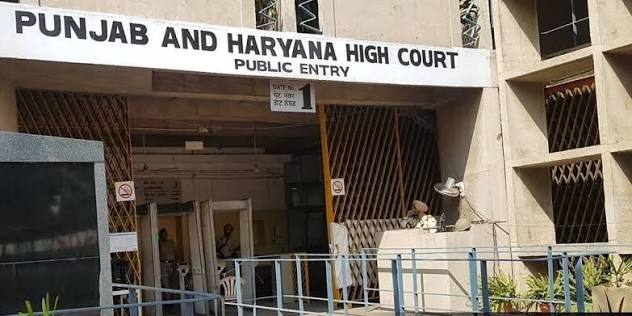
The Punjab and Haryana High Court has quashed an FIR registered against a woman accused of hurting religious sentiments after she dressed her pet dog as Lord Krishna on Janmashtami and shared the photograph as her WhatsApp status.
The bench headed by Justice Subhas Mehla held that the woman's actions did not disclose any criminal intent, an essential requirement for attracting penal liability.
The FIR had been lodged on the complaint of a Shiv Sena youth leader, who alleged that the WhatsApp status depicting the dog dressed as Lord Krishna had hurt the sentiments of the Hindu community.
During the investigation, the woman admitted posting the photograph but maintained that she had never intended to offend anyone. She explained that she had been childless for six years after marriage, considered her pet as her own child and had dressed it up as part of her Janmashtami celebrations.
Accepting her explanation, the High Court observed that neither dressing the dog in Lord Krishna's attire nor sharing the image on WhatsApp amounted to desecration of a sacred object or an act intended to insult religion.
"Individual expression of the petitioner, shaped by her personal experiences, cannot be criminalized merely because it does not align with the sensitivities of others. In the absence of mens rea, criminal proceedings cannot be initiated to validate subjective perceptions of hurt. Constitutional tolerance must override hypersensitivity which leads innocent acts to be construed as desecration," the Court said.
Examining Section 298 of the Bharatiya Nyaya Sanhita (BNS), the Court noted that the provision applies only when a place of worship or an object held sacred is destroyed, damaged or defiled with the necessary intention or knowledge. It held that the yellow cloth, crown and ornaments used to dress the dog could not be treated as sacred objects within the meaning of the law.
The Court further remarked that the petitioner's conduct reflected devotion rather than disrespect.
"On Janmashtami, the lady's heart was focused on Krishna. So, by dressing her dog—which she considers and loves as her own child—the petitioner is practicing Bhakti Yoga. For Krishna, the purity of the cloth or the species of the wearer is secondary to the purity of the devotee's emotion," the Court observed.
Holding that the basic ingredients of the offence were absent, the Court cautioned against allowing criminal prosecutions based merely on subjective feelings of offence.
"Criminal liability cannot be founded upon subjective hypersensitivity or idiosyncratic perceptions of offence; otherwise, the threshold for criminal prosecution would be left to the varying sensibilities of individuals rather than the objective standard contemplated by law," it said, referring to the Supreme Court's "community standards" test.
The judgment also discussed Hindu philosophy, mythology and the concept of anthropomorphization—the attribution of human characteristics to animals or other non-human entities. The Court noted that anthropomorphization has deep roots in Indian mythology, pointing to deities such as Lord Hanuman, Lord Ganesha, Lord Garuda and Lord Nandi.
According to the Court, the petitioner had anthropomorphized her pet purely out of affection and not with any intention to insult religious beliefs.
"The gesture made by the petitioner by dressing up her pet in the customary attire of Janmashtami seems to have been done in good faith and without malice. The posting of the photo on WhatsApp appears to be out of an intention of love and for showcasing her affection. The question of hurting others' religious sentiments and disgracing Lord Krishna arises primarily because of a myopic viewpoint that visualizes 'dog' as an impure creation of God," the Court observed.
Finding that continuation of the criminal case would amount to an abuse of the legal process, the High Court quashed the FIR, the chargesheet and all consequential proceedings against the petitioner.
Advocate Mitul Singh Rana represented the petitioner, while Additional Advocate General Subhash Godara appeared for the State of Punjab.
Website designed, developed and maintained by webexy