
Today, in a Miscellaneous Application filed by a judicial officer from Rajasthan, the Supreme Court granted protection by exercising its powers under Article 142 of the Constitution of India.
Earlier, when the writ petition filed by Judge D.K. Gupta was disposed of by the Supreme Court on 19.12.2025, the Court had requested the Acting Chief Justice of the Rajasthan High Court, Justice Sanjeev Prakash Sharma, to post him near his hometown, i.e., Jaipur, considering his serious health issues, the posting of his wife, and the limited time left before his retirement.
It was submitted by Senior Advocate Vikas Singh, assisted by Varun Gupta and Kajal S. Singh, that pursuant to the said order, Judge Gupta came to be posted as Judge, Labour Court, Jaipur, on 30.12.2025. Mr. Singh submitted before the Court that:
“At the fag end of a distinguished judicial career spanning three decades, marked by unwavering dedication, devotion, and sincerity, the posting of the Petitioner to the Labour Court assumes an unmistakably punitive character, not merely by innuendo but otherwise. At the time the order dated 19.12.2025 was passed by this Hon’ble Court, the Petitioner was holding the post of Principal District and Sessions Judge, Jalore. The present posting is neither commensurate with the rank so held nor aligned with the observations made by this Hon’ble Court.”
Mr. Singh further argued:
“Such a posting undermines the dignity and reputation of the Petitioner, which are integral to the personality and character of a judicial officer and to the independence of the judicial office he holds. Non-posting of the Petitioner to a position commensurate with his rank and status is therefore wholly arbitrary, humiliating, and demeaning, and cannot be said to be in consonance with the letter and spirit of the order dated 19.12.2025.”
Judge Gupta also made a representation before the Registrar General of the Rajasthan High Court, stating:
“The applicant submits with utmost sincerity that although no judicial work is less fulfilling, yet an officer of the rank of Principal District and Sessions Judge in the Super Time Scale being posted as Judge, Labour Court, while his far junior officers are posted as Principal District and Sessions Judges at Jaipur Metropolitan-I, Jaipur Metropolitan-II, and Jaipur District, leaves an indelible imprint of gross humiliation.”
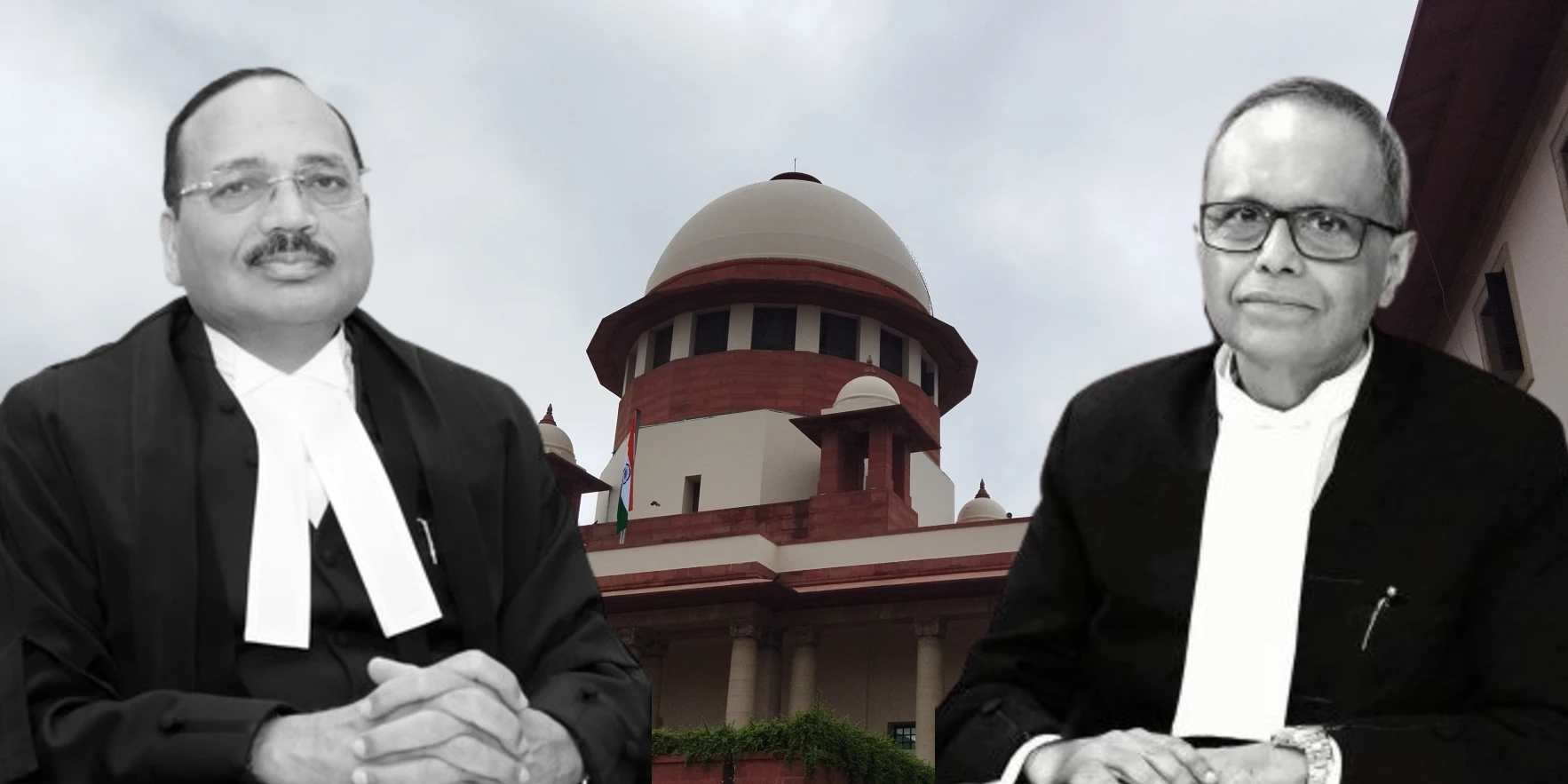
After hearing the parties, a Bench comprising the Chief Justice of India Surya Kant and Justice Joymalya Bagchi passed an order exercising its extraordinary powers under Article 142 of the Constitution of India. The Court directed that notwithstanding his posting as Judge, Labour Court, Judge Gupta shall continue to draw the pay and allowances of the Super Time Scale and shall not be required to report to any officer junior to him in rank.
Judge Gupta had passed several notable orders in Rajasthan and was widely regarded as a popular judicial officer. He had passed an order against the Adani Group, following which he was transferred within a few hours.
While disposing of a bail petition under the POCSO Act, the Rajasthan High Court, allegedly influenced by newspaper reports, made adverse remarks against Judge Gupta. The Supreme Court subsequently directed that these adverse remarks shall not be taken into consideration while assessing his service record.
During his judicial career spanning nearly 30 years, Judge Gupta has been transferred on 29 occasions.
Website designed, developed and maintained by webexy