
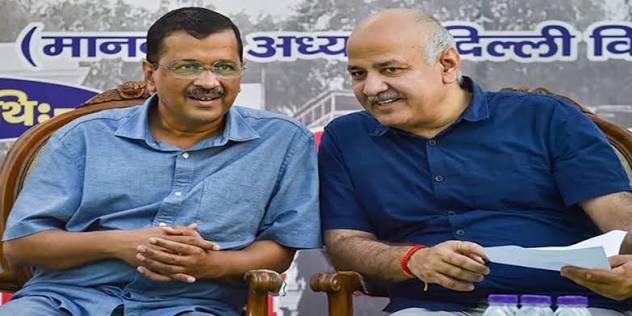
Former Delhi Chief Minister Arvind Kejriwal and former Deputy Chief Minister Manish Sisodia have approached the Delhi High Court seeking dismissal of the Central Bureau of Investigation's (CBI) revision petition challenging their discharge in the Delhi Excise Policy case.
The applications have been filed in response to the CBI's challenge against a February 27, 2026 trial court order that discharged Kejriwal, Sisodia and 21 other accused from the case. They raise preliminary objections questioning the maintainability of the CBI's revision petition.
A key contention raised by Kejriwal and Sisodia is that the CBI filed its revision petition within four hours of the trial court's judgment, describing the move as having been undertaken with "unprecedented haste" and in an "unserious manner."
They have argued that the CBI petition fails to identify any specific illegality, discrepancy or perversity in the trial court's discharge order.
In his application, Sisodia contended that the CBI had failed to explain, in relation to each accused, how the discharge order was unsupported by evidence, ignored material evidence or involved an arbitrary or perverse exercise of judicial discretion.
The application further argues that the CBI has not placed any evidence, documents or other material along with its revision petition to establish that the trial court's findings were perverse.
According to Kejriwal and Sisodia, the CBI's "bare-shell, omnibus and non-specific petition" has caused prejudice to the respondents as they are unable to properly understand the allegations and case they are required to defend.
The applications are likely to be heard by Justice Manoj Jain on August 18.
The CBI's revision petition initially came before Justice Swarana Kanta Sharma after the trial court discharged Kejriwal and the other accused on February 27.
On March 9, Justice Sharma issued notice in the CBI's plea and stayed the trial court's direction concerning departmental proceedings against the CBI officer who investigated the case. She also prima facie observed that certain findings recorded by the trial court appeared erroneous.
Justice Sharma further directed the trial court to defer proceedings under the Prevention of Money Laundering Act (PMLA) arising from the CBI case.
Following this, Kejriwal, Sisodia and other accused, including Durgesh Pathak, Vijay Nair, Arun Pillai and Chanpreet Singh Rayat, sought Justice Sharma's recusal from the matter.
They alleged a conflict of interest, pointing to her children's association with lawyers on the Central government's panel. They also alleged ideological bias, citing her participation in events organised by the Adhivakta Parishad, the lawyers' wing of the Rashtriya Swayamsevak Sangh (RSS).
Justice Sharma initially rejected the recusal plea and decided to continue hearing the matter. Kejriwal, Sisodia and Pathak subsequently chose to boycott proceedings before her.
Justice Sharma later initiated contempt proceedings against Kejriwal and others over allegations made against her. She thereafter decided not to hear the Excise Policy case.
Website designed, developed and maintained by webexy