
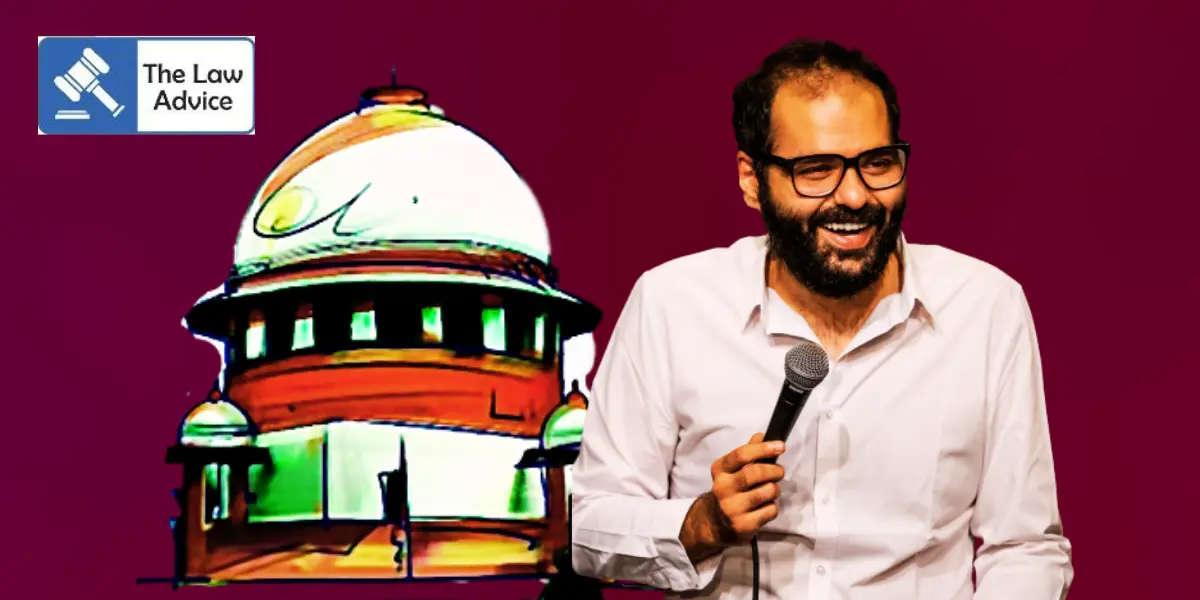
Comedian Kunal Kamra has approached the Supreme Court seeking permission to intervene in a case before a seven-judge Bench that will examine the limits of legislative privilege and its impact on a citizen’s freedom of speech.
Kamra has filed an application in N Ravi and Others v. Speaker, Legislative Assembly, Chennai, where the Supreme Court is expected to consider the interplay between legislative privileges, freedom of speech and the right to life and personal liberty.
His intervention plea comes against the backdrop of the breach of privilege proceedings he is facing before the Maharashtra Legislative Assembly over a satirical song performed during his comedy show Naya Bharat.
The performance referred to the 2022 split in the Shiv Sena, which resulted in the resignation of then Maharashtra Chief Minister Uddhav Thackeray and the formation of a new government under Eknath Shinde. Kamra also reportedly referred to Shinde as “Gaddar” (traitor) in the song.
Following the performance, breach of privilege proceedings were initiated against Kamra on allegations that he had disrespected and insulted Shinde. A criminal case was also registered against him.
Kamra has separately approached the Bombay High Court seeking quashing of the criminal case. The High Court has stayed his arrest, but the petition is yet to be finally decided.
In his plea before the Supreme Court, Kamra has argued that his case raises broader questions about the extent to which legislative privilege can be used against citizens for commenting on the actions of elected representatives.
He has submitted that the use of legislative privilege in such circumstances could have a “chilling effect” on freedom of speech and expression. According to Kamra, the issue is not limited to journalists or members of the press but can affect any citizen who speaks about the conduct of legislators.
Kamra has also told the Supreme Court that the proceedings against him have made it difficult for him to find venues for his comedy shows in Mumbai. He has further expressed concern that similar proceedings could be initiated against him if he comments on the actions of legislators in the future.
The plea states that the use of constitutional provisions to discourage speech concerning elected representatives raises important questions concerning free speech.
The application was drawn by advocate Arti Raghavan and filed through advocate Mansi Binjarajka.
The case in which Kamra seeks to intervene relates to a 2003 resolution passed by the Tamil Nadu Legislative Assembly against senior journalists of The Hindu. The privilege proceedings followed an editorial in the newspaper that criticised what it described as the “rising intolerance” of the then AIADMK government led by J Jayalalithaa.
The Assembly had sentenced The Hindu editor N Ravi, executive editor Malini Parthasarthy, publisher S Rangarajan, bureau chief V Jayant and special correspondent Radha Venkatesan to 15 days’ imprisonment for alleged breach of legislative privilege and contempt.
Although arrest warrants were issued, the journalists were not arrested after the Supreme Court restrained any such action.
In its December 8, 2003 order, the Supreme Court noted that the case raised substantial questions concerning the interpretation of Article 194(3) of the Constitution and its relationship with Article 19(1)(a), which guarantees freedom of speech and expression, and Article 21, which protects life and personal liberty.
The matter was initially referred to a five-judge Bench. In 2004, the Court referred it to a seven-judge Bench after noting an apparent conflict between judgments of five-judge and seven-judge Benches on related questions.
The Court had also noted the submission of Senior Advocate Harish Salve, who represented the The Hindu journalists, that the issue had wide ramifications and required an authoritative ruling.
The case is now scheduled to be heard by the seven-judge Bench from October 6, with the Court proposing to conclude arguments by October 15.
Website designed, developed and maintained by webexy