
The Supreme Court has held that a party relying on a customary law must strictly prove its existence, scope, and continuous practice, reiterating that customs cannot be presumed merely because there is no evidence to the contrary.
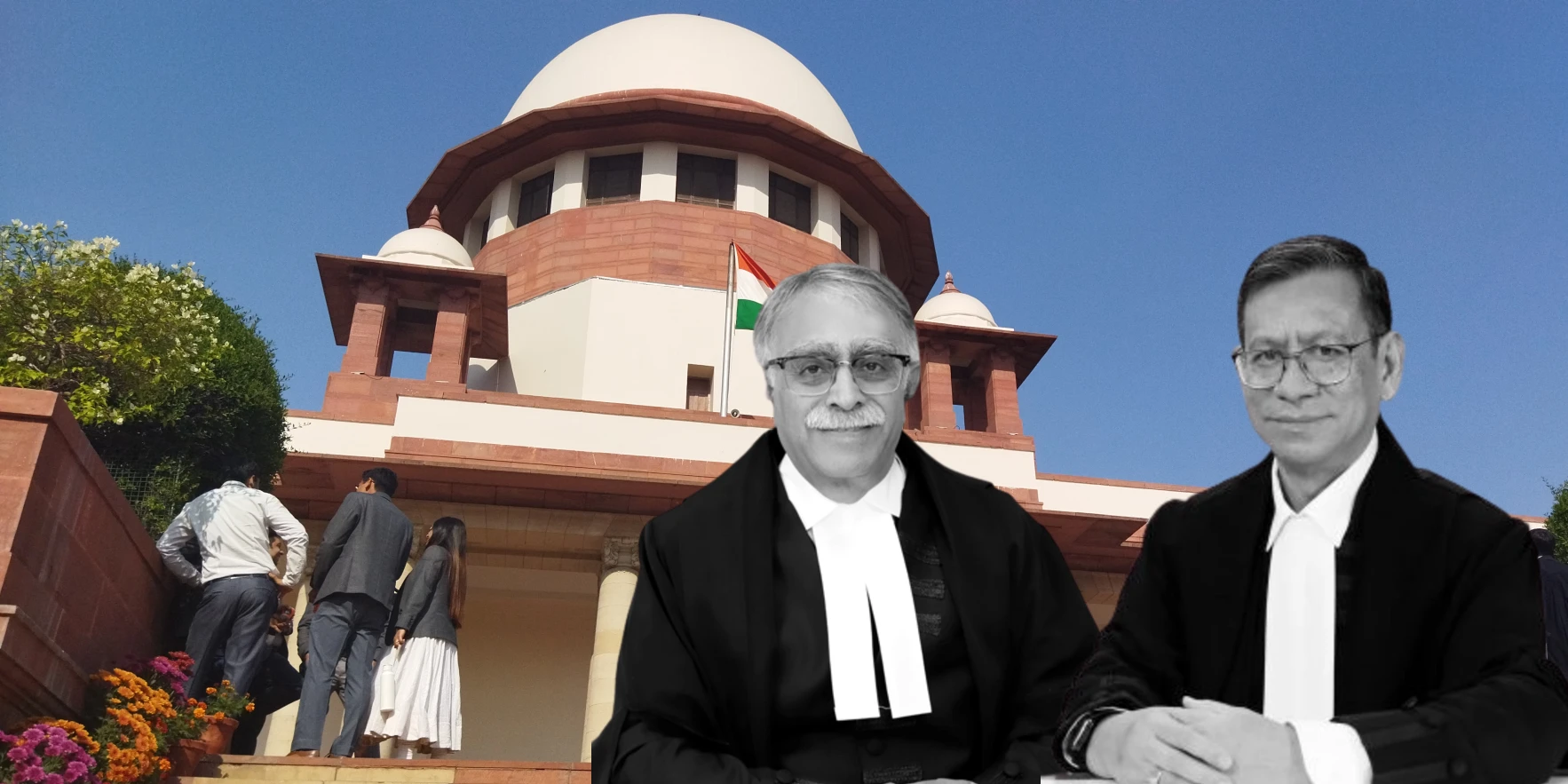
A Bench of Justices Sanjay Karol and Nongmeikapam Kotiswar Singh allowed an appeal filed by Bejla Oraon and set aside concurrent findings of the trial court, first appellate court, and the High Court of Jharkhand concerning inheritance rights under the customary law governing the Oraon community.
The dispute arose over ancestral property belonging to an Oraon family. The respondents claimed rights through a "ghardamad" (resident son-in-law) arrangement, contending that Punai Oraon had been accepted as the ghardamad of Ledura Oraon, who died without children. The appellant, however, asserted that under Oraon custom, daughters do not inherit property and, in the absence of a valid customary transfer, the property would devolve upon the nearest male agnate.
Examining extensive oral evidence and customary law principles, the Court observed that while the custom permitting a ghardamad to inherit the property of his father-in-law appeared to be established, there was no evidence proving a custom allowing an uncle-in-law to adopt his niece's husband as a ghardamad. The Court emphasized that the burden of proving a custom lies on the person asserting it and such proof must demonstrate long-standing, certain, and reasonable usage.
The Bench found significant inconsistencies in the respondents' evidence regarding inheritance rights of daughters, the devolution of property of an issueless Oraon male, and the validity of the alleged partition and lease deed. Referring to authoritative writings on Oraon customary law, the Court held that in the absence of a validly established customary succession through a ghardamad, the property would devolve upon the nearest male agnate.
Criticizing the High Court for framing but not adequately answering the substantial question of law regarding the validity of the alleged ghardamad adoption, the Supreme Court held that merely noting the absence of a prohibition under custom was insufficient. The party relying on the custom had to affirmatively prove it.
Accordingly, the Court set aside the judgments of the courts below, decreed the plaintiff's suit, and held that all consequential benefits would follow in favour of the appellant.
The judgment reinforces settled principles governing proof of custom, inheritance under tribal customary laws, and the limited circumstances in which courts may interfere with concurrent findings of fact.
Case: Bejla Oraon v. Kali Das Oraon & Ors.
Citation: 2026 INSC 672
Decision Date: 9 July 2026.

Representation:-
For Petitioner(s):- Mr. Rajan Raj, Ms. Mohini Priya, Ms. Sayesha Gambhir
For Respondent(s):- Mr. Vinod Chauhan, Mr. Pardeep Kumar, Mr. Ajeet Kumar Bhagat, Mr. Deepankar, Mr. Anubhav, Mr. Rakesh Kumar, Mr. Shivam Munjal, Mr. Sahil Goyal, Mr. Umang Tripathi, Mr. Devansh, Mr. Ravindra Kumar, Ms. Shagun Mishra
Website designed, developed and maintained by webexy