
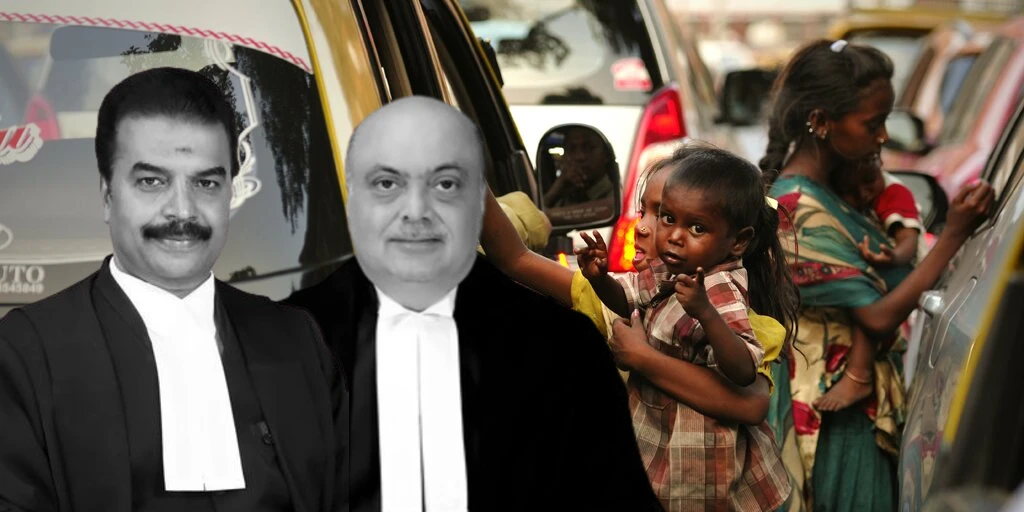
In a significant ruling on public employment and eligibility criteria, the Supreme Court has held that a candidate possessing qualifications higher than the prescribed maximum limit cannot claim a right to continue in service, even after years of employment. The Court restored the dismissal of an employee who had secured appointment to a post meant exclusively for candidates with lower educational qualifications.
A Bench of Justice Ahsanuddin Amanullah and Justice R. Mahadevan allowed the appeal filed by the employer against K. Poovarasan and set aside the judgments of the Madras High Court that had ordered his reinstatement.
The respondent was appointed as a Temporary Attender after his name was sponsored through the Employment Exchange. The employer had specifically prescribed that applicants must have passed the 8th Standard but should not have passed the 12th Standard or possess any higher qualification.
However, it later emerged that the respondent was a graduate at the time his name was sponsored for the post. The employer contended that he had suppressed this material fact and obtained consideration for appointment despite being ineligible.
A disciplinary inquiry culminated in his dismissal from service in October 2018. The Madras High Court subsequently set aside the dismissal and directed reinstatement with continuity of service, though without back wages. Challenging that decision, the employer approached the Supreme Court.
The Court emphasized that public employment must be distributed in accordance with prescribed eligibility conditions and that courts cannot ignore the rationale behind fixing an upper educational qualification limit for certain posts.
The Bench observed that the purpose of prescribing a maximum qualification is to create employment opportunities for persons who could not pursue higher education due to social or economic circumstances. Allowing overqualified candidates to occupy such posts would deprive genuinely eligible candidates of opportunities specifically intended for them.
The Court noted that once it became evident that the respondent possessed qualifications beyond the permissible limit on the date his name was sponsored, he became ineligible for consideration itself. Consequently, any subsequent stages of selection or appointment could not create a legal right to continue in service.
The Court also found the respondent's conduct suspicious. While filling the attestation form, he disclosed only that he had passed the 10th Standard despite being required to reveal all educational qualifications acquired from school onwards.
According to the Bench, had he acted in good faith, there was no reason to withhold details of his graduation. The omission raised serious doubts regarding his bona fides.
The Court further pointed out that after joining service, the respondent sought permission from the employer to pursue graduation. This indicated an attempt to create the impression that he did not already possess a graduate degree when he entered service.
Rejecting the plea for a sympathetic approach on account of the respondent's long years of service, the Court reiterated that equitable considerations cannot validate an appointment that was illegal from the outset.
Relying on its earlier decision in Jomon K.K. v. Shajimon P., the Court observed that the State, as a model employer, may legitimately reserve certain posts for candidates with lower qualifications to ensure broader access to livelihood opportunities.
The Bench also reiterated that sympathy cannot be misplaced where an appointment is illegal and void in the eyes of law.
Allowing the appeal, the Supreme Court set aside the Madras High Court's orders directing reinstatement and restored the employer's dismissal order dated October 30, 2018.
The judgment reinforces that candidates must strictly satisfy prescribed eligibility conditions and that appointments obtained despite ineligibility cannot be protected merely because the employee has served for a long period.
An employee who possesses educational qualifications higher than the maximum qualification prescribed for a post is ineligible for appointment, and long years of service or sympathetic considerations cannot cure such illegality.
Case: General Manager (HR) & Anr. v. K. Poovarasan (2026 INSC 581)
Date of Judgment: 19 May 2026
Bench: Justice Ahsanuddin Amanullah and Justice R. Mahadevan.

Website designed, developed and maintained by webexy